Taking too much melatonin can cause unwanted effects, most often excessive sleepiness, dizziness, headache, nausea, or reduced alertness. There is no single dose that defines an overdose for everyone, because the risk depends on the person, product, amount taken, other medicines or substances, and symptoms. Most reported exposures are not associated with severe toxicity, but a child, an unknown ingestion, or severe symptoms should always be taken seriously.
Table of Contents
What Does “Too Much Melatonin” Mean?
“Too much melatonin” does not necessarily mean someone has taken an enormous amount. It does not mean you have an overdose on melatonin.
It can simply mean that a person took more than intended. They may have forgotten that they already took a dose, taken a second dose because the first did not seem to work, or used two products that both contain melatonin.
For example, someone might take a melatonin tablet and later use a sleep supplement without realizing that the second product also contains melatonin.
For a child, the situation can be quite different. Gummies and chewable products may look like sweets, making accidental ingestion possible.
There is no universal toxic threshold that can safely be applied to every person. The actual product, amount, age, symptoms, and other substances involved all matter.
Is Melatonin Overdose the Same as Melatonin Side Effects?
Not exactly.
A side effect can occur even when someone takes melatonin as directed. A person might become sleepy, develop a headache, or feel dizzy after an ordinary amount.
Taking substantially more than intended may increase the likelihood of unwanted effects, but symptoms alone do not tell you exactly how much melatonin was absorbed or whether something else is responsible.
For example, dizziness after taking melatonin could also be related to another medicine, alcohol, dehydration, low blood pressure, or another health problem.
So it is better to look at the whole situation, rather than trying to diagnose an overdose from one symptom.
Also Read: Our Melatonin Guide | Circadian Rhythm and Melatonin | Your Body's Natural Melatonin Production
What Happens If You Take Too Much Melatonin?
The effects of excessive melatonin exposure are usually related to sleepiness and reduced alertness.
A person may feel much more tired than expected, become dizzy, or have difficulty staying alert. Other reported effects include:
- Headache
- Dizziness
- Nausea
- Vomiting
- Confusion
- Excessive sleepiness
- Reduced alertness
- Occasionally, changes in blood pressure or heart rate
A systematic review of melatonin safety found that reported adverse effects were generally mild, with sleepiness, headache, and dizziness among the more commonly reported problems.
Higher-dose research has also found more reports of some adverse effects such as drowsiness, headache, and dizziness, although the available evidence has important limitations.
These symptoms do not automatically mean serious poisoning.
What matters most is how the person is doing overall.
Symptoms of Too Much Melatonin
| Possible symptom | What it may feel like |
|---|---|
| Excessive sleepiness | Much sleepier than expected |
| Dizziness | Light-headed or unsteady |
| Headache | Head pain or pressure |
| Nausea | Feeling sick or unsettled |
| Confusion | Difficulty thinking clearly |
| Reduced alertness | Difficulty staying awake or responding normally |
This table is not a way to diagnose an overdose.
Symptoms can have many causes, and severe or unusual symptoms should be medically assessed rather than automatically blamed on melatonin.
Also Read: Melatonin for Older Adults | Melatonin for Pregnant Women | Melatonin for Kids.
When Is Too Much Melatonin an Emergency?
Most accidental melatonin exposures are not severe, but certain symptoms should be treated as medical emergencies.
Seek urgent medical help if the person has:
- Difficulty breathing
- Severe difficulty waking or inability to wake normally
- A seizure
- Loss of consciousness
- Severe confusion
- Collapse
- Severe or rapidly worsening symptoms
A child who has swallowed an unknown or potentially excessive amount also deserves prompt professional advice rather than being managed using assumptions based on an adult’s experience.
Do not simply tell someone with severe symptoms to “sleep it off.”
The concern is not ordinary tiredness. It is whether the person can be normally awakened, is breathing normally, and is otherwise stable.
What Should You Do If You Accidentally Take Too Much Melatonin?
If you realize that you have taken more melatonin than intended, start by not taking any more.
Then gather the information that will help a healthcare professional or poison-information service assess the situation.
1. Check the product
Keep the bottle, blister pack, packet, or gummy container nearby.
Check the:
- Product name
- Strength
- Serving size
- Other ingredients
- Formulation
2. Work out approximately what was taken
Note the approximate number of tablets or gummies and when they were taken.
You do not need to calculate a toxic dose yourself. The purpose is simply to give accurate information when seeking advice.
3. Check for other substances
Think about whether the person also took:
- Prescription medicines
- Over-the-counter medicines
- Other supplements
- Alcohol
- Recreational substances
This information can be important because the symptoms may not be caused by melatonin alone.
4. Do not drive if you are impaired
If you are sleepy, dizzy, confused, or otherwise impaired, do not drive yourself to a hospital or clinic.
Ask someone else for help or use an appropriate emergency service.
5. Get individualized advice
Contact an appropriate poison-information service or healthcare professional if:
- The amount taken is uncertain
- Symptoms are present
- A child is involved
- Other medicines or substances were taken
- You are concerned about the product
6. Get emergency help for severe symptoms
If there is difficulty breathing, seizure, collapse, loss of consciousness, severe confusion, or inability to wake normally, seek urgent medical attention.
Do not induce vomiting and do not use home remedies to try to “neutralize” melatonin.
What Information Should You Have Ready?
If you contact a doctor, poison-information service, or emergency department, they may ask for:
- Age
- Approximate weight, particularly for a child
- Product name
- Strength
- Number of tablets or gummies
- Approximate time taken
- Other medicines or substances
- Current symptoms
- Relevant medical conditions
If possible, keep the packaging and take it with you if medical assessment is needed.
Do not delay emergency care simply because you do not have every detail.
What If a Child Takes Too Much Melatonin?
Children deserve particular caution after an excessive melatonin ingestion.
Gummies and chewable products can look like sweets, and young children may consume several before an adult realizes what happened.
This has become an increasingly important safety issue. A 2026 systematic review found increasing reports of melatonin overdoses and extended use among children aged 0–6 years, while also finding that longer-term evidence in typically developing children remains limited.
CDC surveillance has also documented a substantial number of emergency-department visits in young children following unsupervised melatonin ingestion.
This does not mean that every child who eats a melatonin gummy will become seriously ill.
It does mean parents should not use adult experience to decide what is safe for a child.
If a child may have swallowed an unknown or potentially excessive amount, contact an appropriate poison-information service or healthcare professional for individualized advice.
Seek urgent medical attention if the child develops:
- Difficulty waking
- Breathing problems
- Seizure
- Loss of consciousness
- Severe confusion
- Collapse
- Other rapidly worsening symptoms
Keep melatonin products out of children’s reach and sight, particularly gummies and flavored formulations.
Also Read: Our Melatonin Dosage Guide | Melatonin Side Effects | Melatonin Drug Interactions
Can You Die From a Melatonin Overdose?
This is understandably one of the first questions people ask after taking too much.
The available evidence suggests that melatonin generally has a lower acute toxicity profile than many highly dangerous medicines, and most reported exposures do not result in severe poisoning.
That does not mean a large or unknown ingestion should automatically be considered harmless.
The situation can be more complicated when:
- Other medicines were taken
- Alcohol or other substances were involved
- The product contains additional ingredients
- The amount is unknown
- A child is involved
- Severe symptoms develop
Rare serious cases have been reported, but individual case reports cannot establish a universal fatal dose or prove that melatonin alone caused the outcome.
The safest conclusion is therefore simple:
Serious toxicity from melatonin alone appears uncommon, but a concerning or unknown ingestion should still be assessed appropriately.
Also Read: Foods Rich in Melatonin | Blue Light and Melatonin
Why Does Taking More Melatonin Not Necessarily Help You Sleep Better?
More melatonin does not automatically mean better sleep.
Melatonin is primarily involved in the body’s timing system. It is not simply a sedative that becomes increasingly effective as the amount increases.
Taking more may instead increase the chance of unwanted effects such as sleepiness, headache, or dizziness.
This is one reason taking another dose simply because the first one has not worked yet is not a good strategy.
If melatonin does not seem to be helping, the problem may involve timing, the underlying sleep problem, the product itself, or whether melatonin is appropriate in the first place.
[Also Read: Melatonin Dosage Guide]
Can You Accidentally Take Too Much Melatonin From Different Products?
Yes, and this is an easy mistake to make.
Melatonin may appear in:
- Gummies
- Tablets
- Sleep supplements
- Combination sleep products
A person may take one product at bedtime and later use another without realizing that both contain melatonin.
Always check the ingredient list and serving size before taking another sleep product.
Product quality can also complicate matters.
In a 2023 study of 25 melatonin gummy products sold in the United States, the measured melatonin content ranged from 74% to 347% of the amount stated on the label. Only three of the 25 products were within 10% of their labeled amount.
Earlier research involving 30 commercial melatonin supplements also found substantial variability between the measured and labeled amounts.
These studies were conducted on products available in specific markets and should not automatically be applied to every melatonin product worldwide.
Still, they illustrate why checking the product and its serving instructions matters.
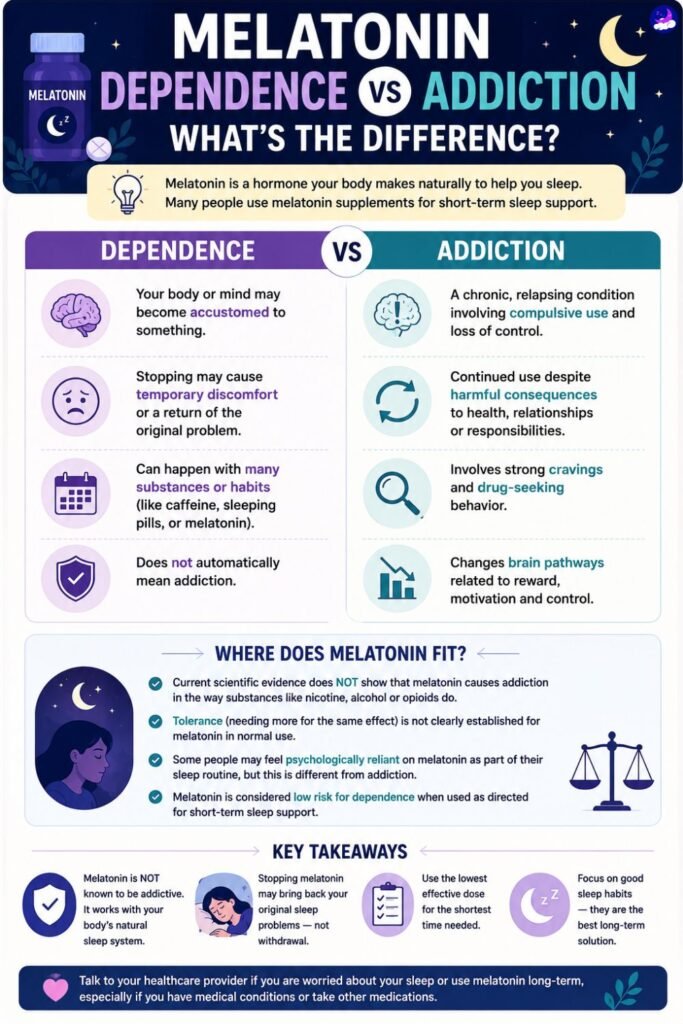
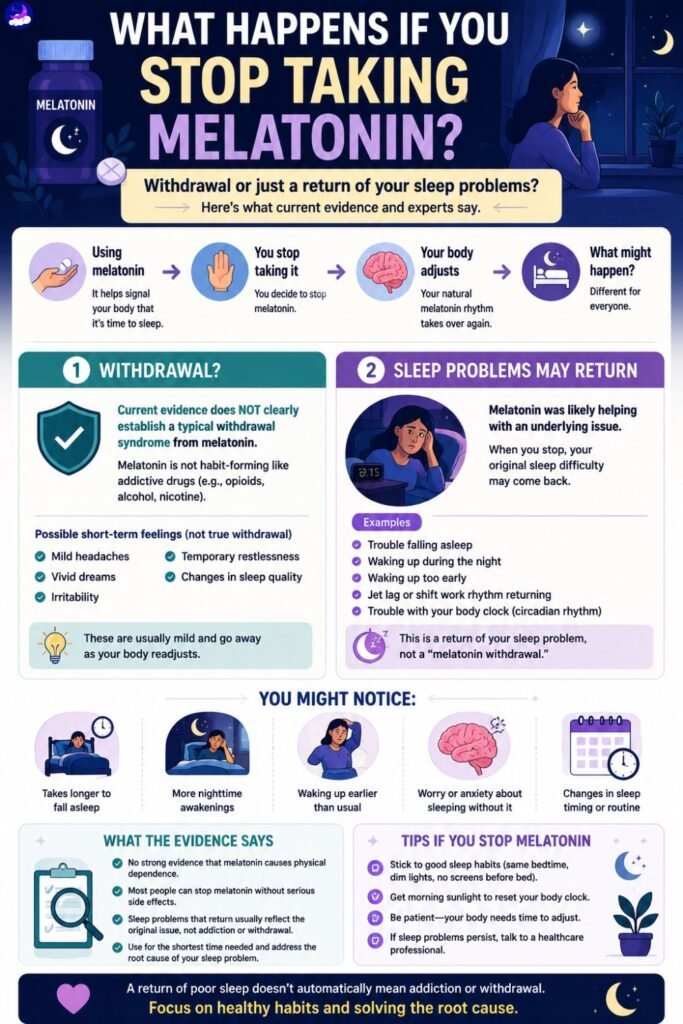
Also Read: When to take Melatonin | Can you take Melatonin everynight? | Melatonin Addiction
What Makes an Excessive Melatonin Dose More Concerning?
The amount taken is important, but it is not the only factor.
The situation deserves greater caution when:
- A young child is involved
- The amount is unknown
- Other medicines were taken
- Alcohol or other substances were involved
- The product contains several active ingredients
- The person has significant medical conditions
- Severe symptoms are present
- The product itself is uncertain
For example, an adult who accidentally takes an extra dose of a melatonin-only product and feels mildly sleepy is very different from a child who may have swallowed an unknown number of gummies.
Likewise, someone who has taken melatonin along with another sedating medicine may have a different risk from someone who took melatonin alone.
This is why risk cannot be judged from the melatonin number alone.
What About Melatonin With Other Medicines or Alcohol?
Melatonin can be used alongside many medicines, but combinations can sometimes increase sleepiness or impairment, depending on what else is being taken.
Alcohol and other substances that cause drowsiness may also make the person more impaired.
If someone has taken too much melatonin along with another medicine, alcohol, or supplement, mention everything that was taken when seeking medical advice.
Do not assume that melatonin is responsible for every symptom.
Also Read: Can you overdose on Melatonin | Melatonin gummies vs Tablets
How Long Do Symptoms Last?
There is no universal number of hours that applies to every melatonin ingestion.
Symptoms and their duration can vary depending on:
- Amount taken
- Formulation
- Age and individual factors
- Other medicines or substances
- Other medical conditions
Symptoms may improve as the substance is metabolized, but the timing is not predictable enough to use a fixed observation period.
If symptoms are persistent, worsening, severe, or unusual, medical assessment is appropriate.
This is particularly important when the amount taken is unknown or another substance may have been involved.
Can You Prevent Accidental Melatonin Overuse?
A few simple habits can reduce the chance of accidental overuse.
Read the label before taking the product.
Check the amount per tablet, gummy, serving, or dose.
Avoid taking multiple melatonin-containing products unless you know exactly what each contains.
Do not automatically take another dose because the first one has not produced sleep yet.
And if you sometimes forget whether you have already taken melatonin, consider keeping a simple bedtime medication or supplement record.
For families, storage matters.
Keep melatonin out of children’s reach and sight, especially gummies and flavored products.
Treat supplements with the same care you would give other medicines in the home.
Also Read: Melatonin For Jetlag | Melatonin For Shift workers
Frequently Asked Questions
Can you overdose on melatonin?
Yes. Taking more melatonin than intended can cause unwanted effects, but there is no single universal dose that defines an overdose for every person.
What are the symptoms of taking too much melatonin?
Commonly reported effects include excessive sleepiness, dizziness, headache, nausea, and reduced alertness. Severe or unusual symptoms need medical assessment.
What should I do if I accidentally took too much melatonin?
Do not take more. Keep the product packaging, note approximately how much and when it was taken, check for other substances, and seek individualized advice if the amount is uncertain, symptoms are present, or a child is involved.
Can a child overdose on melatonin gummies?
Children can accidentally consume multiple gummies or tablets. Most reported exposures do not result in severe outcomes, but the increasing number of pediatric ingestions makes safe storage important. Contact a poison-information service or healthcare professional after a potentially excessive ingestion.
Can too much melatonin make you sick?
Yes. Taking more than intended can cause sleepiness, dizziness, headache, nausea, and other unwanted effects.
Can melatonin overdose cause serious problems?
Serious toxicity from melatonin alone appears uncommon, but severe symptoms, unknown amounts, children, combination products, and co-ingestion of other substances require greater caution.
Can you die from taking too much melatonin?
Severe outcomes from melatonin alone appear uncommon, but it would be unsafe to assume that every excessive ingestion is harmless. Other substances and individual circumstances can change the risk.
Should I go to the emergency room after taking too much melatonin?
Not every accidental extra dose requires an emergency department visit. The decision depends on the person, amount, product, other substances, and symptoms. Difficulty breathing, seizure, collapse, loss of consciousness, inability to wake normally, or severe worsening symptoms require urgent medical attention.
Also Read: Melatonin and Weird Dreams | Melatonin Myths and Facts | Benefits of Melatonin beyond sleep.
Bottom Line
Taking more melatonin than intended can cause unwanted effects, particularly excessive sleepiness, dizziness, headache, nausea, and impaired alertness.
There is no single number that defines a dangerous or toxic amount for everyone.
The situation deserves greater attention when the amount is unknown, a child is involved, another medicine or substance was taken, the product contains multiple ingredients, or severe symptoms develop.
If you are unsure what was taken, appropriate poison-information or medical advice is safer than trying to work out the risk from an internet dosage chart.
Most importantly, more melatonin is not necessarily better for sleep.
Taking another dose simply because the first one has not worked may increase unwanted effects without solving the underlying sleep problem.
If melatonin is not working as expected, it is worth stepping back and asking whether the dose, timing, product, or underlying sleep problem needs to be reconsidered.
[Also Read: Is Melatonin Addictive?]
References
- Poison Control. Melatonin.
Poison Control — Melatonin Information - Besag FMC, Vasey MJ, Lao KSJ, Wong ICK. Adverse Events Associated With Melatonin for the Treatment of Primary or Secondary Sleep Disorders: A Systematic Review. CNS Drugs. 2019;33:1167–1186.
PubMed — Melatonin Adverse Events Systematic Review - Cohen PA, Avula B, Wang YH, et al. Quantity of Melatonin and CBD in Melatonin Gummies Sold in the US. JAMA. 2023;329(16):1401–1402.
JAMA — Melatonin Gummy Labeling Study - Erland LAE, Saxena PK. Melatonin Natural Health Products and Supplements: Presence of Serotonin and Significant Variability of Melatonin Content. Journal of Clinical Sleep Medicine. 2017;13(2):275–281.
PubMed — Melatonin Supplement Variability Study - Kracht CL, et al. Melatonin Use in Young Children: A Systematic Review. JAMA Network Open. 2026;9.
JAMA Network Open — Melatonin Use in Young Children Systematic Review - CDC. Emergency Department Visits for Unsupervised Pediatric Melatonin Ingestion — United States, 2019–2022. MMWR. 2024.
CDC — Pediatric Melatonin Ingestion Data - CDC. Pediatric Melatonin Ingestions — United States, 2012–2021. MMWR. 2022;71:725–729.
CDC — Pediatric Melatonin Ingestions - National Poisons Information Centre, All India Institute of Medical Sciences (AIIMS), New Delhi.
AIIMS — National Poisons Information Centre