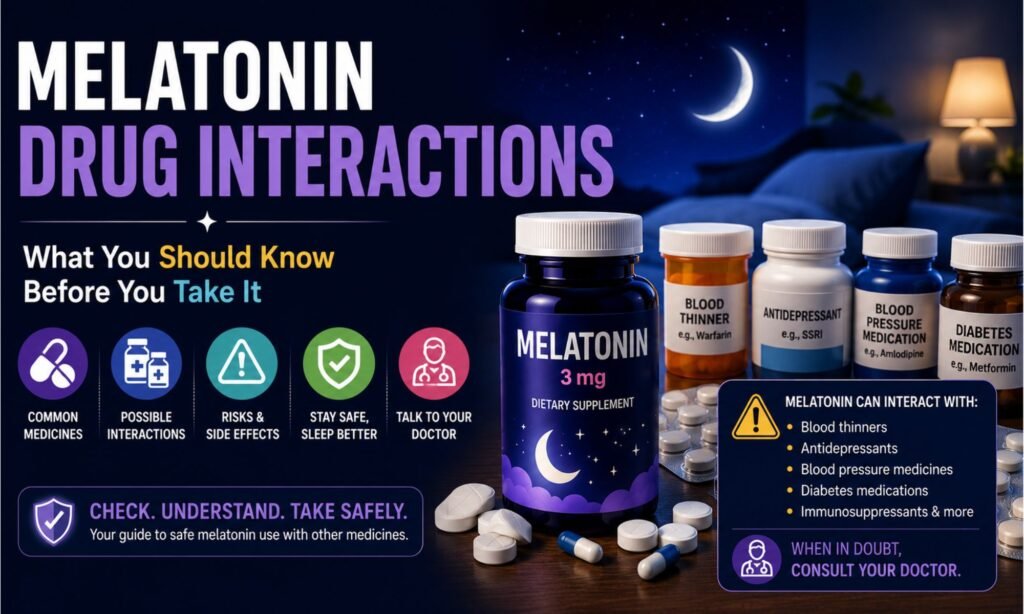
Yes. Melatonin can interact with certain medicines, supplements, alcohol, and caffeine. While most interactions are mild, some may increase side effects or affect how your medicines work. If you take prescription medications or have a long-term health condition, seek medical advice before using melatonin.
Quick Facts
| Question | Answer |
| Can melatonin interact with medicines? | Yes |
| Most common interaction | Increased drowsiness |
| Most serious concern | Blood thinners and immunosuppressants |
| Alcohol? | Avoid |
| Caffeine? | May reduce effectiveness |
| Should I ask my doctor? | Yes, if taking prescription medicines |
Table of Contents
Melatonin Drug Interactions: Can Melatonin Interact With Other Medicines?
Melatonin is widely used to improve sleep and is generally considered safe for many healthy adults when taken for short periods. However, being available without a prescription does not mean it is free from drug interactions.
Like many supplements, melatonin can change the way certain medicines or other supplements work. In some cases, it may increase side effects such as excessive sleepiness or dizziness. In others, it may reduce or increase the effects of prescription medicines, making treatment less predictable.
The good news is that most people do not experience serious problems. The key is knowing which combinations deserve extra caution and when medical advice is needed.
Also Read: Our Melatonin Guide | Circadian Rhythm and Melatonin | Your Body's Natural Melatonin Production
What Is a Drug Interaction?
A drug interaction happens when one medicine, supplement, food, or drink changes the effect of another. This change can make a treatment:
- Work better than expected
- Work less effectively
- Increase the chance of side effects
- Raise the risk of serious health problems
Drug interactions are not limited to prescription medicines. Vitamins, herbal products, dietary supplements, and even common foods can sometimes affect how medicines work inside the body.
Melatonin is no exception. Although it is a naturally occurring hormone, taking it as a supplement can influence several body systems, which is why it may interact with certain medications.
Practical Tip:
Always tell your doctor or pharmacist about every prescription medicine, over-the-counter medication, vitamin, herbal product, and sleep supplement you take. A complete medication list helps identify potential interactions before they become a problem.
Why Can Melatonin Interact With Medicines?
Melatonin works on sleep and wake signals, but its effects are not limited to the brain. It can also influence blood vessels, hormones, blood sugar regulation, and the immune system. Because many medicines act on these same systems, combining them with melatonin might sometimes change their effects.
Most interactions happen through one or more of the following mechanisms.
Increased Drowsiness
This is the most common interaction.
Melatonin naturally promotes sleep. When it is taken with medicines that also cause drowsiness, the combined effect may be stronger than expected.
Possible symptoms include:
- Excessive daytime sleepiness
- Slower reaction time
- Poor concentration
- Dizziness
- Increased risk of falls, especially in older adults
This is why extra caution is advised when melatonin is combined with sleeping pills, anti-anxiety medicines, certain antidepressants, or other sedating drugs.
Changes in Blood Pressure
Research suggests that melatonin may slightly affect blood pressure in some people. While this effect is usually small, it may become more important in people already taking medicines to lower blood pressure.
In some cases, the combination could increase the risk of:
- Light-headedness
- Dizziness when standing
- Low blood pressure
- Fainting, particularly in older adults
The effect varies from person to person, so regular blood pressure monitoring may be recommended after starting melatonin.
Changes in Blood Sugar
Some studies suggest that melatonin may influence how the body regulates blood sugar. The evidence is still evolving, and results have not always been consistent.
For people with diabetes, this means melatonin could sometimes affect blood glucose control, especially when combined with diabetes medications.
If you have diabetes, it is a good idea to monitor your blood sugar more closely after starting melatonin and discuss any unusual readings with your healthcare provider.
Increased Risk of Bleeding
Melatonin has mild effects on how blood platelets function. Although the evidence is limited, experts recommend caution when melatonin is combined with medicines that reduce blood clotting.
The concern is not that melatonin alone causes bleeding, but that it may add to the effects of blood-thinning medications in some people.
Anyone taking prescription blood thinners should consult their healthcare provider before using melatonin.
Hormonal and Immune Effects
Melatonin is a hormone, so it can influence other hormone-related processes in the body. It also has effects on the immune system, although these are still being studied.
These actions may become important for people who:
- Use hormonal medicines, such as birth control pills
- Take medicines that suppress the immune system after an organ transplant
- Have certain autoimmune conditions
For these individuals, medical guidance is recommended before starting melatonin.
Clinical Pearl: Most melatonin interactions are predictable rather than dangerous.
The highest risk is usually not from melatonin itself, but from combining it with medicines that affect the same body systems—such as drugs that cause drowsiness, lower blood pressure, thin the blood, or suppress the immune system. Reviewing your medication list with a healthcare professional before starting melatonin is one of the simplest ways to reduce these risks.
These are some specific groups of medicines that may interact with melatonin, what the evidence shows, and the practical steps you can take to use melatonin more safely.
Medicines That May Interact With Melatonin
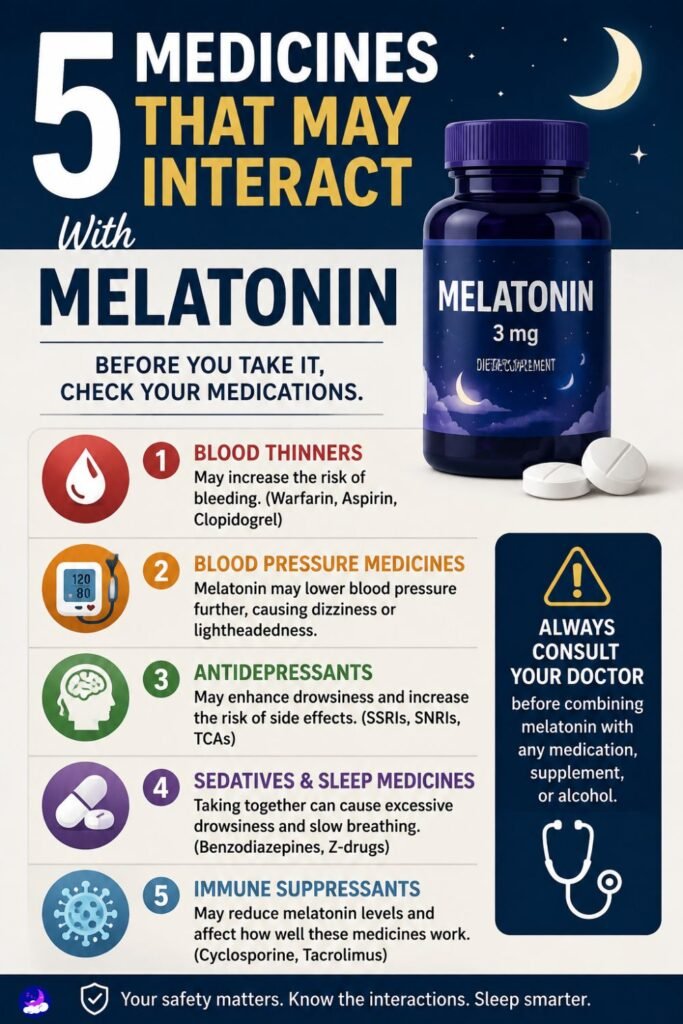
Most people can take melatonin without serious problems. However, some medicines may interact with it. In many cases, the interaction is mild and simply means you should use melatonin with extra caution. In other situations, combining melatonin with certain medicines may increase the risk of side effects or make one of the treatments less effective.
The sections below explain the medicine groups that deserve the most attention. If you take any of these medications, do not stop them on your own. Instead, ask your healthcare provider whether melatonin is appropriate for you.
| Medicine Category | Possible Interaction with Melatonin | What You Should Do |
| Blood thinners | May increase bleeding risk | Ask your doctor before using melatonin. |
| Blood pressure medicines | May lower blood pressure further | Monitor your blood pressure and watch for dizziness. |
| Diabetes medicines | May affect blood sugar control | Check blood glucose regularly when starting melatonin. |
| Antidepressants | May increase drowsiness or affect melatonin levels | Use only under medical guidance. |
| Anti-anxiety medicines | May cause excessive sleepiness | Avoid activities requiring alertness until you know how you respond. |
| Sleeping pills and sedatives | May greatly increase sedation | Combining them should only be done under medical supervision. |
| Anti-seizure medicines | May affect seizure control in some people | Consult your neurologist before taking melatonin. |
| Birth control pills | May increase melatonin levels | A lower melatonin dose may be enough for some people. |
| Immunosuppressants | May interfere with immune-suppressing treatment | Avoid melatonin unless approved by your specialist. |
Melatonin and Blood Thinners
Blood thinners are medicines that reduce the blood’s ability to form clots. They are commonly prescribed to help prevent strokes, heart attacks, deep vein thrombosis (DVT), and pulmonary embolism.
Some research suggests that melatonin slightly affects platelet function. While the evidence is not strong enough to prove that melatonin alone causes bleeding, experts recommend caution when it is taken together with blood-thinning medicines.
Possible concerns include:
- A higher risk of bruising
- Nosebleeds
- Bleeding gums
- Longer bleeding after an injury or surgery
The risk is generally greater in people who:
- Take more than one blood thinner
- Are older adults
- Already have a bleeding disorder
- Use high doses of melatonin
You should never stop a prescribed blood thinner because you want to take melatonin. Instead, ask your healthcare provider whether melatonin is appropriate and whether any additional monitoring is needed.
Warning: If you notice unusual bruising, black stools, blood in the urine, vomiting blood, or bleeding that does not stop, seek medical care immediately.
Melatonin and Blood Pressure Medicines
Melatonin has a small effect on blood pressure, although research findings have not always been consistent. Some studies suggest it can lower nighttime blood pressure, while others show little or no change.
If you already take medicine to lower your blood pressure, combining it with melatonin could increase the chance of:
- Feeling dizzy when standing up
- Light-headedness
- Low blood pressure
- Fainting, especially in older adults
Not everyone experiences these effects, but they are more likely when:
- Starting melatonin for the first time
- Increasing the dose
- Taking several blood pressure medicines
Practical Tip
If you take blood pressure medication and decide to use melatonin after speaking with your healthcare provider:
- Check your blood pressure for the first few days.
- Stand up slowly from sitting or lying down.
- Contact your healthcare provider if you develop persistent dizziness or fainting.
People with well-controlled blood pressure should not stop either medicine without medical advice.
Melatonin and Diabetes Medicines
People with diabetes often wonder whether melatonin is safe to take. The answer depends on individual circumstances.
Research suggests that melatonin might influence insulin release and the body’s ability to regulate blood sugar. However, studies have produced mixed results, and experts are still trying to understand exactly how important these effects are.
For someone taking diabetes medication, this means melatonin could make blood sugar levels slightly harder to predict.
Possible effects include:
- Higher blood sugar in some people
- Changes in fasting glucose
- Differences in blood sugar from one night to another
This does not mean everyone with diabetes should avoid melatonin. It simply means that closer monitoring is a good idea, especially during the first few weeks.
A few practical steps can help:
- Check your blood glucose more often after starting melatonin.
- Continue taking your diabetes medicines as prescribed.
- Report repeated high or low readings to your healthcare provider.
- Avoid increasing your melatonin dose without medical advice.
If you have diabetes, you may also find our [Who Should Not Take Melatonin] guide helpful, as it explains when extra medical supervision is recommended.
Melatonin and Antidepressants
People taking antidepressants should be cautious before adding melatonin. While the combination is not always unsafe, the effects can vary depending on the type of antidepressant and the individual.
Some antidepressants may increase the body’s natural melatonin levels or affect how melatonin is broken down. Others can also cause drowsiness, so taking them with melatonin will make you feel sleepier than expected.
Possible effects include:
- Increased daytime drowsiness
- Dizziness or poor concentration
- Reduced alertness the next morning
- Changes in sleep quality
Not all antidepressants interact with melatonin in the same way. Some people take both without problems, while others may need a lower melatonin dose or closer monitoring.
If you take an antidepressant, avoid starting melatonin on your own. Your healthcare provider can help decide whether it is appropriate and recommend the safest dose and timing.
Practical Tip: If your doctor recommends melatonin, start with the lowest effective dose. Taking more does not necessarily improve sleep and may increase side effects.
Melatonin and Anti-Anxiety Medicines
Medicines used to treat anxiety often work by calming the brain and nervous system. Melatonin also promotes sleep, so taking the two together may increase their sedative effects.
The combination may lead to:
- Excessive sleepiness
- Slower reaction times
- Poor coordination
- Difficulty concentrating
- A higher risk of falls, especially in older adults
These effects are more likely when melatonin is taken with medicines that already cause significant drowsiness.
Extra caution is needed if you:
- Drive or operate machinery
- Work night shifts
- Are older than 65 years
- Take more than one medicine that causes sleepiness
If you feel unusually sleepy or have trouble staying awake during the day after starting melatonin, speak with your healthcare provider.
Melatonin and Sleeping Pills or Sedatives
This is one of the most important interactions to know about.
Prescription sleeping pills, sedatives, and similar medicines are designed to help you sleep or reduce anxiety. Adding melatonin will further increase their sleep-promoting effects.
Possible problems include:
- Excessive sedation
- Morning grogginess
- Confusion
- Poor balance
- Slower breathing in susceptible individuals
- Increased risk of falls and accidents
Because of these risks, melatonin should not be added to prescription sleep medicines unless your healthcare provider recommends it.
If you are already taking medication for insomnia, ask your doctor before using melatonin. They may adjust your treatment rather than adding another sleep aid.
Clinical Pearl: More sleep medicines do not always mean better sleep. Combining products that make you sleepy can increase side effects without improving sleep quality.
Melatonin and Anti-Seizure Medicines
The relationship between melatonin and epilepsy is complex.
Some studies suggest melatonin may improve sleep in people with epilepsy, while others have raised concerns that it could affect seizure control in certain individuals. Overall, the evidence remains mixed, and researchers have not reached a clear conclusion.
Because of this uncertainty, people with epilepsy should not start melatonin without first speaking to the healthcare professional managing their condition.
Special care is important if you:
- Have poorly controlled seizures
- Recently changed your anti-seizure medication
- Take more than one anti-seizure medicine
Good sleep is important for seizure control, but the safest approach is to choose a sleep treatment under medical supervision.
Melatonin and Birth Control Pills
Hormonal birth control pills can increase the amount of melatonin in the body by slowing its breakdown.
As a result, some people may notice stronger effects from the same melatonin dose, including:
- Feeling sleepier than expected
- Morning drowsiness
- Vivid dreams
- Headache
This does not mean you must avoid melatonin if you use birth control. However, a lower dose may be enough to achieve the desired effect.
If you experience excessive sleepiness after combining the two, discuss it with your healthcare provider before increasing or continuing your melatonin dose.
Birth control pills can slow the breakdown of melatonin in the liver, allowing melatonin levels to stay higher for longer.
Also Read: Melatonin For Jetlag | Melatonin For Shift workers
Melatonin and Immunosuppressants
Immunosuppressants are medicines that reduce the activity of the immune system. They are commonly prescribed after organ transplantation and for some autoimmune diseases.
Melatonin has been shown to influence immune function, although scientists are still studying exactly how these effects work in people.
Because immunosuppressant medicines are carefully balanced to prevent organ rejection or control immune-related diseases, there is a theoretical concern that melatonin could interfere with their intended effects.
For this reason, most experts recommend avoiding melatonin unless your transplant specialist or treating physician specifically approves it.
This advice is especially important for people who:
- Have received an organ transplant
- Take long-term immunosuppressive medicines
- Have complex autoimmune conditions requiring specialist care
If you fall into any of these groups, never start melatonin without discussing it with your healthcare team.
Checklist: Before Taking Melatonin with Prescription Medicines
✔ Tell your healthcare provider about all prescription and over-the-counter medicines you take.
✔ Mention any vitamins, herbal supplements, or CBD products you use.
✔ Start with the lowest effective melatonin dose if your healthcare provider approves it.
✔ Watch for new symptoms such as excessive drowsiness, dizziness, unusual bleeding, or changes in blood sugar.
✔ Never stop or change a prescribed medicine without medical advice.
Also Read: Our Melatonin Dosage Guide | Melatonin Side Effects
Can Melatonin Interact With Over-the-Counter Medicines?
Yes, some over-the-counter (OTC) medicines can interact with melatonin, especially those that cause drowsiness. Common examples include antihistamines used for allergies, some cold and flu medicines, certain cough syrups, and motion sickness medicines. When taken together, these products may increase sleepiness, dizziness, poor coordination, and slower reaction times.
Always read the medicine label carefully, as many combination cold and flu products contain ingredients that can make you sleepy. If you are unsure whether an OTC medicine is safe to use with melatonin, ask your pharmacist before taking both. This simple step can help prevent unnecessary side effects and reduce the risk of accidents, particularly in older adults.
Practical Tip: If an over-the-counter medicine already makes you sleepy, avoid taking melatonin at the same time unless your healthcare provider recommends it.
Supplements and Herbs That May Interact with Melatonin
Many people assume that herbal products and dietary supplements are completely safe because they are “natural.” However, natural products can still affect the body in powerful ways and may interact with medicines or other supplements.
In many cases, melatonin does not directly react with these products. Instead, they may have similar effects, such as causing drowsiness or affecting the nervous system. When taken together, these effects can become stronger.
If you regularly use herbal remedies or dietary supplements, tell your healthcare provider before starting melatonin.
| Supplement or Herb | Possible Interaction | What to Know |
| Valerian | Increased drowsiness | May make you feel overly sleepy. |
| Chamomile | Increased sedation | May increase sleepiness, especially with other sleep aids. |
| Ashwagandha | May enhance calming effects | Monitor for excessive drowsiness. |
| Magnesium | Usually safe, but may add to relaxation | Use recommended doses unless advised otherwise. |
| CBD | May increase drowsiness and dizziness | Avoid driving or operating machinery after combining them. |
| Kava | Increased sedation and possible liver concerns | Avoid combining unless advised by a healthcare professional. |
Melatonin and Valerian
Valerian is a popular herbal supplement used to promote relaxation and improve sleep. Since both valerian and melatonin may help people fall asleep, taking them together can increase their calming effects.
Possible side effects include:
- Excessive sleepiness
- Morning grogginess
- Slower reaction times
- Difficulty concentrating
Some people tolerate the combination well, while others feel unusually tired the next day. Starting with multiple sleep aids at the same time is generally not recommended.
Melatonin and Chamomile
Chamomile is commonly consumed as a tea, but it is also available as capsules and extracts.
A cup of chamomile tea in the evening is unlikely to cause problems for most healthy adults. However, concentrated chamomile supplements may have a stronger calming effect.
When combined with melatonin, some people may notice:
- Increased drowsiness
- Reduced alertness
- Morning sleepiness
If you are using chamomile supplements rather than tea, speak with your healthcare provider before adding melatonin.
Melatonin and Ashwagandha
Ashwagandha is an herbal supplement often marketed for stress, anxiety, and sleep support.
Although research on its interaction with melatonin is limited, both products may promote relaxation. Taking them together could increase sleepiness in some people.
If your healthcare provider recommends using both:
- Start with low doses.
- Avoid alcohol.
- Do not drive until you know how the combination affects you.
Because long-term safety data are still limited, avoid taking multiple sleep supplements without medical guidance.
Melatonin and Magnesium
Magnesium is one of the most commonly used supplements for sleep. Unlike many herbal products, magnesium and melatonin do not appear to have a significant direct interaction.
Many people take both together without problems.
However, both may promote relaxation, so some people experience:
- Increased sleepiness
- Morning grogginess, especially with higher doses
Using recommended doses and avoiding unnecessary combinations of several sleep supplements can help reduce unwanted side effects.
Melatonin and CBD
CBD (cannabidiol) products have become increasingly popular for sleep and anxiety, but research on combining CBD with melatonin is still limited.
Both may cause:
- Drowsiness
- Dizziness
- Reduced alertness
When taken together, these effects may become stronger.
CBD products also vary widely in quality and strength. Some contain ingredients that are not listed on the label, making their effects less predictable.
Until more research is available, it is safest to use this combination only after discussing it with a healthcare professional.
Melatonin and Kava
Kava is sometimes used to reduce anxiety and promote relaxation. It can cause drowsiness on its own and has also been linked to rare but serious liver problems.
Combining kava with melatonin may increase:
- Excessive sleepiness
- Poor coordination
- Slower reaction times
Because of these concerns, many experts recommend avoiding this combination unless it has been specifically approved by your healthcare provider.
Practical Tip: If you already take one product to help you sleep, avoid adding another without checking whether the combination is necessary. Using several sleep aids together rarely improves sleep and may increase side effects.
Also Read: When to take Melatonin | Can you take Melatonin everynight? | Melatonin Addiction
Alcohol, Caffeine, and Melatonin
Foods and drinks can also affect how well melatonin works. Although they are not “drug interactions” in the traditional sense, alcohol and caffeine can change your response to melatonin and influence your sleep.
Melatonin and Alcohol
Drinking alcohol while taking melatonin is generally not recommended.
Alcohol can make you feel sleepy at first, but it often disrupts sleep later in the night. It may also increase some of melatonin’s side effects.
Possible problems include:
- Excessive drowsiness
- Poor coordination
- Increased dizziness
- Reduced alertness
- A higher risk of falls and accidents
Alcohol can also make sleep less restful by increasing nighttime awakenings. As a result, taking melatonin after drinking may not improve sleep as much as you expect.
If you plan to drink alcohol, it is usually best to avoid taking melatonin that night.
Melatonin and Caffeine
Unlike alcohol, caffeine does not usually create a dangerous interaction with melatonin. Instead, it can work against melatonin’s sleep-promoting effects.
Caffeine stimulates the brain and can delay sleep, while melatonin signals that it is time to sleep. Using them close together may reduce the benefit of melatonin.
For the best results:
- Avoid coffee, tea, energy drinks, or cola for several hours before bedtime.
- Follow good sleep habits instead of relying on higher melatonin doses.
- Take melatonin at the time recommended by your healthcare provider.
If melatonin does not seem to work, late-day caffeine may be part of the reason.
Clinical Pearl: Melatonin works best when it supports your body’s natural sleep rhythm.
Evening caffeine and alcohol can interfere with that rhythm, reducing the supplement’s benefits even if they do not cause a serious drug interaction.
Now, let us look who is at the greatest risk of melatonin interactions, how to reduce those risks, and when you should seek medical advice.
Also Read: Melatonin and Weird Dreams | Melatonin Myths and Facts | Benefits of Melatonin beyond sleep.
Who Should Be Extra Careful?
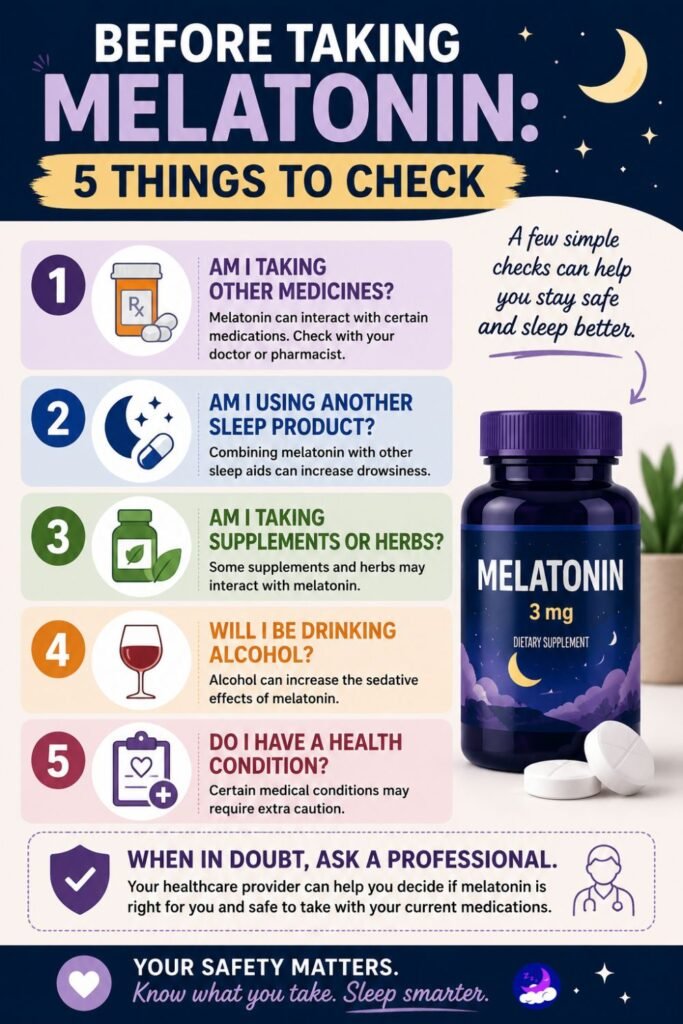
Although melatonin is generally well tolerated, some people have a higher chance of experiencing drug interactions or side effects. If you fall into one of the groups below, speak with your healthcare provider before using melatonin.
Older Adults
As we age, the body processes medicines more slowly, and many older adults take several prescription medications each day. This increases the chance of drug interactions.
Older adults may also be more sensitive to melatonin’s effects, making them more likely to experience:
- Daytime drowsiness
- Dizziness
- Confusion
- Poor balance
- Falls
If melatonin is recommended, starting with the lowest effective dose is usually the safest approach.
People Taking Multiple Medicines
The more medicines and supplements you take, the greater the chance of an interaction.
This is especially true if your treatment includes medicines that:
- Cause drowsiness
- Lower blood pressure
- Affect blood sugar
- Thin the blood
- Suppress the immune system
Always let your healthcare provider know about every prescription medicine, over-the-counter product, vitamin, and herbal supplement you use. This helps them identify possible interactions before they become a problem.
People with Chronic Medical Conditions
Long-term health conditions often require ongoing medication, which may increase the risk of interactions.
Extra caution is advised if you have conditions such as:
- Diabetes
- High blood pressure
- Heart disease
- Epilepsy
- Autoimmune diseases
- Bleeding disorders
Melatonin may still be appropriate for some people, but the decision should be based on your medical history and current treatment plan.
Pregnancy and Breastfeeding
There is still limited evidence on the long-term safety of melatonin during pregnancy and breastfeeding.
Because researchers do not yet have enough high-quality data, most medical organizations recommend avoiding melatonin during pregnancy or while breastfeeding unless it has been specifically recommended by a healthcare professional.
If you are pregnant, planning a pregnancy, or breastfeeding, discuss sleep problems with your doctor before using melatonin.
People with Liver Disease
The liver plays an important role in breaking down melatonin.
People with moderate or severe liver disease may clear melatonin more slowly, which can increase its effects and raise the risk of side effects such as prolonged drowsiness.
If you have liver disease, do not start melatonin without medical advice. Your healthcare provider can decide whether it is suitable and whether a lower dose is needed.
Checklist: Are You at Higher Risk?
You should speak with your healthcare provider before taking melatonin if you:
✔ Take prescription medicines every day.
✔ Use more than one sleep supplement.
✔ Have diabetes, high blood pressure, epilepsy, or another long-term medical condition.
✔ Are pregnant or breastfeeding.
✔ Have liver disease or have received an organ transplant.
✔ Are over 65 years of age and take several medications.
Also Read: Melatonin for Older Adults | Melatonin for Pregnant Women | Melatonin for Kids.
How to Reduce the Risk of Drug Interactions
Most melatonin interactions can be avoided with a few simple precautions. The goal is not to avoid melatonin altogether, but to use it safely.
Here are some practical steps you can take.
Keep an Up-to-Date Medication List
Write down everything you take, including:
- Prescription medicines
- Over-the-counter medicines
- Vitamins
- Herbal supplements
- CBD products
- Sleep aids
Bring this list to every healthcare appointment so your doctor or pharmacist can check for possible interactions.
Talk to a Healthcare Professional Before Starting Melatonin
This is especially important if you:
- Take prescription medicines
- Have a chronic medical condition
- Recently started a new medication
- Are considering taking melatonin every night
Your healthcare provider can tell you whether melatonin is appropriate and whether your current treatment needs any adjustments.
Start with the Lowest Effective Dose
Taking more melatonin does not always improve sleep.
Higher doses may increase the risk of:
- Morning grogginess
- Dizziness
- Headaches
- Drug interactions
Also Read: Can you overdose on Melatonin | Melatonin gummies vs Tablets
Avoid Combining Multiple Sleep Aids
Using several sleep products at the same time is a common mistake.
For example, some people combine melatonin with:
- Herbal sleep supplements
- Prescription sleeping pills
- CBD products
- Alcohol
These combinations may increase drowsiness without improving sleep quality.
Monitor for New Symptoms
After starting melatonin, pay attention to how you feel over the next few days.
Watch for symptoms such as:
- Excessive daytime sleepiness
- Persistent dizziness
- Light-headedness
- Unusual bruising or bleeding
- Unexpected changes in blood sugar
- New or worsening side effects after starting another medicine
If these symptoms develop, stop taking melatonin and contact your healthcare provider for advice.
Practical Tip: Before buying melatonin, ask your pharmacist to review your medication list. Pharmacists are trained to identify potential drug interactions and can often spot problems that are easy to miss.
When Should You Contact a Doctor?
Most people who take melatonin do not experience serious drug interactions. However, some symptoms should never be ignored, especially if you recently started melatonin or combined it with another medicine.
⚠️ Warning Signs: Seek Medical Advice Promptly
Contact your healthcare provider as soon as possible if you experience:
- Extreme or persistent drowsiness
- Fainting or repeated episodes of severe dizziness
- Unusual bruising or prolonged bleeding
- Black or bloody stools
- Blood in the urine
- Severe confusion or difficulty staying awake
- Repeated episodes of very high or very low blood sugar
- Any new symptom that starts soon after combining melatonin with another medicine or supplement
Seek emergency medical care immediately if you develop trouble breathing, swelling of the face or throat, chest pain, or signs of severe bleeding.
Remember that these reactions are uncommon. Most people who use melatonin responsibly and under appropriate medical guidance do not experience serious interactions.
If you are unsure whether melatonin is right for you, our [Who Should Not Take Melatonin], [Melatonin Side Effects], and [Can You Take Melatonin Every Night?] guides provide additional information to help you make an informed decision.
Frequently Asked Questions
Can I take melatonin with my prescription medicines?
It depends on the medicine. Melatonin may interact with certain medications, including blood thinners, blood pressure medicines, diabetes medicines, antidepressants, sedatives, and immunosuppressants. If you take any prescription medication, check with your healthcare provider or pharmacist before starting melatonin.
Is it safe to take melatonin with vitamins?
In most cases, common vitamins such as vitamin D, vitamin C, and B-complex vitamins do not have known significant interactions with melatonin. However, if you take several supplements together, it is still a good idea to review them with a healthcare professional.
Can I take melatonin and magnesium together?
Many people take melatonin and magnesium together without problems, and there is no strong evidence of a harmful interaction. However, both may promote relaxation, so some people experience increased sleepiness or morning grogginess. Using recommended doses can help reduce this risk.
Does melatonin interact with over-the-counter cold or allergy medicines?
Some cold and allergy medicines contain antihistamines or other ingredients that can cause drowsiness. Taking them with melatonin may increase sleepiness and reduce alertness. Always read the medicine label or ask a pharmacist if you are unsure.
Should I stop taking my regular medicine if I want to use melatonin?
No. Never stop or change a prescribed medicine without talking to your healthcare provider. If melatonin is appropriate for you, your healthcare provider can advise you on the safest way to use it alongside your current treatment.
Can I drink coffee after taking melatonin?
Caffeine does not usually cause a dangerous interaction with melatonin, but it can reduce melatonin’s sleep-promoting effects. For the best results, avoid coffee, tea, energy drinks, and other caffeinated beverages for several hours before bedtime.
Is alcohol more harmful than caffeine when taking melatonin?
Generally, yes. Alcohol can increase drowsiness, dizziness, and poor coordination while also disrupting normal sleep. Caffeine mainly works by reducing melatonin’s effectiveness rather than increasing its side effects.
Can my pharmacist check whether melatonin will interact with my medicines?
Yes. Pharmacists are trained to identify drug interactions and can review both prescription and over-the-counter medicines, as well as supplements. If you are unsure whether melatonin is safe with your current medications, a pharmacist is an excellent resource.
Also Read: Foods Rich in Melatonin | Blue Light and Melatonin
Bottom Line for Melatonin Drug Interactions:
Melatonin is generally well tolerated and has a good safety profile for many healthy adults. However, it is not free from drug interactions. Certain prescription medicines, herbal supplements, and alcohol can increase side effects or change how melatonin or your medications work.
Most interactions can be avoided by reviewing your medicines with your doctor or pharmacist before starting melatonin.
The risk is often higher for older adults, people taking multiple medications, and those with chronic health conditions such as diabetes, high blood pressure, epilepsy, or autoimmune diseases.
Before starting melatonin:
- Review your current medicines and supplements.
- Use the lowest effective dose if melatonin is appropriate.
- Avoid combining multiple sleep aids unless advised by a healthcare professional.
- Watch for new symptoms after starting melatonin.
- Speak with your doctor or pharmacist if you have any concerns about possible interactions.
If you take prescription medicines, use several supplements, or have a long-term medical condition, discussing melatonin with your healthcare provider is the safest way to reduce the risk of interactions while getting the sleep support you need.
References
Note: The references below are from high-quality sources, including clinical guidelines, government health agencies, and peer-reviewed research.
- American Academy of Sleep Medicine. Health Advisory: Melatonin Use in Adults and Children.
https://aasm.org/advocacy/position-statements/melatonin-use-in-children-and-adolescents-health-advisory/ - National Center for Complementary and Integrative Health (NCCIH). Melatonin: What You Need To Know.
https://www.nccih.nih.gov/health/melatonin-what-you-need-to-know - National Institutes of Health, Office of Dietary Supplements. Melatonin Fact Sheet for Health Professionals.
https://ods.od.nih.gov/factsheets/Melatonin-HealthProfessional/ - Mayo Clinic. Melatonin.
https://www.mayoclinic.org/drugs-supplements-melatonin/art-20363071 - NHS. Melatonin.
https://www.nhs.uk/medicines/melatonin/ - Cleveland Clinic. Melatonin: Uses, Side Effects & Dosage.
https://my.clevelandclinic.org/health/drugs/23488-melatonin - Andersen LP, Gögenur I, Rosenberg J, Reiter RJ. The Safety of Melatonin in Humans. Clinical Drug Investigation. 2016;36(3):169-175.
https://pubmed.ncbi.nlm.nih.gov/26692007/ - Ferracioli-Oda E, Qawasmi A, Bloch MH. Meta-analysis: Melatonin for the Treatment of Primary Sleep Disorders. PLoS One. 2013.
https://pubmed.ncbi.nlm.nih.gov/23691095/ - Brzezinski A. Melatonin in Humans. New England Journal of Medicine. 1997.
https://pubmed.ncbi.nlm.nih.gov/9400037/ - NIH National Library of Medicine (PubMed). Melatonin – Drug Information.
https://pubmed.ncbi.nlm.nih.gov/