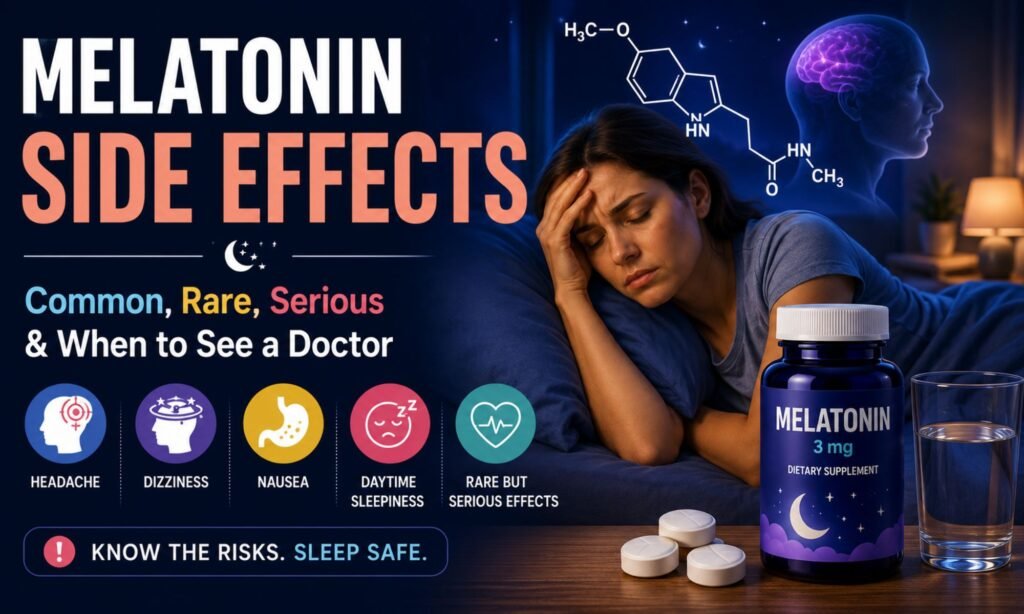
Yes. Melatonin can cause side effects, but they are usually mild and temporary. Serious side effects are rare when melatonin is used correctly.
At a Glance: Melatonin Side Effects
Most people can take melatonin without serious problems. The most common side effects are mild and often improve after lowering the dose or stopping the supplement.
Common side effects
- Morning sleepiness
- Headache
- Dizziness
- Nausea
- Vivid dreams
Less common side effects
- Dry mouth
- Mood changes
- Stomach upset
- Temporary blood pressure changes
Rare but serious side effects
- Severe allergic reaction
- Fainting
- Confusion
- Unusual bleeding (especially with blood thinners)
When to see a doctor
Seek medical care immediately if you develop:
- Difficulty breathing
- Swelling of the face or throat
- Severe confusion
- Loss of consciousness
- Chest pain
Most people tolerate melatonin well when they use the lowest effective dose, take it at the correct time, and avoid combining it with medicines that may interact with it.
The summary above gives you the short answer. The sections below explain each side effect in detail, including how common it is, how to reduce the risk, and when medical attention may be needed.
What You Should Know Before Taking Melatonin
Although melatonin is generally considered safe, no supplement is completely free from side effects. Understanding what is normal—and what is not—can help you use melatonin more safely.
The good news is that most side effects are mild and often improve after lowering the dose or stopping the supplement. Knowing what to expect can help you use melatonin more safely and recognize when it is time to seek medical advice.
This guide explains the common, less common, and serious side effects of melatonin, who is most likely to experience them, and practical steps to reduce the risk.
Also read: Melatonin Explained
Does Melatonin Cause Side Effects?
Yes, melatonin can cause side effects, but they are usually mild and temporary. Research shows that melatonin has a good safety profile when taken in appropriate doses for short-term use. Many clinical trials and systematic reviews have found that serious side effects are uncommon.
Unlike many prescription sleeping pills, melatonin does not usually cause dependence or withdrawal symptoms. It also has a lower risk of affecting breathing during sleep or causing significant memory problems. However, this does not mean it is completely free from risks.
Some people are naturally more sensitive to melatonin. Others may experience side effects because they take a dose that is higher than they need. In many cases, people start with 5 or 10 mg when a much lower dose could have been enough. Higher doses increase the amount of melatonin in the bloodstream and may make unwanted effects more likely.
The quality of the supplement can also play a role. Studies have found that the actual melatonin content in some over-the-counter products may be much higher or lower than what is listed on the label. Some products have even been found to contain other ingredients, including serotonin, which may increase the risk of side effects.
Another important point is that not every symptom that appears after taking melatonin is caused by the supplement itself. Stress, poor sleep habits, illness, alcohol, caffeine, or another medicine may be responsible. If symptoms appear repeatedly after taking melatonin and improve after stopping it, melatonin becomes a more likely cause.
Quick Tip
If you notice new symptoms after starting melatonin, keep a simple diary for a week. Record:
- The dose you took
- The time you took it
- When you went to bed
- How you slept
- Any side effects you noticed the next day
This information can help you and your healthcare provider decide whether melatonin is responsible.
Also Read: Melatonin Dosage Guide.
Knowing that melatonin can cause side effects is only the first step. The next question is which side effects are common and which ones should concern you.
Most Common Side Effects
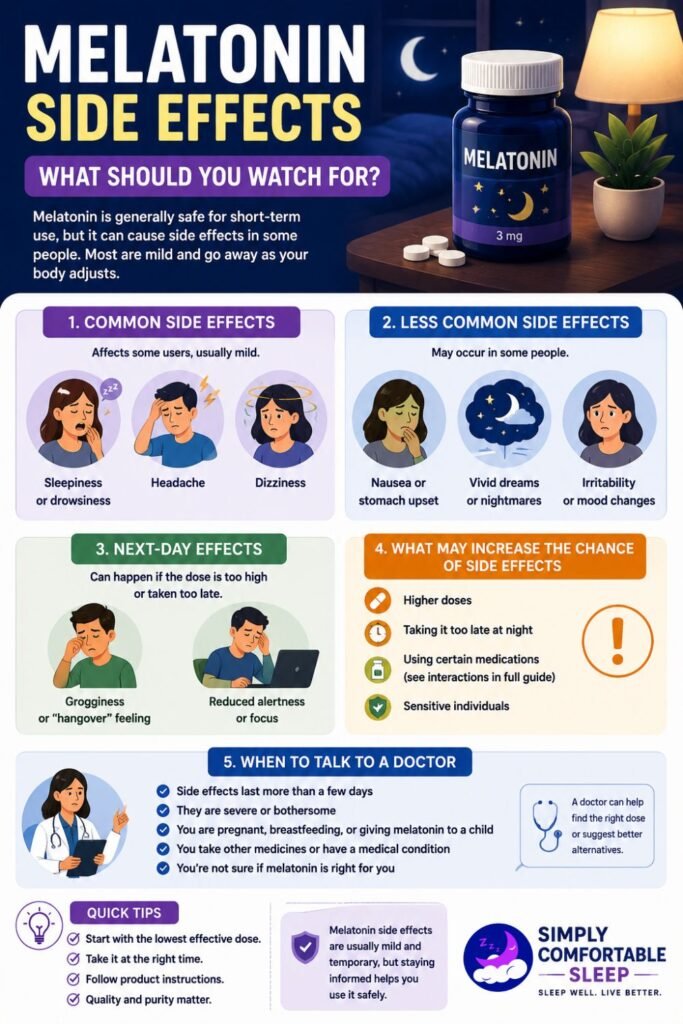
Most common melatonin side effects are mild and improve once the body adjusts or after reducing the dose. They are more likely when melatonin is taken too late at night or in larger amounts than needed.
The following side effects are reported most often in clinical studies and real-world use. Fortunately, most are mild and improve after adjusting the dose or stopping melatonin.
Daytime Sleepiness
The most frequently reported side effect is feeling sleepy or drowsy during the day. Because melatonin helps prepare the body for sleep, taking too much or taking it too late in the evening may leave you feeling tired the next morning.
This may affect concentration, reaction time, school performance, work, or driving. The risk is higher if melatonin is combined with alcohol, prescription sleeping medicines, or other drugs that cause drowsiness.
If morning sleepiness becomes a regular problem, your dose may be too high or the timing may not be suitable.
Headache
Headaches are one of the more commonly reported side effects of melatonin.The reason is not completely understood, but changes in blood vessel activity and individual sensitivity may play a role.
Most headaches are temporary and improve without treatment. However, if headaches are severe, occur every time you take melatonin, or continue after stopping it, another cause should be considered.
Dizziness
Melatonin may make some people feel lightheaded or dizzy, especially when getting up quickly from bed or a chair.
Older adults may be more affected because dizziness increases the risk of falls and injuries. If you feel dizzy after taking melatonin, stand up slowly and avoid activities that require good balance until the feeling passes.
Nausea
A small number of people experience stomach discomfort, nausea, or an upset stomach after taking melatonin.
Taking melatonin with a light snack may reduce stomach irritation for some people, although evidence is limited. Heavy meals close to bedtime should still be avoided because they may interfere with sleep.
Vivid Dreams or Nightmares
Melatonin may increase dream activity in some people. Dreams may become more vivid, detailed, or easier to remember after waking.
While many people find this harmless, others may experience disturbing dreams or nightmares that interrupt sleep.
If vivid dreams become troublesome, lowering the dose or taking melatonin slightly earlier in the evening may help.
Feeling Groggy the Next Morning
Some people describe a “hangover” feeling after taking melatonin. They may wake up feeling mentally slow, less alert, or lacking energy.
This is usually related to taking more melatonin than needed or taking it too close to bedtime.
Starting with the lowest effective dose often reduces this problem.
Quick Reference: Common Melatonin Side Effects
| Side Effect | How Common | Usually Serious? | What May Help |
| Daytime sleepiness | Common | No | Lower the dose or take it earlier |
| Morning grogginess | Common | No | Use the lowest effective dose |
| Headache | Common | Usually not | Monitor symptoms and discuss persistent headaches with a doctor |
| Dizziness | Common | Usually not | Stand slowly and avoid driving if affected |
| Nausea | Less common | Usually not | Try taking with a light snack if appropriate |
| Vivid dreams | Common in some users | No | Reduce the dose if bothersome |
Less Common Side Effects
Not everyone experiences the common side effects listed above. Some people develop less frequent symptoms that affect mood, digestion, or blood pressure. Although these are uncommon, they are still worth recognizing.
Mood Changes
A small number of people report feeling irritable, restless, anxious, or unusually emotional after taking melatonin.
Research has not shown that melatonin commonly causes mood disorders, but individual responses vary. People with depression, bipolar disorder, or other mental health conditions should speak with their healthcare provider before starting melatonin because changes in sleep can sometimes affect mood.
Mild Stomach Problems
Besides nausea, some people report:
- Stomach cramps
- Bloating
- Diarrhea
- Constipation
- Indigestion
These symptoms are uncommon and usually improve after stopping the supplement.
Dry Mouth
Dry mouth has been reported in some users, although it is not among the most common complaints.
Drinking enough water during the day and avoiding alcohol before bedtime may help reduce this symptom.
Temporary Changes in Blood Pressure
Melatonin can influence blood pressure in different ways depending on the person and any medicines they are taking.
Some studies suggest that melatonin may slightly lower blood pressure during the night, while other research has shown possible increases in blood pressure in people taking certain blood pressure medicines.
Because of these mixed findings, people with high blood pressure should discuss melatonin use with their healthcare provider, especially if they already take medication.
Mild Confusion in Older Adults
Older adults may be more sensitive to melatonin. Some may experience mild confusion, reduced alertness, or difficulty with balance, particularly if the dose is high or if they take other medicines that affect the brain.
Although these symptoms are uncommon, they increase the risk of falls and injuries.
Allergic Reactions
True allergic reactions to melatonin are rare but possible.
Symptoms may include:
- Skin rash
- Itching
- Hives
- Swelling of the lips, tongue, or face
Any swelling that affects breathing or swallowing should be treated as a medical emergency.
Warning
Stop taking melatonin immediately and seek urgent medical care if you develop swelling of the face or throat, difficulty breathing, severe dizziness, or widespread hives after taking the supplement.
Some people who experience side effects are actually reacting to other ingredients in the supplement, such as colorings, fillers, or preservatives, rather than melatonin itself.
If you regularly take prescription medicines, then you must read our article on Drug Interactions before using melatonin.
Rare But Serious Side Effects
Fortunately, these reactions are rare. However, recognizing them early can help you know when simple observation is enough and when immediate medical care is needed.
The symptoms below are uncommon, but they should not be ignored.
Severe Allergic Reaction (Anaphylaxis)
A severe allergic reaction to melatonin is very rare, but it is a medical emergency.
Watch for symptoms such as:
- Difficulty breathing
- Wheezing
- Swelling of the lips, tongue, mouth, or throat
- Severe itching or widespread hives
- Feeling faint or losing consciousness
Call your local emergency services immediately if these symptoms develop after taking melatonin.
Severe Drowsiness and Accidents
Melatonin can sometimes cause excessive sleepiness that lasts into the next day. Although this is usually mild, in some people it can affect driving, operating machinery, or making important decisions.
The risk is higher if melatonin is combined with:
- Alcohol
- Prescription sleeping pills
- Anti-anxiety medicines
- Opioid pain medicines
- Certain antihistamines
Older adults are particularly vulnerable because excessive drowsiness increases the risk of falls and fractures.
Changes in Mood or Behavior
Some people report unexpected changes in mood after taking melatonin.
Rarely reported symptoms include:
- Increased irritability
- Confusion
- Agitation
- Feeling unusually low
- Changes in behavior
Research has not clearly shown that melatonin directly causes these problems in most people. However, if significant mood changes appear soon after starting melatonin and improve after stopping it, speak with your healthcare provider before using it again.
People with depression, bipolar disorder, or other psychiatric conditions should only use melatonin under medical guidance.
Low Blood Pressure or Fainting
Melatonin may affect blood pressure in some individuals.
Although this effect is usually small, some people may experience:
- Feeling faint
- Lightheadedness
- Dizziness when standing
- Rare episodes of fainting
This is more likely in older adults or people taking medicines for high blood pressure.
Bleeding Risk in People Taking Blood Thinners
Melatonin may interact with medicines that reduce blood clotting, such as warfarin.
Some studies suggest that melatonin could increase the risk of bleeding in susceptible individuals, although the available evidence is limited and not entirely consistent.
Possible warning signs include:
- Unusual bruising
- Nosebleeds
- Bleeding gums
- Blood in urine or stool
Anyone taking blood thinners should consult their healthcare provider before using melatonin.
Possible Seizure Concerns
The relationship between melatonin and seizures remains uncertain.
Some research suggests melatonin may reduce seizures in certain neurological conditions, while other reports have described seizures occurring after melatonin use. Overall, the evidence is mixed, and no clear conclusion can be made.
People with epilepsy or seizure disorders should only take melatonin after discussing it with their neurologist or healthcare provider.
Hormonal Effects
Because melatonin is a hormone, researchers have studied whether long-term use could affect other hormones.
Current evidence has not shown major hormonal problems in most adults using melatonin for short periods. However, there is still limited information about long-term use over many years, especially in children and adolescents.
This uncertainty is one reason experts recommend using melatonin only when needed and reviewing long-term use with a healthcare professional.
Warning Signs That Need Immediate Medical Care
Seek urgent medical attention if you develop:
- Difficulty breathing or swelling of the face or throat
- Chest pain
- Fainting or repeated loss of consciousness
- Severe confusion
- Persistent vomiting
- Signs of serious allergic reaction
- Unusual bleeding while taking blood-thinning medicines
One factor that has a major influence on side effects is the amount of melatonin you take.
Does Dosage Affect Side Effects?
Yes. In general, higher doses of melatonin are more likely to cause side effects.
Melatonin works differently from many medicines. Taking more does not always improve sleep. Instead, larger doses may simply increase the amount of melatonin circulating in the body for longer than necessary.
Several studies suggest that many adults respond well to relatively low doses, often between 0.3 mg and 3 mg, depending on the reason for use. Yet many over-the-counter supplements contain 5 mg, 10 mg, or even higher doses.
For some people, these larger doses may increase the likelihood of:
- Morning drowsiness
- Headache
- Dizziness
- Vivid dreams
- Grogginess
- Difficulty concentrating
However, everyone responds differently. Some people experience side effects even with low doses, while others tolerate higher doses without problems.
The goal is not to take the highest dose available. The goal is to take the lowest effective dose that helps achieve the desired result.
Does Taking More Melatonin Help You Sleep Better?
Not necessarily.
Research has found that once melatonin receptors are activated, taking much larger doses often provides little additional benefit for sleep but may increase unwanted effects.
More is not always better.
If melatonin is not working after increasing the dose several times, the problem may not be a lack of melatonin. Other sleep disorders, medications, medical conditions, stress, or poor sleep habits may be affecting your sleep.
Practical Checklist: Is Your Dose Too High?
You may be taking more melatonin than you need if you regularly experience:
- Morning grogginess
- Difficulty waking up
- Feeling sleepy during the day
- Headaches after waking
- Vivid dreams every night
- Trouble concentrating the next morning
If these symptoms occur, speak with your healthcare provider before making major changes, especially if you have been taking melatonin regularly.
Also Read: Melatonin Dosage Guide.
Who Is More Likely to Experience Side Effects?
Not everyone responds to melatonin in the same way. Certain groups are more likely to develop side effects or complications, even when taking the same dose.
Older Adults
As people age, their bodies process medicines and supplements differently.
Older adults may be more likely to develop:
- Morning drowsiness
- Balance problems
- Dizziness
- Confusion
- Falls
For this reason, experts usually recommend starting with the lowest effective dose in older adults.
Children and Teenagers
Studies suggest that melatonin is generally well tolerated in children when prescribed or recommended by a healthcare professional for specific sleep problems.
However, children should not take melatonin routinely without medical advice.
Possible melatonin side effects in children include:
- Morning sleepiness
- Headache
- Bedwetting in some cases
- Mood changes
- Agitation
Researchers are also continuing to study whether long-term use could affect growth or puberty. Current evidence has not confirmed major problems, but long-term data remain limited.
Parents should avoid giving melatonin simply because a child occasionally has difficulty falling asleep.
Pregnant and Breastfeeding Women
There is not enough high-quality evidence to confirm that melatonin is completely safe during pregnancy or while breastfeeding.
Because of this uncertainty, most medical organizations recommend avoiding melatonin during pregnancy unless advised by a healthcare provider.
People Taking Multiple Medicines
Melatonin can interact with several medicines.
The risk of side effects may increase in people taking:
- Blood thinners
- Blood pressure medicines
- Diabetes medicines
- Anti-seizure medicines
- Sedatives
- Antidepressants
- Medicines that affect the immune system
Drug interactions may increase drowsiness or change how either medicine works.
Read our detailed guide on [Drug Interactions] before combining melatonin with prescription medicines.
People With Chronic Medical Conditions
Extra caution may be needed in people with:
- Liver disease
- Kidney disease
- Autoimmune diseases
- Epilepsy
- Depression or bipolar disorder
- Bleeding disorders
Melatonin is not automatically unsafe for these conditions, but individual medical advice is important.
Shift Workers
Some shift workers use melatonin to adjust their sleep schedule.
While melatonin can be helpful in certain situations, taking it at the wrong time may actually make alertness worse during work hours and increase the risk of accidents.
Timing is just as important as the dose.
People Using High-Dose Supplements
Many supplements sold online contain much higher doses than most people need.
Using large doses without medical guidance may increase the chance of:
- Daytime sleepiness
- Headaches
- Dizziness
- Vivid dreams
- Morning grogginess
Choosing a reputable brand that provides accurate labeling may also reduce the risk of unexpected side effects due to inconsistent product quality.
Who Should Be Extra Careful With Melatonin?
Speak with your healthcare provider before taking melatonin if you:
- Are pregnant or breastfeeding
- Are giving melatonin to a child
- Are over 65 years old
- Have epilepsy
- Have an autoimmune disease
- Take blood thinners or multiple prescription medicines
- Have liver or kidney disease
- Have a history of severe allergic reactions
Also Read: Who Should Not Take Melatonin?
The next section explains how to reduce the risk of side effects, when you should stop taking melatonin, when symptoms require medical attention, answers common questions, and concludes with practical advice.
How to Reduce Side Effects
Many side effects can be prevented. In many cases, small changes in dose, timing, or product choice are enough to make melatonin easier to tolerate.
Melatonin is not a “more is better” supplement. Taking a higher dose than your body needs usually does not improve sleep and may increase unwanted effects.
Start With the Lowest Effective Dose
Experts generally recommend starting with the lowest dose that is likely to work for your situation.
Many adults find that a low dose is enough to help with sleep. If the first dose is effective, there is usually no reason to increase it.
Increasing the dose should only be considered if needed and preferably after discussing it with a healthcare professional.
Take It at the Right Time
Timing matters as much as the dose.
Taking melatonin too late at night may increase the chance of:
- Morning grogginess
- Daytime sleepiness
- Difficulty waking up
- Reduced alertness
Most people should take melatonin 30 to 60 minutes before their planned bedtime, although the ideal timing can vary depending on why it is being used.
Choose a Reliable Supplement
Unlike prescription medicines, dietary supplements are not tested in exactly the same way before they reach the market.
Independent studies have found that some melatonin supplements contain much more—or much less—melatonin than the label states. Some products have also been found to contain unexpected ingredients.
To reduce this risk:
- Buy from reputable manufacturers.
- Look for products that have undergone third-party quality testing.
- Avoid products that make unrealistic health claims.
Avoid Alcohol
Alcohol and melatonin both affect the brain.
Taking them together may:
- Increase drowsiness
- Reduce coordination
- Affect judgment
- Worsen sleep quality
If you plan to drink alcohol, it is generally best to avoid taking melatonin that night.
Be Careful With Other Medicines
Melatonin can increase drowsiness when combined with certain medicines.
Extra caution is needed with:
- Sleeping pills
- Anti-anxiety medicines
- Opioid pain medicines
- Some antihistamines
- Muscle relaxants
Always check with your healthcare provider or pharmacist if you are unsure whether melatonin is safe to take with your current medicines.
Monitor Your Symptoms
When starting melatonin, pay attention to how you feel over the next few days.
Ask yourself:
- Am I waking up refreshed?
- Do I feel unusually sleepy during the day?
- Have I developed headaches or dizziness?
- Are the side effects improving or getting worse?
Keeping track of these changes makes it easier to decide whether melatonin is helping or causing problems.
Side Effect Prevention Checklist
✔ Start with the lowest effective dose.
✔ Take melatonin at the correct time.
✔ Avoid alcohol before bedtime.
✔ Buy products from trusted manufacturers.
✔ Review your medicines for possible interactions.
✔ Stop and seek medical advice if unusual symptoms develop.
For more guidance on dosing, see our [Melatonin Dosage Guide].
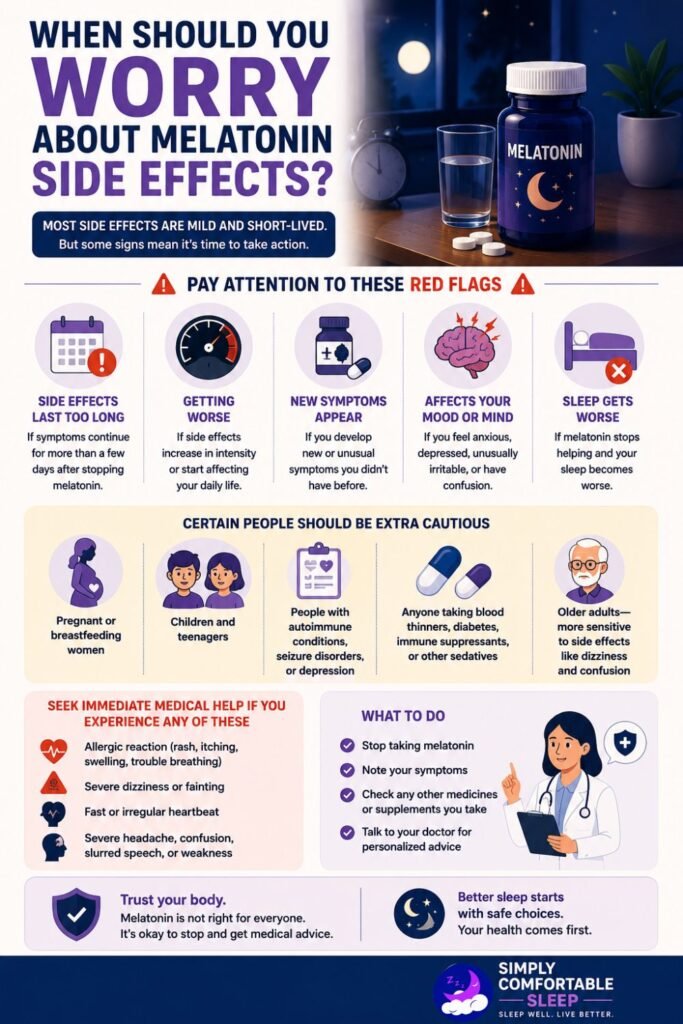
When Should You Stop Taking Melatonin?
Mild side effects often improve on their own. However, some symptoms are a clear sign that melatonin should be stopped and medical advice sought.
You should stop taking melatonin and speak with a healthcare provider if you experience:
- Severe daytime sleepiness that affects daily activities
- Persistent headaches
- Repeated dizziness or fainting
- Mood changes that are new or worsening
- Confusion
- Severe nausea or vomiting
- Symptoms that continue despite reducing the dose
If you started melatonin on your own and your sleep has not improved after a few weeks, it is also worth discussing your symptoms with a healthcare professional.
Poor sleep can be caused by many conditions, including:
- Sleep apnea
- Restless legs syndrome
- Anxiety
- Depression
- Chronic pain
- Thyroid disorders
- Certain medicines
Treating the underlying problem is often more effective than simply increasing the melatonin dose.
Should You Stop Melatonin Suddenly?
For most people, yes.
Current evidence suggests that melatonin does not usually cause physical dependence. Most people can stop taking it without experiencing withdrawal symptoms.
Some people may notice that their original sleep problem returns after stopping melatonin, but this is usually because the underlying sleep issue is still present—not because the body has become dependent on the supplement.
If you have been taking melatonin for a long time or under medical supervision, discuss any changes with your healthcare provider.
Remember
If your sleep becomes worse after stopping melatonin, do not assume you need a higher dose. It may be time to reassess your sleep habits or look for another cause of your sleep problem.
If you are wondering whether melatonin is suitable for long-term use, read our guide Can You Take Melatonin Every Night?
When Should You See a Doctor?
Stopping melatonin is sometimes enough. In other situations, medical evaluation is important, especially if symptoms are severe or persistent.
Seek Emergency Medical Care If You Have
- Difficulty breathing
- Swelling of the face, lips, tongue, or throat
- Chest pain
- Severe allergic reaction
- Loss of consciousness
- Seizures
- Severe confusion
These symptoms are rare but require immediate medical attention.
Arrange a Medical Appointment If You Experience
- Persistent daytime sleepiness
- Frequent dizziness
- Repeated headaches
- Mood changes
- Depression that worsens
- Problems with balance
- Unusual bruising or bleeding
- Side effects that continue after stopping melatonin
A healthcare provider can determine whether melatonin is responsible or whether another medical condition is causing the symptoms.
Children Should Be Reviewed If
A child taking melatonin develops:
- Ongoing daytime sleepiness
- Behavioral changes
- Repeated headaches
- Persistent stomach problems
- Any unusual or severe symptoms
Parents should avoid increasing the dose without medical advice.
When Sleep Problems Continue
If you still have difficulty sleeping after using melatonin correctly for several weeks, it is time for a medical review.
Persistent insomnia may require a different approach, such as:
- Treating an underlying medical condition
- Improving sleep habits
- Cognitive Behavioral Therapy for Insomnia (CBT-I)
- Adjusting medications that interfere with sleep
Melatonin is only one part of sleep care. It is not the answer for every sleep problem.
When to Contact a Doctor
Contact your healthcare provider if:
- Side effects are severe or persistent.
- Sleep does not improve after a few weeks.
- You are pregnant or breastfeeding and considering melatonin.
- You have a chronic medical condition.
- You take prescription medicines that may interact with melatonin.
- You are unsure whether melatonin is the right choice for your situation.
Frequently Asked Questions
Can melatonin cause side effects the next day?
Yes. Some people feel sleepy, groggy, dizzy, or have difficulty concentrating the next morning. This is more common with higher doses or when melatonin is taken too late at night.
Are melatonin side effects common?
Most side effects are mild and temporary. The most commonly reported include daytime sleepiness, headache, dizziness, nausea, and vivid dreams. Serious side effects are rare.
Does long-term melatonin use cause side effects?
Current research suggests that melatonin is generally well tolerated during short-term use. Studies on melatonin side effects long term are still limited, particularly beyond several months or years. More research is needed to fully understand its long-term safety in different age groups.
Can melatonin raise blood pressure?
The evidence is mixed. Melatonin may lower blood pressure in some people but can affect blood pressure differently depending on the individual and the medicines they take. People with hypertension should discuss melatonin use with their healthcare provider.
Is melatonin safe for children?
Melatonin may be appropriate for certain children when recommended by a healthcare professional. However, it should not be used routinely without medical advice, as more research is needed on its long-term effects.
Can melatonin cause dependence?
Current evidence suggests that melatonin does not usually cause physical dependence or withdrawal symptoms. However, if the underlying sleep problem is not addressed, sleep difficulties may return after stopping it.
Can I drive after taking melatonin?
No. Melatonin can reduce alertness and slow reaction time. Avoid driving or operating heavy machinery after taking it and until you know how it affects you.
While most people experience only mild side effects, knowing when to stop melatonin and seek medical advice can help you use it more safely.
Bottom Line
For most healthy adults, the benefits of melatonin outweigh the risks when it is used correctly.
Serious side effects are rare, but they can occur. Difficulty breathing, severe allergic reactions, fainting, seizures, or unusual bleeding require immediate medical attention. People who are older, pregnant, taking multiple prescription medicines, or living with certain medical conditions should speak with a healthcare professional before using melatonin.
If side effects are persistent, severe, or unusual, do not ignore them. They may be related to melatonin, another medicine, or an underlying health condition that needs proper evaluation.
Melatonin can be a useful tool for some sleep problems, but it works best when it is used carefully—not as a long-term solution for every case of poor sleep. If you continue to struggle with sleep despite using melatonin correctly, it is important to look beyond the supplement and identify the real cause.
For many people, the safest approach is simple: use the lowest effective dose, buy a quality product, monitor for side effects, and seek medical advice whenever symptoms are severe, persistent, or unexpected.
If you’re ever unsure whether a symptom is caused by melatonin, stop using the supplement and speak with your healthcare provider.
Used correctly, melatonin is well tolerated by most people. The key is to choose the lowest effective dose, pay attention to how your body responds, and seek medical advice whenever something doesn’t feel right.
References
- Brzezinski A. Melatonin in Humans. New England Journal of Medicine. 1997;336(3):186–195.
https://doi.org/10.1056/NEJM199701163360306 - Ferracioli-Oda E, Qawasmi A, Bloch MH. Meta-Analysis: Melatonin for the Treatment of Primary Sleep Disorders. PLoS ONE. 2013;8(5):e63773.
https://doi.org/10.1371/journal.pone.0063773 - Andersen LPH, Gögenur I, Rosenberg J, Reiter RJ. The Safety of Melatonin in Humans. Clinical Drug Investigation. 2016;36(3):169–175.
https://pubmed.ncbi.nlm.nih.gov/26692007/ - Besag FMC, Vasey MJ, Lao KSJ, Wong ICK. Adverse Events Associated With Melatonin for the Treatment of Primary or Secondary Sleep Disorders: A Systematic Review. CNS Drugs. 2019;33(12):1167–1186.
https://pubmed.ncbi.nlm.nih.gov/31722088/ - Buscemi N, Vandermeer B, Hooton N, et al. The efficacy and safety of exogenous melatonin for primary sleep disorders: A meta-analysis. Journal of General Internal Medicine. 2005;20(12):1151–1158.
https://pubmed.ncbi.nlm.nih.gov/16336622/ - Erland LAE, Saxena PK. Melatonin Natural Health Products and Supplements: Presence of Serotonin and Significant Variability of Melatonin Content. Journal of Clinical Sleep Medicine. 2017;13(2):275–281.
https://pubmed.ncbi.nlm.nih.gov/27855744/ - National Center for Complementary and Integrative Health (NCCIH). Melatonin: What You Need To Know.
https://www.nccih.nih.gov/health/melatonin-what-you-need-to-know - National Institutes of Health (NIH) – Office of Dietary Supplements. Melatonin Fact Sheet for Health Professionals.
https://ods.od.nih.gov/factsheets/Melatonin-HealthProfessional/ - American Academy of Sleep Medicine (AASM). Health Advisory: Melatonin Use in Children and Adolescents.
https://aasm.org/advocacy/position-statements/melatonin-use-in-children-and-adolescents-health-advisory/ - Mayo Clinic. Melatonin.
https://www.mayoclinic.org/drugs-supplements-melatonin/art-20363071 - Cleveland Clinic. Melatonin: Uses, Benefits, Side Effects and Safety.
https://health.clevelandclinic.org/melatonin - NHS. Side effects of melatonin.
https://www.nhs.uk/medicines/melatonin/side-effects-of-melatonin/ - NHS. About melatonin.
https://www.nhs.uk/medicines/melatonin/about-melatonin/ - National Center for Complementary and Integrative Health (NCCIH). Sleep Disorders and Complementary Health Approaches.
https://www.nccih.nih.gov/health/sleep-disorders-and-complementary-health-approaches