Discover how your diet affects your sleep quality! Learn which foods improve sleep and which ones keep you awake. Backed by medical research, this guide will help you sleep better naturally.
Take a quick look at how your diet affects key sleep-related hormones:
| Hormone | Function | Foods That Help | Foods That Harm |
| Melatonin | Regulates sleep cycle | Tart cherries, nuts | Caffeine, alcohol |
| Serotonin | Promotes relaxation | Bananas, turkey | Processed foods |
| Cortisol | Stress hormone, disrupts sleep | Whole grains, fish | Sugary snacks |
How Your Diet Affects Your Sleep Quality?
A good night’s sleep is essential for feeling refreshed.
But did you know that what you eat can significantly affect how well you sleep?
Yes, your diet and sleep quality are closely connected.
Let’s dive into how your foods can help you drift off peacefully or leave you tossing and turning all night.
The Science Behind Diet and Sleep
Your body’s internal circadian rhythm, regulates your sleep-wake cycle.
This rhythm is influenced by many factors, including light, physical activity, and—you guessed it—food.
There are certain nutrients and eating habits which can either support or disrupt this delicate balance.
For example, research published in Nutrients (2019) found that diets high in sugar and refined carbohydrates can lead to poor sleep quality.
These foods will cause rapid spikes and drops in blood sugar levels, which can wake you up during the night.
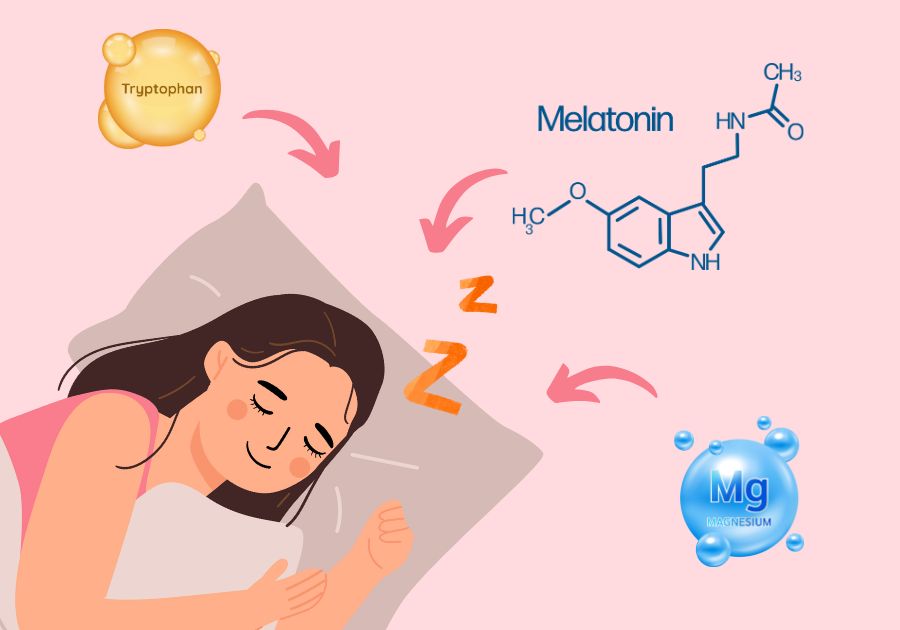
On the other hand, foods rich in tryptophan, magnesium, and melatonin—like turkey, nuts, and cherries—can promote better sleep.
Foods That Help You Sleep
These are the types of foods that will help you sleep. It is not only the food, but what it contains. The nutrients, the richness.
Tryptophan-Rich Foods:
Tryptophan is an amino acid that helps your body produce serotonin, a neurotransmitter that promotes relaxation.
Serotonin is then converted into melatonin, the hormone that regulates sleep.
Foods like turkey, chicken, eggs, and dairy products are excellent sources of tryptophan.
A study in the Journal of Psychiatric Research (2016) showed that tryptophan supplementation improved sleep quality in people with mild insomnia.
Magnesium-Packed Foods:
Magnesium is a mineral that helps calm your nervous system and relax your muscles. It also plays a role in regulating melatonin.
Foods like almonds, spinach, pumpkin seeds, and dark chocolate are rich in magnesium.
A study in the Journal of Research in Medical Sciences (2012) found that magnesium supplementation improved sleep efficiency and reduced insomnia symptoms.
Melatonin-Boosting Foods:
Melatonin is the hormone that tells your body it’s time to sleep. Some foods, like cherries, grapes, and tomatoes, naturally contain melatonin.
Research in the European Journal of Nutrition (2017) found that drinking tart cherry juice increased melatonin levels and improved sleep duration and quality.
Eat these to improve your sleep quality:
✅ Tryptophan-rich foods: Turkey, eggs, dairy
✅ Magnesium-rich foods: Almonds, spinach, dark chocolate
✅ Calming teas: Chamomile, valerian root, peppermint
Foods That Disrupt Sleep
While some foods can help you sleep, others can keep you awake. Here are a few culprits:
Caffeine:
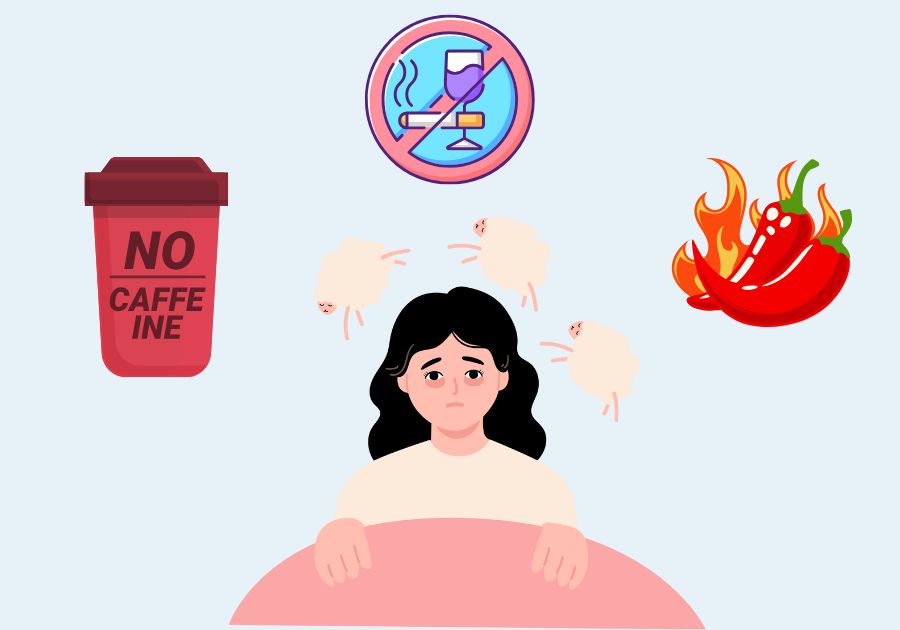
Found in coffee, tea, chocolate, and some sodas, caffeine is a stimulant that blocks the effects of adenosine, a chemical that makes you feel sleepy.
A study in the Journal of Clinical Sleep Medicine (2013) found that consuming caffeine even 6 hours before bedtime can disrupt sleep.
Alcohol:
While alcohol might make you feel sleepy at first, it actually disrupts your sleep cycle.
It reduces the amount of REM sleep (the deep, restorative stage of sleep) and can cause you to wake up frequently during the night.
Research in the Journal of Sleep Research (2018) confirmed that alcohol negatively impacts sleep quality.
Spicy and Fatty Foods:
Spicy foods can cause heartburn, while fatty foods take longer to digest. Both can make it harder to fall asleep and stay asleep.
A study in the International Journal of Environmental Research and Public Health (2020) linked high-fat diets to poorer sleep quality.
Avoid these before bedtime:
🚫 Caffeinated drinks – Coffee, tea, soda
🚫 Sugary snacks – Cakes, candy, ice cream
🚫 Spicy & heavy meals – Can cause acid reflux
Read this article to Know the foods that will cause Acid reflux.
Timing Matters Too
When you eat is just as important as what you eat. Eating a heavy meal right before bed can make it harder to fall asleep because your body is busy digesting food instead of winding down.
On the other hand, going to bed hungry can also disrupt your sleep.
The key is to find a balance. Aim to eat your last meal 2-3 hours before bedtime and opt for a light snack if you’re feeling hungry.
Timing Matters: When Should You Eat?
- Best time for dinner: 3 hours before bed
- Avoid late-night snacks: Can spike blood sugar
- Drink water, but not too much: Prevent waking up frequently
Practical Tips for Better Sleep Through Diet.
- Eat a Balanced Diet: Focus on whole foods like fruits, vegetables, lean proteins, and whole grains. These provide the nutrients your body needs to regulate sleep.
- Limit Caffeine and Alcohol: Try to avoid caffeine after 2 PM and limit alcohol consumption, especially in the evening.
- Snack Smart: If you need a bedtime snack, choose something light and sleep-friendly, like a banana with almond butter or a small bowl of oatmeal.
- Stay Hydrated: Dehydration can disrupt sleep, but avoid drinking too much water right before bed to prevent nighttime trips to the bathroom.
Conclusion
Your diet plays a more significant role in your sleep quality than you might think.
By choosing the right foods and avoiding sleep disruptors, you can significantly improve your sleep. Remember, small changes can make a big difference.
So, the next time you reach for a snack or plan your dinner, consider how it might affect your sleep. Sweet dreams!
-
12 Melatonin Myths vs Facts: What Science Really Says
Melatonin is surrounded by common myths. It is not simply a sleeping pill; it mainly helps regulate circadian rhythm and sleep timing. More melatonin does not necessarily mean better sleep, and it can cause side effects or interact with medicines. Although naturally produced by the body, melatonin is not completely risk-free. Its benefits depend on…
-
Melatonin Gummies vs Tablets: Which Is Better for Sleep?
Melatonin comes in many forms, including gummies and tablets, but neither is automatically better for sleep. The more important factors are the amount of melatonin, formulation, timing, ingredients, product quality, and your individual response. Gummies may be easier to take, while tablets may offer different formulations or fewer added ingredients. In most cases, the question…
-
Does Melatonin Cause Weird Dreams? Dreams, Nightmares & Sleep Quality
Does Melatonin Cause Weird Dreams? Melatonin may cause vivid dreams, unusual dreams, or more memorable dreams in some people, but it does not necessarily cause nightmares or poor sleep quality. Reports of vivid or abnormal dreams exist, but the evidence does not clearly establish that melatonin directly causes them. Sleep timing, REM sleep, stress, sleep…
-
Is Melatonin Addictive? Dependence, Withdrawal & What the Evidence Says
Melatonin is not generally considered addictive. Current evidence does not show the typical pattern of craving, loss of control, physical dependence, or escalating tolerance seen with many addictive medicines. However, some people may feel reliant on melatonin for sleep, especially if an underlying sleep problem is still present. What Does “Addiction” Actually Mean? The word…
-
Can You Overdose on Melatonin? Symptoms, Risks & 6 Remedies.
Taking too much melatonin can cause unwanted effects, most often excessive sleepiness, dizziness, headache, nausea, or reduced alertness. There is no single dose that defines an overdose for everyone, because the risk depends on the person, product, amount taken, other medicines or substances, and symptoms. Most reported exposures are not associated with severe toxicity, but…