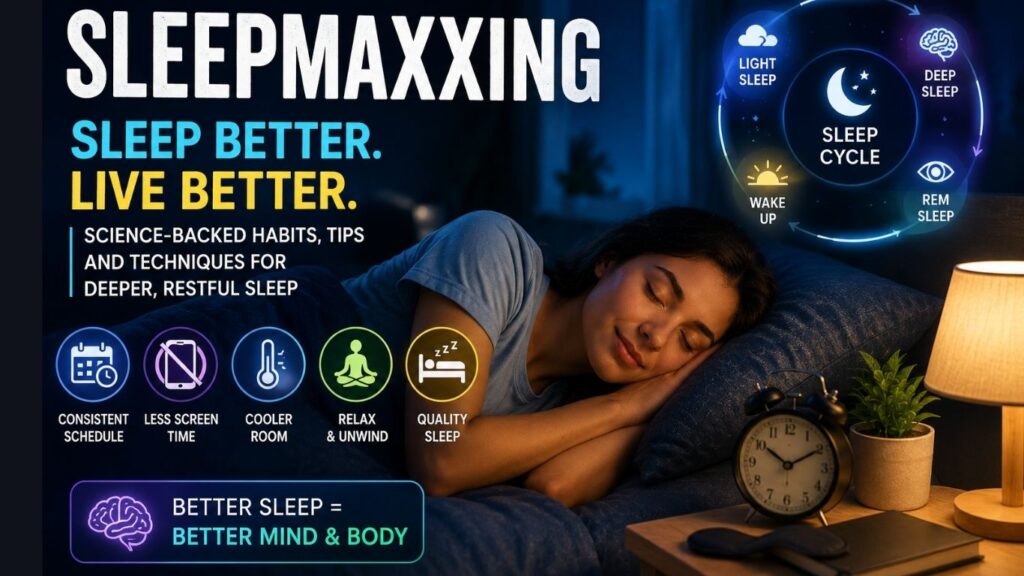
Sleepmaxxing is a trend focused on improving sleep quality using healthy habits, routines, and sleep tools. It aims to boost energy, recovery, brain function, and overall health through better sleep practices.
Table of Contents
Sleep has become one of the biggest health topics on social media. From sleep masks and magnesium supplements to mouth taping and blue-light glasses, people are trying many methods to improve their sleep. This growing trend is called “sleepmaxxing.”
But what exactly is sleepmaxxing? Is it truly backed by science, or is it just another internet trend?
The truth is somewhere in the middle.
Some sleepmaxxing habits are strongly supported by medical research. Others have little scientific proof and may even be harmful if used incorrectly. Understanding the difference is important because good sleep affects nearly every part of health, including the brain, heart, immune system, hormones, mood, and metabolism.
This article explains the science behind sleepmaxxing in simple language and discusses which methods are actually useful.
What Does Sleepmaxxing Mean?
Sleepmaxxing means trying to “maximize” the quality and quantity of sleep using different habits, tools, routines, and lifestyle changes.
The word comes from two terms:
- “Sleep”
- “Maxxing” which means optimizing or improving something as much as possible
The trend became popular on social media platforms like TikTok, YouTube, and Instagram. Many influencers started sharing “sleep hacks” to get deeper sleep, fall asleep faster, and wake up feeling refreshed.
Some common sleepmaxxing practices include:
- Following a strict sleep schedule
- Using blackout curtains
- Wearing blue-light-blocking glasses
- Taking melatonin or magnesium supplements
- Mouth taping
- Tracking sleep using smartwatches or rings
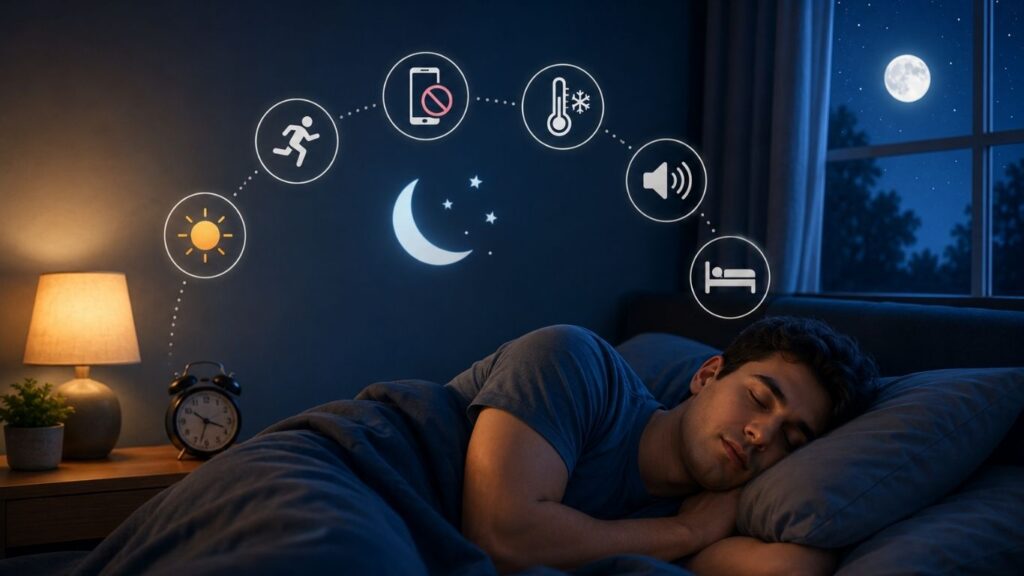
- Cooling the bedroom
- Listening to white noise
- Avoiding screens before bedtime
Not all these methods have equal scientific support. Some are proven sleep hygiene techniques, while others are still being studied.
Why Sleep Is So Important
Before understanding sleepmaxxing, it is important to understand why sleep matters so much. Sleep is not simply a period of rest where the body “switches off.”
During sleep, the brain and body remain highly active and perform many important repair and recovery functions that are essential for physical health, mental wellbeing, and daily performance.
During sleep, the brain removes waste products, processes memories, balances emotions, and restores mental energy.
At the same time, the body repairs tissues, strengthens the immune system, regulates hormones, supports muscle recovery, and helps maintain healthy heart function and metabolism.
Important hormones like melatonin and growth hormone are also released during sleep, helping the body recover and maintain normal biological functions.
| Body Function | What Happens During Sleep |
| Brain repair | The brain removes waste products and strengthens memories |
| Hormone balance | Growth hormone and melatonin are released |
| Immune function | The immune system becomes more active |
| Heart health | Blood pressure and heart rate decrease |
| Muscle recovery | Tissues repair and muscles recover |
| Emotional regulation | Stress and emotions are processed |
Good sleep helps people think clearly, react faster, stay emotionally balanced, and remain physically active.
On the other hand, poor sleep can quickly affect both the body and mind. Many people notice that after just one or two nights of poor sleep, they become tired, irritated, less productive, and unable to focus properly.
For example, a college student preparing for exams may stay awake late at night using phones or laptops and drinking excess coffee.
Although it may seem helpful at first, lack of sleep often reduces concentration, memory, and learning ability.
Similarly, an office worker sleeping only 4–5 hours daily may experience constant fatigue, stress, headaches, mood swings, and poor work performance over time.
Multiple medical research shows that long-term sleep deprivation increases the risk of several serious health conditions, including:
- Obesity
- Type 2 diabetes
- High blood pressure
- Heart disease
- Depression
- Anxiety disorders
- Weak immunity
- Poor concentration and memory problems
Sleep also plays a major role in emotional control and mental health. People who regularly sleep poorly are more likely to experience stress, irritability, anxiety, and low mood.
Deep sleep and REM sleep help the brain process emotions and recover from mental exhaustion. This is one reason why people often feel emotionally overwhelmed after continuous sleep loss.
Modern lifestyles have made healthy sleep more difficult than before. Late-night screen exposure, social media scrolling, work stress, irregular schedules, noise pollution, and excessive caffeine intake often disturb the body’s natural sleep cycle.
Many people sacrifice sleep for work, entertainment, or productivity without realizing that poor sleep itself reduces productivity and damages health in the long run.
This is one of the main reasons why sleepmaxxing has become popular. People are becoming more aware that good sleep is not a luxury but one of the most important foundations of health.
By improving sleep habits, maintaining regular sleep schedules, and creating a sleep-friendly environment, people aim to improve energy levels, mental focus, recovery, emotional balance, and overall wellbeing.
The Science of Circadian Rhythm
One of the main ideas behind sleepmaxxing is improving the body’s natural sleep cycle, known as the circadian rhythm.
The circadian rhythm is the body’s internal 24-hour clock. It controls:
- Sleep and wake cycles
- Hormone release
- Body temperature
- Hunger
- Energy levels
The most powerful signal controlling this rhythm is light exposure.
During the day:
- Bright light tells the brain to stay awake
At night:
- Darkness increases melatonin production and prepares the body for sleep
This explains why screen exposure at night can disturb sleep.
How Blue Light Quietly Damages Your Sleep
Many people finish their day by lying in bed with a phone in their hand. One short video becomes ten, messages keep coming, and suddenly it is past midnight. The body feels tired, but the brain still feels awake. This is one of the biggest reasons sleep problems are increasing today.
Electronic devices such as smartphones, tablets, laptops, and televisions produce blue light. During the daytime, this light is not harmful. In fact, natural sunlight also contains blue light, which helps people stay alert and active.
The real problem begins when the brain continues receiving this bright light late at night.
The human body naturally prepares for sleep after sunset. As darkness increases, the brain releases melatonin, a hormone that helps the body relax and feel sleepy. But when someone spends hours staring at a bright screen, the brain receives mixed signals. Instead of slowing down, it behaves as if it is still daytime. (Harvard Health – Blue Light Has a Dark Side)
This is why many people say things like:
- “I feel sleepy, but I cannot sleep.”
- “My mind keeps running at night.”
- “I sleep late even when I am tired.”
For example, imagine a student preparing for exams. He studies on a laptop until midnight and then spends another hour scrolling social media to “relax.”
Even after switching off the phone, his brain remains active, making it difficult to fall asleep quickly. The next morning, he wakes up tired, struggles to focus in class, and depends on caffeine to stay awake.
The same thing happens with many working professionals. After spending the entire day in front of screens, they continue replying to emails or watching videos late into the night. Over time, this habit can disturb sleep quality and leave the mind constantly exhausted.
Poor nighttime screen habits may lead to:
- Difficulty falling asleep
- Light and disturbed sleep
- Reduced deep sleep
- Morning fatigue
- Irritability and mood swings
- Poor concentration during the day
Studies suggest that lowering screen exposure before bedtime may help the brain return to its natural sleep rhythm. (Evening Use of Light-Emitting eReaders Negatively Affects Sleep – PNAS)
This is one reason why sleep experts often recommend creating a “screen-free wind-down routine” before bed.
Many people following sleepmaxxing routines now try simple habits like:
- Keeping phones away from the bed
- Using dim yellow lighting at night
- Turning on blue-light filters
- Reading printed books before sleep
- Listening to calming music instead of watching videos
These may seem like small lifestyle changes, but they can have a strong effect on sleep quality over time. In many cases, improving nighttime habits works better than chasing expensive sleep gadgets or viral internet hacks.
What Happens During Different Sleep Stages?
Many people think sleep is just one long period of rest, but the brain actually moves through several different sleep stages throughout the night.
Each stage has its own job, and all of them are important for physical health, mental recovery, memory, and emotional balance.
A healthy night’s sleep is like a carefully organized repair system where the body and brain work together to restore energy and prepare for the next day.
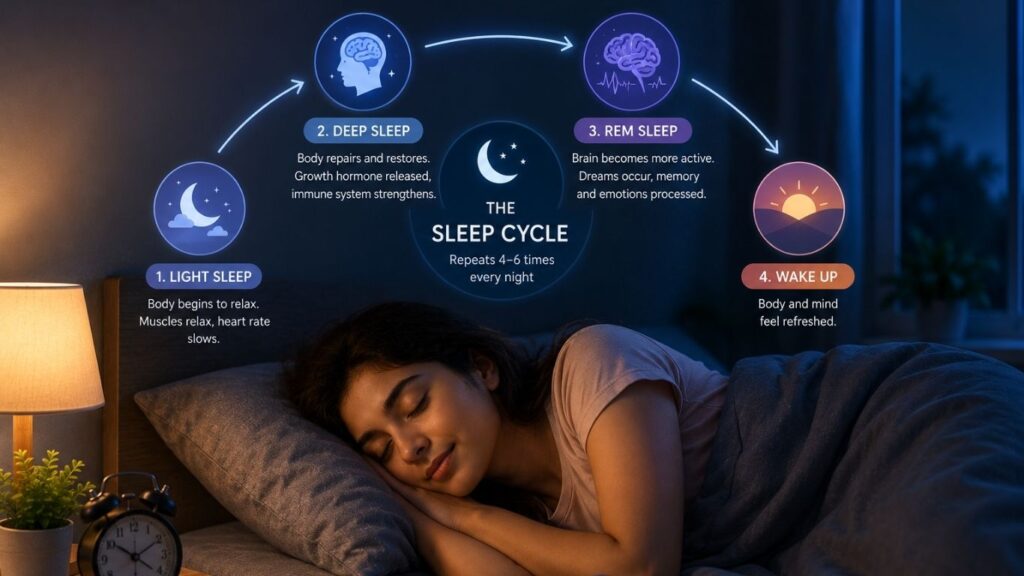
Sleep is generally divided into three major stages:
| Sleep Stage | Main Function |
|---|---|
| Light Sleep | Helps the body relax and transition into deeper sleep |
| Deep Sleep | Supports physical healing, immune function, and body repair |
| REM Sleep | Helps with dreaming, learning, emotions, and memory |
A person usually moves through these stages several times during the night. If sleep gets disturbed frequently, the body may not spend enough time in the most restorative stages, especially deep sleep and REM sleep.
Light Sleep: The Body Begins to Slow Down
Light sleep is the first stage after falling asleep. During this period, the heartbeat slows, muscles begin to relax, and body temperature gradually drops.
Although it is called “light” sleep, this stage is still important because it prepares the brain and body for deeper restorative sleep later in the night.
For example, someone who falls asleep while watching television may wake up easily during light sleep because the brain is still somewhat aware of surrounding sounds. However, even this stage helps reduce mental and physical tiredness.
People who consume too much caffeine late in the evening may spend less time in healthy sleep cycles because the brain remains overstimulated. This is one reason sleep experts recommend limiting coffee or energy drinks before bedtime.
Deep Sleep: The Body’s Repair Mode
Deep sleep is one of the most important stages of sleep. During this phase, the body focuses heavily on repair and recovery. Muscles recover from physical activity, tissues heal, and the immune system becomes more active.
Growth hormone is also released during deep sleep, which helps children grow and supports muscle and tissue repair in adults. National Sleep Foundation
This stage is especially important for:
- Muscle recovery
- Physical healing
- Immune strength
- Energy restoration
- Tissue repair
Athletes and physically active individuals particularly depend on deep sleep for recovery. For instance, a football player who trains intensely during the day may notice body soreness and poor performance if sleep quality becomes poor for several nights in a row.
Similarly, people recovering from illness often feel more sleepy because the body uses sleep to support healing and immune function. This is why doctors frequently advise proper rest during infections and periods of physical stress.
REM Sleep: The Brain’s Emotional and Memory Center
REM sleep stands for “Rapid Eye Movement” sleep. This is the stage where most dreaming occurs. During REM sleep, the brain becomes highly active even though the body remains relaxed.
This stage plays an important role in:
- Learning
- Memory formation
- Emotional processing
- Mental recovery
- Brain development
Students, professionals, and creative workers all benefit from healthy REM sleep because the brain processes information and strengthens memories during this stage. Sleep Foundation – REM Sleep
For example, a student studying for an important examination may find it harder to remember information after sleeping poorly. Even if many hours are spent studying, lack of proper REM sleep can affect memory consolidation and concentration the next day.
Researchers also believe REM sleep helps people process emotions and stress. This explains why continuous sleep deprivation often makes people emotionally sensitive, anxious, or irritable.
What Happens When Sleep Cycles Get Disturbed?
Modern lifestyles often interfere with natural sleep cycles. Late-night phone use, stress, shift work, gaming, irregular schedules, and excessive screen exposure can reduce both deep sleep and REM sleep. Harvard Health – Blue Light Has a Dark Side
When this happens, people may experience:
- Morning fatigue
- Brain fog
- Poor concentration
- Low energy
- Mood swings
- Reduced productivity
For example, someone may technically sleep for seven hours but still wake up exhausted because the quality of sleep was poor and the brain could not complete healthy sleep cycles properly.
This is one reason why sleepmaxxing has become so popular. Many people are now trying to improve not only sleep duration but also sleep quality so the body can spend enough time in deep and REM sleep.
Healthy sleep habits such as maintaining a regular sleep schedule, reducing nighttime screen exposure, and creating a quiet sleep environment may help support better sleep cycles naturally.
Popular Sleepmaxxing Techniques Explained
Sleepmaxxing includes many habits, routines, and tools that people use to improve sleep quality.
Some of these methods are strongly supported by medical research, while others are based more on personal experience or internet trends.
The goal is not simply to sleep longer, but to help the body achieve deeper and more refreshing sleep naturally.
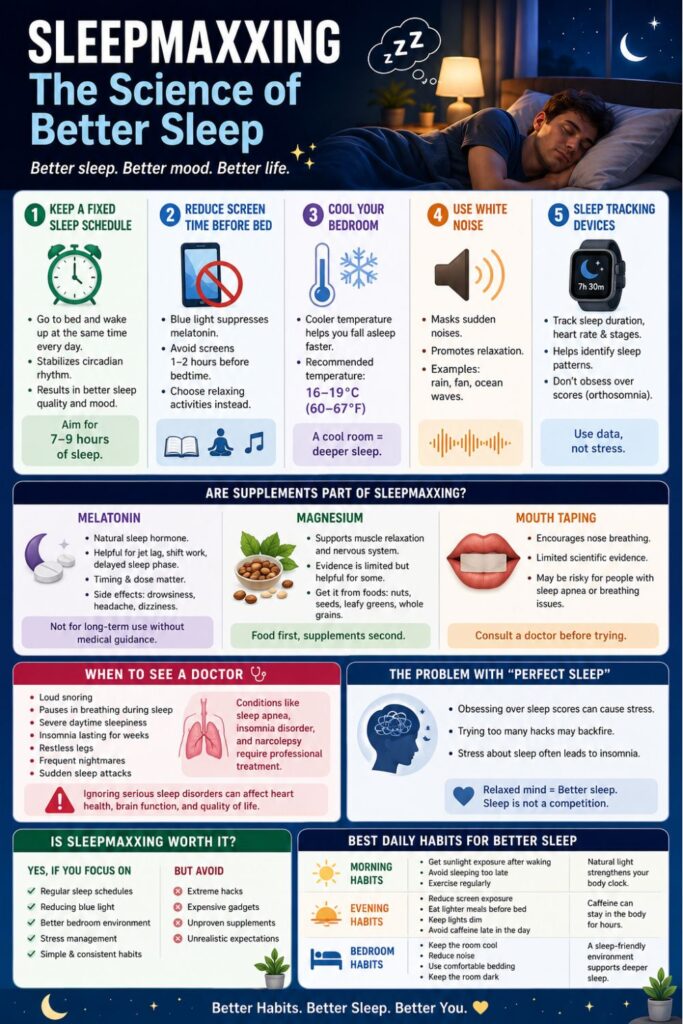
1. Following a Regular Sleep Schedule
One of the most effective sleep habits is sleeping and waking at nearly the same time every day. The human body functions best when it follows a stable routine. Irregular sleeping patterns can confuse the body’s internal clock, making it harder to fall asleep and wake up feeling refreshed. Sleep Foundation – Sleep Schedule
For example, many people sleep late on weekends and wake up very late the next day. Although this may feel relaxing, it can disturb the body’s natural rhythm. On Monday morning, they often struggle to wake up on time and feel tired throughout the day. This effect is sometimes compared to mild jet lag.
People who maintain regular sleep timings often notice:
- Better sleep quality
- Faster sleep onset
- Improved mood
- Better daytime energy
- More stable concentration levels
Helpful habits include:
- Waking up at a fixed time daily
- Avoiding extreme weekend sleep schedules
- Maintaining 7–9 hours of sleep regularly
- Sleeping at roughly the same time every night
2. Reducing Screen Exposure Before Sleep
Late-night screen use has become one of the biggest causes of poor sleep in modern society. Phones, tablets, laptops, and televisions expose the brain to bright light at a time when the body naturally prepares for rest.
This may delay melatonin release and make the brain remain mentally active longer. Harvard Health – Blue Light Has a Dark Side
A common example is someone scrolling social media “for five minutes” before bed but ending up awake for another hour. The brain remains stimulated by videos, notifications, and bright light, making natural sleep more difficult.
Instead of using screens before bedtime, many sleep experts recommend calming activities such as:
- Reading printed books
- Meditation
- Light stretching
- Deep breathing exercises
- Listening to soft music
- Writing in a journal
These relaxing activities help the brain gradually shift into sleep mode.
3. Keeping the Bedroom Cool
Body temperature naturally drops during sleep. A cooler room may support this process and help the body fall asleep more comfortably. Rooms that are too hot may increase sweating, discomfort, and nighttime awakenings. National Sleep Foundation
For example, during hot summer nights, many people toss and turn repeatedly without realizing temperature is disturbing their sleep. In contrast, a cool, quiet room often helps people fall asleep faster and remain asleep longer.
Possible benefits of a cooler sleep environment include:
- Faster sleep onset
- Better deep sleep
- Reduced nighttime awakenings
- Improved comfort
Experts commonly recommend a bedroom temperature around 16–19°C (60–67°F), although comfort levels can vary from person to person.
4. Using White Noise and Relaxing Sounds
Some people sleep better when background sounds are present. White noise machines, fans, rainfall sounds, and ocean-wave recordings are commonly used to reduce sudden environmental noise. Sleep Foundation – White Noise for Sleep
For instance, someone living near a busy road may wake up repeatedly because of vehicle sounds or barking dogs. Constant background noise may help mask these sudden sounds and create a calmer sleep environment.
Popular sound choices include:
- Rainfall sounds
- Fan noise
- Ocean waves
- Forest ambience
- Soft instrumental music
Research results remain mixed, but many people personally report feeling calmer and sleeping more comfortably with consistent background sound.
5. Sleep Tracking Devices and Smart Gadgets
Modern sleepmaxxing often involves technology such as:
- Smartwatches
- Fitness bands
- Smart rings
- Sleep-tracking mobile apps
These devices attempt to measure:
- Sleep duration
- Heart rate
- Sleep stages
- Nighttime movement
Some people find these tools helpful because they encourage healthier sleep habits and improve awareness about bedtime routines. For example, a person who regularly sleeps only five hours may become more conscious of unhealthy habits after reviewing sleep reports.
Possible benefits include:
- Tracking sleep consistency
- Identifying irregular sleep patterns
- Encouraging healthier routines
- Increasing awareness about sleep habits
However, there can also be problems. Some individuals become overly focused on achieving “perfect sleep scores.” This may create anxiety and actually worsen sleep quality, a condition sometimes called orthosomnia. Cleveland Clinic – Orthosomnia
Sleep should improve health and recovery, not become another source of stress.
Are Supplements Part of Sleepmaxxing?
Many people include supplements in their nighttime routines hoping for faster or deeper sleep. Common examples include:
- Melatonin
- Magnesium
- Herbal teas
- Chamomile products
Although some supplements may help certain individuals, they are not magical solutions. Healthy sleep habits usually remain more important than supplements alone.
Melatonin
Melatonin is a natural hormone produced by the brain that helps regulate sleep timing. The body normally increases melatonin production during darkness to prepare for sleep. Sleep Foundation – Melatonin
Melatonin supplements are commonly used for:
- Jet lag
- Shift work sleep problems
- Delayed sleep schedules
For example, someone traveling internationally may temporarily use melatonin to help adjust to a different time zone.
However, many people wrongly assume that taking larger doses automatically improves sleep. In reality, excessive use may cause:
- Morning grogginess
- Headaches
- Dizziness
- Disturbed sleep timing
Important facts about melatonin:
| Fact | Explanation |
|---|---|
| It is a hormone | Not an ordinary vitamin |
| Higher doses are not always better | Too much may cause side effects |
| Timing matters | Incorrect timing may confuse the body clock |
| Long-term use needs caution | Medical guidance may be necessary |
Magnesium
Magnesium is involved in muscle relaxation and nerve function. Some individuals feel calmer after taking magnesium supplements, although scientific evidence regarding sleep improvement remains limited. NIH Office of Dietary Supplements – Magnesium
Instead of depending immediately on supplements, many experts encourage improving magnesium intake through foods such as:
- Nuts
- Seeds
- Whole grains
- Green leafy vegetables
A balanced diet often supports better overall health and sleep naturally.
Mouth Taping: Trendy but Risky?
Mouth taping became popular online after influencers claimed it improves sleep quality by encouraging nose breathing. The method involves placing tape over the mouth during sleep.
Some users claim benefits like:
- Reduced dry mouth
- Less snoring
- Better breathing comfort
However, scientific evidence remains limited, and experts warn that this practice may not be safe for everyone. American Academy of Sleep Medicine
For example, someone with undiagnosed sleep apnea or breathing difficulties may actually worsen their breathing during sleep by taping the mouth shut.
Possible risks include:
- Breathing discomfort
- Increased anxiety
- Worsening sleep apnea symptoms
- Skin irritation
People with breathing or sleep disorders should avoid trying such trends without proper medical advice.
Sleep and Mental Health Are Closely Connected
One major reason sleepmaxxing has gained attention is because more people now recognize the connection between sleep and emotional wellbeing.
Poor sleep may increase:
- Stress
- Anxiety
- Irritability
- Emotional instability
- Low mood
At the same time, good sleep often improves:
- Emotional control
- Motivation
- Focus
- Mental clarity
- Stress handling ability
For example, a person sleeping poorly for several nights may become easily irritated by small problems that normally would not bother them. Students preparing for exams or professionals under work pressure often notice that poor sleep worsens stress and emotional exhaustion.
Deep sleep and REM sleep help the brain process emotions and recover mentally. Sleep Foundation – REM Sleep This explains why quality sleep is important not only for physical health but also for emotional balance and mental wellbeing.
Best Daily Habits for Better Sleep
Good sleep does not usually come from expensive gadgets or complicated nighttime hacks. In many cases, simple daily habits have the strongest effect on sleep quality.
The body prefers routine, balance, and a healthy environment. Small lifestyle changes repeated every day can gradually improve both sleep duration and sleep quality.
Healthy Morning Habits
What people do during the first few hours after waking up can influence sleep later at night. Morning sunlight plays an important role in regulating the body’s internal clock.
Exposure to natural daylight soon after waking helps the brain understand that it is daytime, which supports a healthier sleep-wake cycle later in the evening. Sleep Foundation – Circadian Rhythm
For example, someone who wakes up and immediately spends time outdoors or near sunlight may feel more energetic during the day and naturally sleepy at night.
In contrast, people who remain indoors for long periods may experience irregular sleep timing.
Helpful morning habits include:
- Getting sunlight exposure after waking
- Waking up at a consistent time daily
- Doing regular physical activity
- Avoiding oversleeping on weekends
Exercise is also strongly linked with better sleep. Even moderate activities such as walking, yoga, cycling, or stretching may help improve nighttime rest.
However, extremely intense exercise very late at night may keep some people too alert before bedtime.
Better Evening Habits
Evening routines have a major effect on sleep quality. The brain and body need time to slowly transition from daytime activity into nighttime relaxation.
Bright lights, heavy meals, stress, and constant screen use can interfere with this natural process.
Many sleep experts recommend reducing screen exposure before bed because phones and laptops may keep the brain mentally stimulated for longer periods. Harvard Health – Blue Light Has a Dark Side
For example, someone who spends an hour reading calm fiction before bed may fall asleep faster than someone watching fast-moving social media videos until midnight.
Helpful evening habits include:
- Limiting screen time before sleep
- Keeping room lights soft and dim
- Eating lighter dinners at night
- Avoiding caffeine in the evening
- Practicing relaxation techniques
Caffeine can remain active in the body for several hours. Because of this, late-night coffee, tea, or energy drinks may delay sleep even if a person does not immediately feel “awake.”
Relaxing activities such as deep breathing, light stretching, meditation, or listening to soft music may help calm the nervous system before bedtime.
Creating a Sleep-Friendly Bedroom
The sleeping environment also affects sleep quality more than many people realize. A noisy, bright, or uncomfortable room can repeatedly disturb sleep cycles during the night.
A comfortable sleep environment often includes:
- A cool room temperature
- Minimal noise
- Comfortable pillows and bedding
- Reduced light exposure
For example, someone living in a noisy neighborhood may wake up repeatedly during the night because the brain remains partially alert to surrounding sounds. Simple changes such as blackout curtains, earplugs, or white-noise machines may help improve sleep comfort.
Many people also underestimate the importance of using the bed mainly for sleep rather than for working, eating, or scrolling on phones. Over time, the brain starts associating the bed with wakefulness instead of relaxation.
When Sleep Problems Need Medical Attention
Although healthy habits improve sleep for many people, not every sleep problem can be solved through sleepmaxxing. Some sleep disorders require proper medical diagnosis and treatment.
People should consider seeking medical advice if they experience:
- Loud snoring
- Pauses in breathing during sleep
- Severe daytime sleepiness
- Difficulty sleeping for several weeks
- Uncomfortable leg sensations at night
- Frequent nightmares
- Sudden episodes of falling asleep during the day
These symptoms may be linked with medical conditions such as:
- Sleep apnea
- Chronic insomnia
- Restless legs syndrome
- Narcolepsy
For example, a person with sleep apnea may unknowingly stop breathing multiple times during sleep. Even after spending eight hours in bed, they may wake up exhausted because the brain repeatedly interrupts deep sleep to restart breathing. American Academy of Sleep Medicine
Ignoring serious sleep disorders may increase the risk of heart disease, high blood pressure, poor mental health, memory problems, and reduced quality of life.
The Hidden Problem With “Perfect Sleep”
One interesting problem linked with sleepmaxxing is that some people become overly focused on achieving “perfect sleep.” Instead of helping sleep, this constant pressure may actually increase stress and worsen insomnia.
Some individuals spend hours:
- Monitoring sleep scores
- Trying multiple supplements
- Constantly checking sleep-tracking apps
- Worrying about every small sleep disturbance
This unhealthy obsession with sleep is sometimes referred to as orthosomnia. Ironically, anxiety about sleeping perfectly can keep the brain alert and make natural sleep more difficult. Cleveland Clinic – Orthosomnia
For example, a person may panic after seeing a “poor sleep score” on a smartwatch, even if they actually feel physically fine. Over time, this stress itself may damage sleep quality.
Sleep works best when the body and mind feel safe and relaxed. Good sleep should support wellbeing, not become another source of pressure or competition.
Is Sleepmaxxing Actually Worth It?
Sleepmaxxing can be helpful when it focuses on healthy, evidence-based sleep habits. Many scientifically supported strategies truly improve sleep quality and overall health.
Useful methods often include:
- Maintaining a regular sleep schedule
- Reducing nighttime screen exposure
- Improving bedroom comfort
- Managing stress
- Following healthy daily routines
However, not every internet trend is supported by science. Some viral sleep hacks may:
- Waste money
- Increase unnecessary anxiety
- Promote unrealistic expectations
- Distract people from basic healthy habits
For example, someone may spend large amounts of money on expensive sleep gadgets while continuing unhealthy habits like sleeping at irregular times or using phones late into the night.
In reality, the most effective sleep strategies are often simple and consistent. A stable routine, proper relaxation, healthy lifestyle habits, and a comfortable sleep environment usually matter far more than trendy internet hacks or expensive products.
Final Thoughts
Sleepmaxxing became popular because modern life has damaged healthy sleep habits.
Late-night screen use, stress, irregular work schedules, and constant stimulation have made quality sleep difficult for many people. As a result, people are searching for ways to improve rest and recovery.
Science supports many basic sleep habits:
- Consistent sleep timing
- Healthy circadian rhythm
- Reduced nighttime light exposure
- Proper sleep environment
- Stress management
These methods improve sleep naturally and safely.
At the same time, not every viral sleep hack is scientifically proven. Some trends, especially extreme ones, may do more harm than good.
The real goal of sleepmaxxing should not be achieving “perfect” sleep. Instead, it should focus on creating healthy daily habits that support long-term physical and mental health.
Good sleep is not a luxury. It is one of the strongest foundations of overall wellbeing.