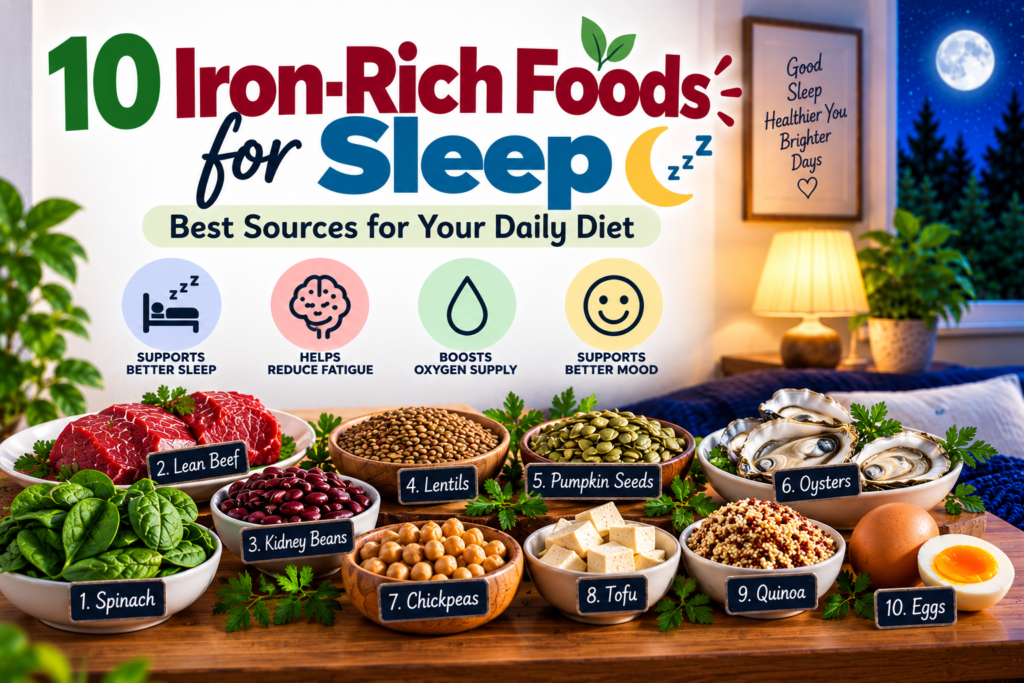
Iron rich foods for sleep can help you meet your daily iron requirements, which are essential for producing hemoglobin, carrying oxygen throughout the body, and supporting normal brain function.
Foods such as lentils, chickpeas, beans, ragi, sesame seeds, leafy greens, meat, fish, and iron-fortified cereals can contribute to your iron intake. But can eating more iron actually help you sleep better?
The connection is particularly important for people with restless legs syndrome (RLS), a condition that can interfere with falling asleep and staying asleep.
Although iron-rich foods support nutritional health, they are not a proven treatment for insomnia.
Table of Contents
This guide explores 10 iron-rich food options, how to improve iron absorption, and what research tells us about iron and better sleep.
Why Is Iron Important for Sleep?
Iron is an essential mineral that helps the body produce haemoglobin, the protein in red blood cells that carries oxygen from the lungs to tissues. It also contributes to muscle function, energy metabolism, neurological development, and normal cellular activity.
Iron is relevant to sleep for another reason: low iron stores are associated with restless legs syndrome, a neurological condition that can cause uncomfortable sensations in the legs and an urge to move them, particularly during rest and in the evening.
However, this does not mean that everyone who sleeps poorly needs more iron. Insomnia, frequent awakenings, and daytime fatigue can have many causes, and iron deficiency is only one possibility.
How Low Iron Stores May Affect Sleep
People with restless legs syndrome may experience crawling, tingling, pulling, or other uncomfortable sensations in their legs. These symptoms often worsen when sitting or lying down and may improve temporarily with movement. As a result, falling asleep can become difficult, and sleep may be repeatedly interrupted.
Iron is involved in several neurological processes, including those related to dopamine signalling. Researchers believe that altered iron availability in the brain may contribute to RLS in some people.
Importantly, normal haemoglobin does not always rule out low iron stores. Iron stores can become depleted before iron-deficiency anaemia develops.
If you regularly experience an urge to move your legs at night, particularly when resting, a medical assessment may be more useful than simply adding iron-rich foods to your diet.
What Does Research Say About Iron and Sleep?
The strongest clinical connection between iron and sleep concerns restless legs syndrome rather than insomnia in general.
The American Academy of Sleep Medicine’s clinical practice guideline recommends regularly checking iron status in people with clinically significant RLS. The assessment includes blood tests such as serum ferritin and transferrin saturation, which help clinicians evaluate iron stores and availability.
For selected patients with RLS, iron treatment may improve symptoms when laboratory findings and clinical circumstances support its use. However, the treatment recommendations are not the same as the general dietary requirements for healthy people.
Also Read:
Iron and Sleep: Take-Home Message
Iron is essential for health, and low iron stores can be relevant to restless legs syndrome. Eating iron-rich foods helps support adequate intake, but extra iron is not a universal remedy for poor sleep.
Also Read: Iron and Sleep:
10 Iron-Rich Foods to Include in Your Diet
Iron occurs naturally in both animal and plant foods, and some foods are fortified with additional iron. The amount your body absorbs depends partly on the type of iron, the meal’s composition, and your individual nutritional status.
The following foods offer practical ways to include iron in your diet, including options commonly eaten in India.
1. Lentils and Dal
Lentils are an important source of plant-based iron, making them particularly useful for vegetarian diets. Masoor dal, moong dal, and other lentil varieties also provide protein, fibre, and other nutrients.
Half a cup of cooked lentils provides approximately 3 mg of iron, according to the US National Institutes of Health food-composition table. The actual amount varies with the variety, serving size, and preparation.
Dal is easy to incorporate into everyday Indian meals. Pairing it with vitamin C-rich foods, such as tomatoes, lemon, or amla, can help your body absorb more of its non-heme iron.
How to include it: Add dal to lunch or dinner and serve it with vegetables or another vitamin C-rich food.
2. Chickpeas (Chana)
Chickpeas provide iron, protein, fibre, and folate. They can be used in chana masala, salads, roasted snacks, and other dishes.
Half a cup of cooked chickpeas provides approximately 2 mg of iron in the NIH food-composition table. The amount varies with the product and preparation.
Like other legumes, chickpeas contain non-heme iron, which is generally less readily absorbed than heme iron from animal foods. Including tomatoes, lemon juice, or other vitamin C-rich ingredients in the same meal can improve absorption.
How to include it: Prepare chana curry, add chickpeas to salads, or serve them with vegetables as part of a balanced meal.
3. Beans
Kidney beans, white beans, and other varieties can contribute useful amounts of iron to your diet. They also provide protein and fibre.
The NIH food-composition table lists approximately 8 mg of iron per cup of canned white beans and around 2 mg per half-cup of canned kidney beans. These values illustrate why the type of bean and serving size matter.
Beans are particularly helpful for people who eat little or no meat. As with other plant sources, their non-heme iron is affected by the foods eaten alongside them.
How to include them: Add rajma to meals, use beans in soups, or combine them with vegetables rich in vitamin C.
4. Ragi (Finger Millet)
Ragi, also known as finger millet, is a traditional Indian grain that can contribute iron as part of a varied diet.
Its iron content depends on the grain and the food-composition data used. The amount in a prepared dish also depends on how much ragi flour it contains. Avoid assuming that every ragi preparation provides the same amount of iron.
Ragi is useful in Indian meals, but it should not be considered a guaranteed solution for iron deficiency. Plant-based iron is less readily absorbed than heme iron, and overall dietary composition matters.
How to include it: Use ragi to prepare roti, dosa, porridge, or other dishes. Combine it with other iron sources and vitamin C-rich foods as part of a balanced eating pattern.
5. Iron-Fortified Breakfast Cereals and Grain Products
Some breakfast cereals and grain products have iron added during manufacturing. Depending on the product, a serving can provide a substantial proportion of your daily requirement.
The NIH lists certain breakfast cereals fortified with 100% of the US Daily Value as providing 18 mg of iron per serving. This figure applies to selected products, not all cereals.
Fortification standards and product availability vary by country. In India, check the packaging to determine whether a cereal or grain product is fortified with iron and how much it provides.
How to include them: Choose products with useful iron content and a reasonable amount of added sugar. Pairing them with fruit containing vitamin C can help improve absorption of non-heme iron.
6. Spinach and Other Leafy Greens
Spinach and certain other leafy vegetables contain iron, folate, and other nutrients. They can contribute to a varied diet, especially for people following vegetarian eating patterns.
Half a cup of cooked spinach provides approximately 3 mg of iron in the NIH food-composition table. However, the amount absorbed is not the same as the amount listed.
Spinach contains compounds that reduce non-heme iron absorption. Other leafy vegetables also vary in their iron content and bioavailability, so no single vegetable should be treated as a complete solution to low iron stores.
How to include them: Add cooked spinach or other leafy greens to dal, vegetable dishes, or meals that include vitamin C-rich ingredients.
7. Tofu
Tofu is a useful source of plant-based protein and can provide iron, depending on the product.
Half a cup of firm tofu provides approximately 3 mg of iron in the NIH food-composition table. Actual values vary with the type of tofu and how it is made.
Tofu can be particularly helpful for vegetarians and vegans who want to include more protein and iron in their diets.
How to include it: Use tofu in curries, stir-fries, or other meals with vegetables. Adding vitamin C-rich ingredients can help improve absorption of its non-heme iron.
8. Sesame Seeds
Sesame seeds contain iron along with fats, protein, and other minerals. They are commonly used in chutneys, sweets, and savoury dishes.
Their contribution to iron intake depends on the quantity consumed. A small sprinkle over a meal provides less iron than a larger portion, and the iron is non-heme iron.
Sesame seeds are best considered one component of a varied diet rather than a stand-alone strategy for correcting iron deficiency.
How to include them: Add sesame seeds to chutney or sprinkle them over vegetables. Avoid sesame if you have an allergy.
9. Meat and Poultry
Meat and poultry provide iron, including heme iron, which is generally more readily absorbed than non-heme iron from plant foods.
Beef, where eaten, can contribute useful amounts. Chicken and other poultry also provide iron, although the amount varies by cut and serving size.
Animal foods can also enhance the absorption of non-heme iron from plant foods eaten in the same meal. However, you do not need to eat meat to obtain adequate iron. A well-planned vegetarian diet can provide iron through legumes, seeds, fortified foods, and other plant sources.
How to include them: If you eat meat or poultry, include suitable portions as part of a balanced diet rather than relying on large servings to improve sleep.
10. Fish and Shellfish
Some seafood provides substantial amounts of iron. Oysters are particularly rich in iron, while other fish and shellfish contain varying amounts.
Three ounces of cooked oysters provide approximately 8 mg of iron, according to the NIH food-composition table. This amount should not be applied to every seafood variety.
Fish and shellfish also provide protein, and some varieties supply omega-3 fatty acids. These nutrients contribute to overall health, but their presence does not establish a direct sleep benefit.
How to include them: If you eat seafood, include suitable varieties as part of a varied diet. If you do not eat fish or shellfish, legumes, tofu, seeds, and fortified foods remain useful alternatives.
Iron Content of Common Foods: A Quick Comparison
The following table uses selected values from the NIH Office of Dietary Supplements food-composition table. These are reference values, not a ranking of which foods are best for sleep.
| Food and serving | Approximate iron |
|---|---|
| Selected iron-fortified breakfast cereal, 1 serving | 18 mg |
| Cooked oysters, 3 oz (85 g) | 8 mg |
| Canned white beans, 1 cup | 8 mg |
| Cooked lentils, ½ cup | 3 mg |
| Cooked spinach, ½ cup | 3 mg |
| Firm tofu, ½ cup | 3 mg |
| Canned kidney beans, ½ cup | 2 mg |
| Cooked chickpeas, ½ cup | 2 mg |
Actual values vary by product, variety, serving size, and preparation. These figures are based on selected foods listed by the US NIH; they should not be treated as exact values for every Indian recipe or packaged product.
For additional information, consult the NIH Iron Fact Sheet for Health Professionals. For Indian foods, the Indian Food Composition Tables 2017 provide nutrient data for a range of commonly consumed foods.
How to Improve Iron Absorption From Food
Choosing iron-rich foods is only part of the picture. Iron absorption also matters, particularly if most of your iron comes from plant foods.
Pair Plant-Based Iron With Vitamin C
Vitamin C can improve the absorption of non-heme iron. This is particularly useful for people whose diets rely heavily on legumes, grains, seeds, and vegetables.
Practical combinations include:
- Dal with tomatoes or lemon.
- Chickpeas with lemon dressing.
- Beans with tomatoes or bell peppers.
- Iron-fortified cereal with a vitamin C-rich fruit.
- Tofu with vegetables such as broccoli or peppers.
You do not need to follow a rigid meal plan. The aim is to include vitamin C-rich foods regularly alongside plant-based iron sources.
Understand Heme and Non-Heme Iron
Heme iron is found in meat, poultry, and seafood. It is generally more readily absorbed by the body.
Non-heme iron is found in plant foods and iron-fortified products. Its absorption is more strongly affected by other dietary components.
This difference is especially relevant to vegetarians and vegans. Plant-based diets can provide iron, but people following them may need to pay closer attention to their overall intake and the variety of sources they consume.
Consider the Timing of Tea and Coffee
Tea and coffee contain polyphenols that can reduce non-heme iron absorption when consumed with a meal. This may matter more for people with low iron stores or diets that depend heavily on plant sources.
If iron deficiency is a concern, consider drinking tea or coffee between meals rather than with your main iron-containing meal. You do not necessarily need to eliminate these drinks; the goal is to avoid unnecessarily reducing iron absorption when intake or iron stores are already a concern.
How Much Iron Do You Need Each Day?
Iron requirements vary with age, sex, and life stage. The following figures are the US recommended dietary allowances for adults, provided for reference.
| Group | Recommended daily iron |
|---|---|
| Adult men aged 19–50 years | 8 mg |
| Adult women aged 19–50 years | 18 mg |
| Adults aged 51 years and older | 8 mg |
| Pregnancy | 27 mg |
| Breastfeeding adults | 9 mg |
These are US recommendations, not universal targets. Requirements and national dietary guidance can differ, including in India. People following vegetarian diets may also need to pay closer attention to iron intake because non-heme iron is generally less readily absorbed.
Also Read:
When Should You Seek Medical Advice About Iron and Sleep?
Restless legs syndrome is an important reason to investigate iron status when sleep is repeatedly disrupted.
Symptoms may include an urge to move the legs, uncomfortable sensations at rest, worsening symptoms in the evening, and temporary relief with movement. These features can interfere with falling asleep and staying asleep.
If you experience these symptoms regularly, a healthcare professional can assess whether they are consistent with RLS and whether blood tests are appropriate. Iron studies may include ferritin and transferrin saturation.
Do not assume that every case of nighttime leg discomfort is caused by low iron. Other conditions and medicines can contribute to similar symptoms, and treatment should be based on an appropriate assessment.
Are Iron Supplements Better Than Iron-Rich Foods?
Iron-rich foods help support normal intake, but they may not be sufficient to correct established iron deficiency in every case.
A healthcare professional may recommend iron supplements or other treatment depending on the cause and severity of the deficiency. For selected people with RLS, treatment decisions depend on iron studies and clinical circumstances.
Iron supplements are not general sleep aids. Taking unnecessary iron can cause nausea, abdominal discomfort, constipation, and other adverse effects. Excess iron can be dangerous, especially for children, so supplements should be stored safely.
If you suspect iron deficiency, seek appropriate assessment rather than relying on symptoms alone or starting high-dose supplements without advice.
Also Read: Iron and Sleep:
Frequently Asked Questions About Iron-Rich Foods for Sleep
1. Which foods are highest in iron?
Some iron-rich options include certain fortified breakfast cereals, oysters, white beans, lentils, tofu, chickpeas, and meat. The amount depends on the serving size and specific food or product.
2. Which iron-rich foods are suitable for vegetarians?
Vegetarians can obtain iron from lentils, chickpeas, kidney beans, tofu, sesame seeds, pumpkin seeds, leafy greens, and iron-fortified foods. Pairing plant sources with vitamin C-rich foods can improve non-heme iron absorption.
3. Does low iron cause poor sleep?
Low iron stores can be relevant to restless legs syndrome, which may interfere with sleep. However, poor sleep has many possible causes, and iron deficiency should not be assumed without appropriate assessment.
4. Can eating iron-rich foods help you sleep better?
Iron-rich foods can help you meet your nutritional requirements. Correcting inadequate iron intake is important for health, but eating more iron has not been established as a general treatment for insomnia.
5. Does spinach provide enough iron?
Spinach contributes iron, but its non-heme iron is not absorbed as readily as heme iron from animal foods. It is best included as one part of a varied diet rather than treated as the sole solution to low iron stores.
6. Should I take iron supplements for restless legs syndrome?
Iron treatment may be appropriate for some people with RLS, depending on their iron studies and clinical assessment. Do not start high-dose iron supplements without professional advice.
7. What is the best time to eat iron-rich foods?
There is no specific time of day when iron-rich foods are proven to improve sleep. Focus on meeting your nutritional needs, combining plant-based iron sources with vitamin C-rich foods, and seeking assessment if iron deficiency is suspected.
Iron-Rich Foods for Sleep: Take-Home Message
Iron-rich foods help you meet your nutritional needs, and addressing iron deficiency may be important for people with restless legs syndrome. However, eating extra iron does not automatically improve sleep. Choose varied iron sources, combine plant foods with vitamin C-rich ingredients, and seek medical advice for persistent symptoms.
References
- National Institutes of Health, Office of Dietary Supplements. Iron: Fact Sheet for Health Professionals. Read the official fact sheet
- National Institutes of Health, Office of Dietary Supplements. Iron: Fact Sheet for Consumers. Read the consumer fact sheet
- Winkelman JW, Berkowski JA, DelRosso LM, et al. Treatment of restless legs syndrome and periodic limb movement disorder: an American Academy of Sleep Medicine clinical practice guideline. J Clin Sleep Med. 2025;21(1):137–152. Read the guideline on PubMed
- Longvah T, Ananthan R, Bhaskarachary K, Venkaiah K. Indian Food Composition Tables 2017. Hyderabad: National Institute of Nutrition, Indian Council of Medical Research. Read the official tables