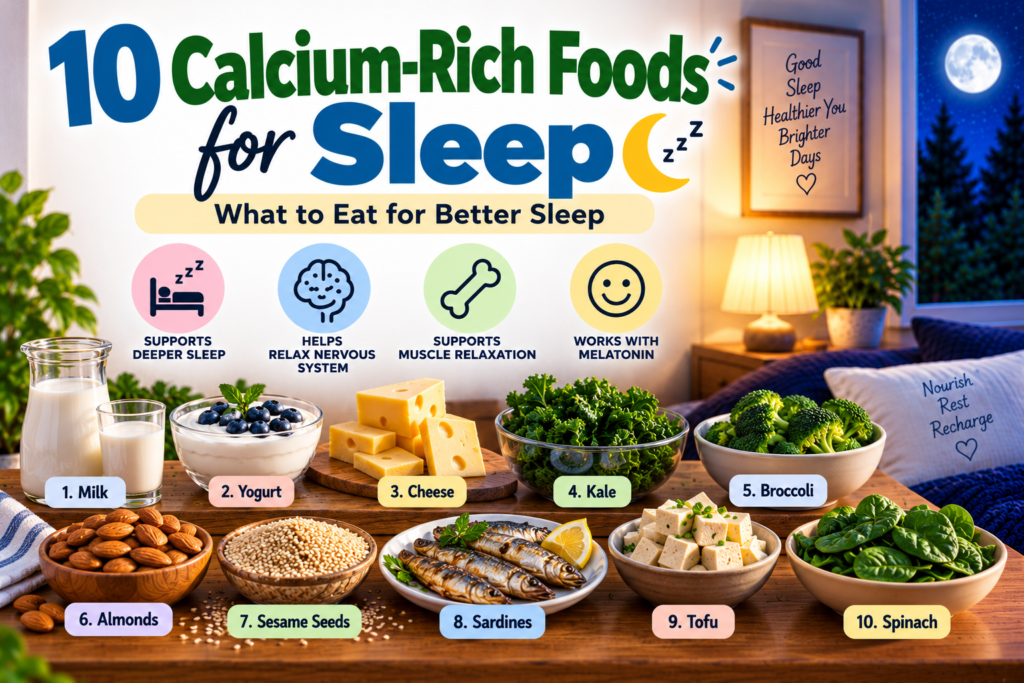
Calcium rich foods for sleep are worth understanding because calcium is essential for normal nerve signaling, muscle function, and bone health.
Milk, yogurt, paneer, ragi, sesame seeds, calcium-set tofu, and certain leafy greens can help you meet your daily calcium needs.
Although calcium is involved in biological processes related to sleep, research has not established that eating more calcium-rich foods directly improves sleep quality or treats insomnia.
In this guide, you will discover 10 calcium-containing foods, how much calcium they provide, and what the science actually says about calcium foods for better sleep.
Table of Contents
Why Is Calcium Important for Sleep?
Calcium is usually associated with strong bones and teeth, but its role in the body extends much further. It helps nerves transmit signals, muscles contract, and cells communicate. These functions are essential for normal physiological activity, including processes involving the nervous system.
Scientists have also investigated whether calcium intake and sleep quality are connected. However, there is an important distinction between calcium being involved in sleep-related biology and proving that consuming additional calcium improves sleep.
How Calcium May Influence Sleep Regulation
Calcium ions act as signalling molecules inside cells. Calcium-dependent pathways participate in neuronal activity and several processes involved in regulating sleep and wakefulness.
A review published in Frontiers in Systems Neuroscience discussed the potential roles of calcium signalling and calcium/calmodulin-dependent protein kinase II (CaMKII) in sleep regulation.
This research helps explain possible biological mechanisms, but it does not demonstrate that eating calcium-rich foods increases deep sleep or helps people fall asleep faster.
Can Low Calcium Intake Affect Sleep?
Some observational studies have found associations between lower calcium intake and less favourable sleep outcomes. However, these studies cannot establish that low calcium intake causes insomnia.
People who consume more calcium may also have different overall diets, activity levels, health conditions, or lifestyle habits. These factors can influence sleep independently.
If your usual diet does not provide enough calcium, improving your intake is sensible for your overall health. But calcium deficiency should not automatically be assumed to be the cause of poor sleep.
What Does the Research Say About Calcium and Sleep?
A 2025 systematic review by Isoda and colleagues examined the relationship between calcium intake, sleep quality, and sleep duration. The researchers identified seven independent studies reported across nine publications. Six of the seven studies were cross-sectional, meaning they examined associations rather than demonstrating cause and effect.
The findings suggested a possible relationship between calcium intake and sleep quality, but results varied. The researchers did not conduct a meta-analysis because there were too few suitable studies, and they concluded that the overall quality of evidence was unsatisfactory.
A separate 2024 study investigated calcium and vitamin D supplementation in adults with prediabetes. Some sleep-related improvements were reported, but the findings cannot establish that calcium-rich foods improve sleep in the general population.
Overall, the evidence is promising enough to justify further research, but not strong enough to recommend extra calcium as a sleep treatment.
Calcium and Sleep: Take-Home Message
Calcium is essential for normal body function and may be involved in sleep regulation. However, research has not established that increasing calcium intake directly improves sleep quality.
Also Read: Calcium and Sleep: What the Evidence Shows
10 Calcium Rich Foods for Sleep to Include in Your Diet
You can obtain calcium from dairy products, seeds, selected vegetables, certain fish, fortified foods, and some traditional Indian staples. The amount available varies with the food, serving size, processing method, and preparation.
The following foods can help you build a calcium-rich diet. They are nutritional choices, not proven remedies for insomnia.
1. Milk
Milk is one of the easiest ways to obtain calcium. One cup (approximately 240 mL) of cow’s milk provides around 275–300 mg of calcium, depending on the type.
Milk also supplies protein and other nutrients, making it a useful addition to breakfast or other meals.
You can drink milk at any convenient time of day. Although warm milk is a popular bedtime tradition, there is insufficient evidence that its calcium content directly improves sleep.
How to include it: Drink a glass of milk, add it to porridge, or use it in other meals. If lactose causes digestive discomfort, lactose-free milk may be an alternative.
2. Yogurt and Curd
Yogurt and curd provide calcium along with protein. Their calcium content varies according to the milk used and the preparation method.
For example, an 8-ounce (approximately 227 g) serving of plain low-fat yogurt provides about 415 mg of calcium in the US National Institutes of Health food-composition table. Indian curd and commercial yogurt products can differ, so check the label when available.
Plain curd is easy to include in everyday meals and can be a useful option for people who prefer traditional Indian foods.
How to include it: Have curd with lunch, use plain yogurt as a snack, or add it to a balanced meal. Choose a product that suits your dietary needs rather than assuming that a particular bedtime serving will improve sleep.
3. Paneer and Cheese
Paneer and cheese contribute calcium, but their calcium content varies considerably.
Some cheeses provide substantial amounts because calcium is retained during production. Paneer composition depends on the milk and manufacturing method, so it is better not to assign one calcium value to every type.
These foods also provide protein. Depending on the product, they can contain considerable saturated fat and calories, so portion size remains important.
How to include them: Add paneer to vegetables, curries, or other balanced meals. Cheese can also contribute calcium, but neither food needs to be eaten immediately before bed.
4. Calcium-Set Tofu
Tofu is particularly useful for people who avoid dairy products. However, not all tofu is equally rich in calcium.
Tofu made with calcium salts, such as calcium sulfate, can provide a substantial amount. According to the NIH food-composition table, half a cup of firm tofu made with calcium sulfate provides approximately 253 mg of calcium.
Tofu prepared using other coagulants may contain considerably less. Check the ingredients and nutrition information instead of assuming all tofu products have the same calcium content.
How to include it: Use calcium-set tofu in stir-fries, curries, salads, or other meals. It can be a practical source of both calcium and plant-based protein.
5. Ragi (Finger Millet)
Ragi, also known as finger millet, is a traditional Indian grain with a relatively high calcium content compared with many other cereals.
Indian food-composition sources report approximately 340–365 mg of calcium per 100 g of raw ragi, although values vary with the grain and source. This figure refers to the grain itself, not a prepared serving of ragi porridge or roti.
Ragi flour can be used to make dosa, roti, porridge, and other dishes. The amount of calcium in the finished meal depends on how much ragi it contains and the other ingredients used.
Ragi is a valuable dietary option, but it has not been established as a direct treatment for sleep problems.
How to include it: Use ragi in place of some other grains in a varied diet. You do not need to rely on ragi alone to meet your calcium requirements.
6. Sesame Seeds
Sesame seeds are concentrated sources of several nutrients, including calcium. One tablespoon provides approximately 80–90 mg of calcium, although the exact amount varies.
They can be added to chutneys, vegetable dishes, salads, or other recipes. Sesame also supplies protein, fats, and other minerals.
The calcium listed in a food-composition table is not necessarily absorbed completely. Plant compounds can reduce calcium absorption, and sesame seeds should be treated as one contributor to your daily intake rather than your only calcium source.
How to include them: Sprinkle sesame seeds over vegetables or use them in homemade chutney. Avoid them if you have a sesame allergy.
7. Chia Seeds
Chia seeds provide calcium, fibre, and plant-based omega-3 fatty acids. One tablespoon contains approximately 76 mg of calcium in the NIH food-composition table.
They can be added to porridge, yogurt, smoothies, or overnight oats. However, a small sprinkle will not supply all the calcium you need each day.
Chia seeds are a nutritious addition to meals, but there is insufficient evidence that they directly improve sleep because of their calcium or omega-3 content.
How to include them: Add chia seeds to yogurt or calcium-fortified soy milk for a snack that combines several nutrients.
8. Calcium-Fortified Plant Milk
Fortified plant beverages can help people who avoid dairy meet their calcium needs. Depending on the brand, one cup of calcium-fortified soy milk may provide approximately 300 mg of calcium.
Unfortified plant beverages can contain much less calcium, so the label matters. Soy milk also generally provides more protein than many other plant beverages, although products vary.
Some fortified drinks contain added vitamin D, which supports calcium absorption. Check the nutrition label for both nutrients.
How to include it: Choose a fortified product that suits your dietary needs. If the label advises shaking before use, follow those instructions because added calcium can settle during storage.
9. Leafy Green Vegetables
Some leafy vegetables provide useful amounts of calcium. Examples include kale, bok choy, and turnip greens.
The amount of calcium varies by vegetable and serving size. More importantly, the body does not absorb calcium equally well from all plant foods.
Spinach contains calcium, but its high oxalate content substantially reduces absorption. In the NIH fact sheet, calcium absorption from spinach is estimated at around 5%, compared with approximately 27% from milk. This means the calcium listed for spinach can be misleading if considered without its bioavailability.
How to include them: Rotate different vegetables through your meals. Broccoli, bok choy, kale, and other suitable vegetables can contribute to a varied diet, even though their calcium amounts per serving may be lower than those of some dairy products.
10. Sardines and Canned Salmon With Bones
Some fish are good calcium sources because their small, soft bones are eaten along with the flesh.
A 3-ounce serving of canned sardines with bones provides approximately 325 mg of calcium. The same serving size of canned salmon with edible bones provides around 180 mg.
Boneless fish fillets usually contain much less calcium than fish eaten with their bones. Sardines and salmon also provide protein, and oily fish supply omega-3 fatty acids.
How to include them: If you eat fish, sardines or canned salmon with edible bones can add variety to your calcium sources. Choose products that fit your dietary preferences and sodium needs.
Calcium Content of Common Foods: A Quick Comparison
The table below uses approximate values from the NIH Office of Dietary Supplements for selected foods. Ragi is included using Indian food-composition sources. Actual amounts can vary by brand, preparation, and serving size.
| Food and serving | Approximate calcium |
|---|---|
| Plain low-fat yogurt, 8 oz (227 g) | 415 mg |
| Sardines with bones, 3 oz (85 g) | 325 mg |
| Milk, 1 cup (240 mL) | 276–299 mg |
| Calcium-fortified soy milk, 1 cup | 299 mg |
| Firm tofu made with calcium sulfate, ½ cup | 253 mg |
| Canned salmon with bones, 3 oz | 181 mg |
| Chia seeds, 1 tablespoon | 76 mg |
| Bok choy, 1 cup raw, shredded | 74 mg |
| Ragi, 100 g raw grain | Approximately 340–365 mg |
The ragi figure is for raw grain, so it should not be compared directly with a cooked serving of another food. The other values are drawn from the NIH calcium fact sheet; ragi values are drawn from Indian government food-composition sources.
How Much Calcium Do You Need Each Day?
Your calcium needs depend on your age and life stage. The following figures are the US National Institutes of Health recommendations for adults.
| Group | Recommended daily calcium |
|---|---|
| Adults aged 19–50 years | 1,000 mg |
| Men aged 51–70 years | 1,000 mg |
| Women aged 51–70 years | 1,200 mg |
| Adults aged 71 years and older | 1,200 mg |
These figures are US recommendations. Requirements and dietary guidance can differ by country, so consult the relevant Indian guidance when planning your diet.
You do not need to obtain all your calcium from one food. Combining dairy products, fortified foods, suitable vegetables, seeds, and other calcium sources throughout the day can make it easier to meet your needs.
If you avoid dairy, options include calcium-fortified plant beverages, calcium-set tofu, ragi, and selected vegetables. People with medical conditions that affect calcium absorption may need individualised advice.
Should You Eat Calcium-Rich Foods Before Bed?
There is no established rule that calcium-rich foods must be eaten immediately before bedtime.
Calcium is involved in biological processes related to nervous-system function, but consuming extra calcium at night has not been shown reliably to trigger sleep or improve sleep quality.
A balanced evening meal that includes calcium-containing foods is reasonable. If you feel hungry later, a modest snack such as plain yogurt or a suitable fortified beverage may fit your needs. The choice should depend on your preferences, digestion, and overall diet.
Does Warm Milk Help You Sleep?
Warm milk is a familiar bedtime tradition, and drinking it may feel comforting as part of a relaxing routine. It also provides calcium and protein.
However, strong evidence that warm milk reliably improves sleep specifically because of its calcium content is lacking. If you enjoy milk and tolerate it well, there is no need to avoid it at bedtime—but it is not an essential sleep treatment.
People who avoid dairy can choose other calcium sources during the day.
Calcium From Food or Supplements: Which Is Better for Sleep?
For most people, food is a sensible starting point for meeting calcium requirements because calcium-containing foods also provide other nutrients.
Calcium supplements may be appropriate when dietary intake is inadequate or when a healthcare professional recommends them for a specific reason. They should not be taken simply because you are experiencing poor sleep.
Can Too Much Calcium Be Harmful?
Yes. More calcium is not always better.
Excessive calcium intake, particularly from supplements in susceptible people, can cause problems such as constipation and may increase kidney stone risk in some circumstances. People with kidney disease or conditions affecting calcium levels should seek individualised advice.
According to US guidance, the tolerable upper intake level is 2,500 mg per day for adults aged 19–50 and 2,000 mg per day for adults aged 51 and older. These are upper limits from all sources, not daily targets. National guidance may differ.
Calcium supplements can also interfere with the absorption of certain medicines, including levothyroxine and some antibiotics. If you take regular medication, ask your healthcare professional or pharmacist about suitable timing and possible interactions.
Also Read: Calcium and Sleep: What the Evidence Shows
Frequently Asked Questions About Calcium-Rich Foods for Sleep
1. Which foods are highest in calcium?
Plain yogurt, certain cheeses, sardines with edible bones, milk, calcium-fortified soy beverages, calcium-set tofu, and ragi can contribute substantial calcium. The amount depends on the serving size, preparation method, and specific product.
2. Which calcium-rich foods are suitable for vegetarians?
Vegetarians can obtain calcium from milk, curd, paneer, yogurt, ragi, sesame seeds, selected leafy greens, calcium-set tofu, and fortified plant beverages. Vegans can focus on suitable fortified products, calcium-set tofu, and other plant sources.
3. Is milk before bed good for sleep?
Milk provides calcium and protein and may be comforting as part of an evening routine. However, strong evidence that milk improves sleep specifically because of its calcium content is lacking.
4. Can calcium deficiency cause insomnia?
There is insufficient evidence to conclude that low calcium is a common direct cause of insomnia. Inadequate calcium intake should be addressed for general health, but persistent sleep problems may have many other causes.
5. Should I take calcium supplements to sleep better?
Calcium supplements are not established treatments for insomnia. They may be appropriate for nutritional or medical reasons, but consult a healthcare professional if you are unsure about your intake or take medicines that may interact with calcium.
6. Does calcium increase melatonin?
Calcium-dependent signalling is involved in biological processes related to sleep, but this does not establish that eating calcium-rich foods increases melatonin production or improves sleep in humans.
7. Which calcium-rich foods are best before bed?
There is no proven best calcium-rich food for bedtime. A modest serving of yogurt or a suitable fortified beverage may be a convenient snack, but timing is a matter of comfort and preference rather than an established sleep treatment.
Calcium-Rich Foods for Sleep: Take-Home Message
Calcium-rich foods help meet essential nutritional needs, but they are not proven sleep remedies. Include a variety of calcium sources in your diet, meet your daily requirements, and seek appropriate care for persistent sleep problems instead of relying on extra calcium.
References
- Isoda A, Kiriya J, Jimba M. Association between calcium intake and sleep quality: a systematic review. BMJ Nutr Prev Health. 2025;8(2). Read the full article on PubMed Central
- Miao Y, Zhang L, Zhang D, et al. Effects of vitamin D and/or calcium intervention on sleep quality in individuals with prediabetes: a post hoc analysis of a randomized controlled trial. Find the study on PubMed
- Wang Y, Minami Y, Ode KL, Ueda HR. The role of calcium and CaMKII in sleep. Front Syst Neurosci. 2022;16:1059421. Read the full article on PubMed Central
- National Institutes of Health, Office of Dietary Supplements. Calcium: Fact Sheet for Health Professionals. Read the official fact sheet
- National Institutes of Health, Office of Dietary Supplements. Calcium: Fact Sheet for Consumers. Read the consumer fact sheet
- NITI Aayog, Government of India. Promoting Millets in Diets: Best Practices Across States/UTs of India. View the report