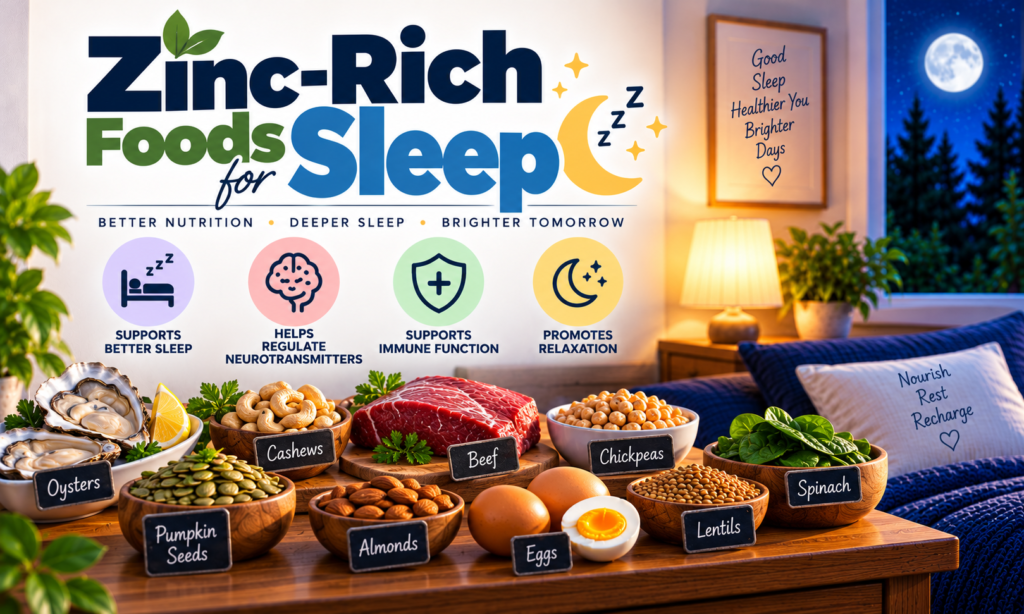
Zinc rich foods for sleep can help you meet your daily zinc requirements while supporting overall health as part of a balanced diet.
But can eating more zinc actually help you sleep better? Zinc plays several important roles in the body, and researchers have investigated its possible connection with sleep quality.
However, evidence suggesting that zinc supplements may improve certain aspects of sleep does not prove that eating zinc-rich foods directly improves sleep.
In this guide, you will discover 10 zinc-rich foods, their approximate zinc content, and practical ways to include them in your daily diet.
Table of Contents
Why Is Zinc Important for Sleep?
Zinc is an essential trace mineral involved in immune function, DNA synthesis, cell division, growth, and wound healing. The body needs zinc in small amounts, but it must obtain it regularly through food because it cannot produce the mineral itself.
Zinc also participates in processes involving the nervous system and normal brain function. Researchers have therefore investigated whether zinc status is associated with sleep quality and regulation.
How Is Zinc Related to Sleep?
Sleep is controlled by several interacting systems, including the body’s circadian clock, sleep pressure, hormones, neurotransmitters, and environmental cues. Zinc may participate in some biological processes relevant to these systems, but its exact role in human sleep remains under investigation.
It is important to distinguish a plausible biological mechanism from a proven health benefit. Even if a nutrient participates in a process related to sleep, consuming extra amounts does not necessarily improve that process.
Can Zinc Deficiency Affect Sleep?
Zinc deficiency can affect normal body functions and may contribute to problems such as impaired immunity, poor appetite, skin changes, and delayed wound healing. However, sleep problems have many possible causes, and insomnia alone does not establish that someone has zinc deficiency.
People with restricted diets, certain gastrointestinal conditions, or other factors affecting nutrient absorption may be more likely to have inadequate zinc intake. A varied diet can help meet requirements, while suspected deficiency may require clinical assessment.
What Does Research Say About Zinc and Sleep?
A 2024 systematic review examined eight human studies investigating zinc supplementation and sleep. Most studies suggested that supplementation might improve some measures of sleep quality in adults, but the findings were not consistent. The review did not find a significant effect on sleep disorders, and the authors called for better research.
Crucially, these studies examined supplements, not simply eating more zinc-rich foods. They therefore do not establish that increasing dietary zinc improves sleep in people who already consume enough.
Zinc and Sleep: Take-Home Message
Zinc is essential for normal health, but more zinc does not automatically mean better sleep.
A balanced diet can help you meet your needs, while persistent sleep problems deserve appropriate assessment.
Also Read:
10 Zinc-Rich Foods to Include in Your Diet
The following foods can help you obtain zinc through everyday meals. The amount in a serving varies with the food variety, brand, portion size, and cooking method. Animal foods often provide zinc that is more readily absorbed, while plant foods can still contribute meaningfully to daily intake.
1. Oysters and Other Shellfish
Oysters are among the richest dietary sources of zinc. Their zinc content can be substantially higher than that of most other foods, although it varies considerably by species and serving.
Other shellfish, including crab and certain other seafood, also provide zinc.
How to eat them: Choose properly cooked shellfish from a reliable source. If you do not eat seafood, the other foods in this list can help you meet your zinc needs.
Keep in mind: Oysters are not necessary for a healthy diet. Their exceptionally high zinc content means that frequent large servings, especially alongside supplements, may contribute to excessive intake.
2. Beef and Other Red Meat
Beef provides zinc along with protein, vitamin B12, and iron. Lamb and pork can also contribute to zinc intake.
How to eat it: Include moderate portions of lean, cooked meat in balanced meals if you eat meat. Combine it with vegetables, whole grains, or other fibre-rich foods.
Keep in mind: You do not need to eat red meat every day to obtain enough zinc. If you prefer plant-based meals, combine legumes, nuts, seeds, and whole grains across the day.
3. Pumpkin Seeds
Pumpkin seeds are a useful plant-based source of zinc. They also provide protein, unsaturated fats, magnesium, and other minerals.
How to eat them: Add a small handful of pumpkin seeds to porridge, curd, salads, or homemade trail mix. Unsalted seeds are a practical option if you are limiting sodium.
Keep in mind: Pumpkin seeds contain phytates, which can reduce the absorption of zinc. Their contribution still counts, but the amount absorbed may differ from that obtained from animal foods.
4. Chickpeas
Chickpeas provide zinc alongside protein, fibre, folate, and other nutrients. They are widely used in Indian meals and can be a convenient option for people following vegetarian diets.
How to eat them: Include cooked chana in curries, chana masala, salads, or homemade hummus. Pair chickpeas with vegetables and whole grains for a balanced meal.
Keep in mind: Soaking and thoroughly cooking dried chickpeas can improve their digestibility. Preparation methods that reduce phytates may also improve mineral availability, although the effect varies.
5. Lentils and Dal
Lentils and other pulses contribute zinc, plant protein, fibre, and several B vitamins. Their nutritional value makes them useful staples for everyday meals.
How to eat them: Include masoor dal, moong dal, toor dal, or other pulses in regular meals. A varied diet that includes different pulses, grains, seeds, and nuts can help support adequate zinc intake.
Keep in mind: Dal is not a sleep treatment. Its value lies in helping provide essential nutrients as part of an overall balanced diet.
6. Oats and Whole Grains
Oats provide zinc as well as fibre and other nutrients. Whole-wheat products and some other whole grains also contribute zinc.
How to eat them: Prepare oats with milk or a fortified alternative, and add fruit, nuts, or seeds. You can also include whole-wheat roti and other whole grains in your regular meals.
Keep in mind: Whole grains contain phytates, which can reduce zinc absorption. They remain nutritious foods, and there is no need to avoid them simply because of this effect.
7. Poultry
Chicken and turkey provide zinc along with protein and other nutrients. Their zinc content varies by cut and portion size.
How to eat them: Include properly cooked poultry in curries, soups, or balanced meals with vegetables and whole grains.
Keep in mind: Poultry can contribute to zinc intake, but it is not the only option. Eggs, dairy, pulses, nuts, and seeds can also help supply this mineral.
8. Milk, Curd, and Cheese
Dairy foods provide zinc as well as protein and calcium. The amount varies by product and serving size.
How to eat them: Milk, plain curd, and cheese can be included according to your dietary preferences and nutritional needs. Unsweetened curd with nuts or seeds is one simple snack option.
Keep in mind: Dairy products can contribute to daily zinc intake, but there is no strong evidence that consuming them specifically at bedtime improves sleep through their zinc content.
9. Eggs
Eggs contain zinc and provide high-quality protein, vitamin B12, and other nutrients. Their zinc content is lower than that of oysters and some meats, but they can contribute to overall intake.
How to eat them: Include boiled eggs, omelettes, or cooked eggs in meals if they fit your diet.
Keep in mind: Eggs alone are unlikely to meet an adult’s full daily zinc requirement. Combine them with other zinc-containing foods.
10. Cashews and Other Nuts
Cashews provide zinc, unsaturated fats, protein, and other minerals. Peanuts and certain other nuts also contribute zinc.
How to eat them: Add a small handful of unsalted nuts to breakfast, snacks, or curd. Nut butters can also contribute, depending on the product and serving size.
Keep in mind: Nuts are energy-dense, so portion size matters if you are monitoring your calorie intake. Like seeds and legumes, nuts contain phytates that may reduce zinc absorption.
Zinc Content of Common Foods: A Quick Comparison
The following table gives approximate amounts of zinc in commonly eaten foods. Values are rounded and may vary with the specific food, preparation, and serving size. Oysters are especially variable, so their value should not be treated as a fixed amount.
| Food | Typical serving | Approximate zinc |
|---|---|---|
| Oysters | 3 oz (85 g) | Highly variable; can exceed 20 mg |
| Beef | 3 oz (85 g), cooked | About 3–8 mg, depending on cut |
| Pumpkin seeds | 1 oz (28 g) | About 2.2 mg |
| Cooked oats | 1 cup | About 2.3 mg |
| Cashews | 1 oz (28 g) | About 1.6 mg |
| Turkey | 3 oz (85 g), cooked | About 1.5 mg |
| Lentils | ½ cup, cooked | About 1.3 mg |
| Chickpeas | ½ cup, cooked | Approximately 1–1.5 mg |
| Milk | 1 cup | About 1 mg |
| Egg | 1 large | About 0.6 mg |
These figures are intended as practical estimates rather than laboratory values for every food. The NIH Office of Dietary Supplements provides further information on zinc sources and dietary reference values.
How to Get Enough Zinc From Your Diet
You do not need to eat all ten foods listed above. Instead, aim for a varied diet that regularly includes several sources of zinc.
A practical approach is to combine different food groups throughout the day:
- Breakfast: Oats with milk, nuts, or pumpkin seeds.
- Lunch: Dal or chana with roti or rice and vegetables.
- Snack: A small handful of cashews or pumpkin seeds.
- Dinner: Eggs, poultry, meat, or pulses, depending on your dietary preference.
These are examples, not a prescribed meal plan. Choose foods according to your appetite, budget, cultural preferences, and nutritional needs.
Does Food Preparation Affect Zinc Absorption?
Yes. Zinc absorption depends partly on the food source and the overall composition of the meal.
Plant foods such as pulses, nuts, seeds, and whole grains contain phytates. These compounds bind certain minerals and can reduce the amount of zinc absorbed from a meal.
Soaking, sprouting, fermenting, and appropriate cooking can reduce phytate levels in some foods. These methods may improve mineral availability, although the effect varies by food and preparation technique.
You do not need to avoid plant foods because they contain phytates. They provide valuable fibre, protein, vitamins, and minerals, and they can contribute to zinc intake as part of a balanced diet.
How Much Zinc Do You Need Each Day?
Zinc requirements vary by age, sex, and life stage. The following US Recommended Dietary Allowances (RDAs) are useful reference values for healthy adults.
| Group | Zinc RDA per day |
|---|---|
| Adult men | 11 mg |
| Adult women | 8 mg |
| Pregnant adults | 11 mg |
| Breastfeeding adults | 12 mg |
Requirements for children and adolescents differ. National recommendations may also vary, so these US values should not be treated as the official dietary reference values for every country.
The best way to meet your needs is usually to eat a variety of zinc-containing foods regularly. If you have a restricted diet or a medical condition that affects absorption, discuss your nutritional needs with a healthcare professional.
Can Zinc Supplements Improve Sleep?
Zinc supplements have been investigated as a possible way to improve sleep quality. The 2024 systematic review of eight human studies found some encouraging results, but the findings were mixed and did not establish zinc as a treatment for sleep disorders.
Several limitations matter: the studies used different doses and durations, involved different groups of participants, and did not provide a consistent answer for everyone. More research is needed to determine whether supplementation helps particular groups, including people with inadequate zinc intake.
Eating zinc-rich foods is not equivalent to taking a zinc supplement. Foods provide zinc alongside other nutrients, while supplements may deliver amounts that are much higher than normal dietary intake.
If you suspect a deficiency, seek professional advice rather than starting high-dose zinc for sleep. Persistent insomnia, frequent waking, loud snoring, or excessive daytime sleepiness may require assessment for causes that zinc cannot address.
Can Too Much Zinc Be Harmful?
Yes. Excessive zinc intake can cause nausea, vomiting, stomach cramps, and diarrhoea. Taking high amounts over time can interfere with copper absorption and lead to copper deficiency.
The US tolerable upper intake level for adults is 40 mg of zinc per day from all sources, including food, supplements, and medicines. This is a safety limit, not a target intake. A healthcare professional may recommend different doses for specific medical reasons.
Zinc can also interact with certain medicines, including some antibiotics and penicillamine. If you take regular medication, check with your doctor or pharmacist before using zinc supplements.
Also Read:
Frequently Asked Questions
1. Which food is highest in zinc?
Oysters are among the richest natural food sources of zinc. Their zinc content varies considerably by species and serving. Beef and other meats, pumpkin seeds, oats, nuts, and legumes also contribute zinc.
2. Can eating zinc-rich foods help me sleep better?
Zinc is essential for normal health, and researchers are studying its relationship with sleep. However, there is not enough evidence to conclude that eating more zinc-rich foods directly improves sleep in people who already get enough zinc.
3. Are pumpkin seeds good sources of zinc?
Yes. Pumpkin seeds provide zinc along with protein, unsaturated fats, and other minerals. A small handful can be a convenient addition to meals or snacks, although the amount absorbed depends partly on the overall diet.
4. Are zinc-rich vegetarian foods enough to meet daily needs?
They can contribute substantially to daily zinc intake. Useful choices include chickpeas, lentils, whole grains, pumpkin seeds, and cashews. Because phytates in plant foods can reduce zinc absorption, eating a varied diet and using suitable preparation methods can be helpful.
5. Should I take zinc supplements before bed?
There is no established bedtime schedule for zinc supplements to improve sleep. Supplementation may be appropriate for a diagnosed deficiency or another medical indication, but taking extra zinc solely for sleep is not routinely recommended.
6. Can I take zinc every day?
Most people can meet their requirements through a balanced diet. Supplements may be appropriate in certain circumstances, but regular high-dose use can cause adverse effects, including copper deficiency. Seek professional advice before taking zinc supplements long term.
7. Does zinc deficiency cause insomnia?
Insomnia has many possible causes, and it cannot be diagnosed as a zinc-deficiency symptom on its own. If you have persistent sleep difficulties or risk factors for nutrient deficiency, a healthcare professional can help determine whether further assessment is needed.
Zinc-Rich Foods for Sleep: Take-Home Message
Include zinc-rich foods such as legumes, seeds, nuts, whole grains, dairy, eggs, and suitable animal foods in a varied diet to help meet your daily requirements. However, zinc-rich foods have not been proven to treat insomnia or improve sleep in everyone. Focus on balanced nutrition, and seek medical advice for persistent sleep difficulties rather than relying on supplements.
References
- Jazinaki MS, Gheflati A, Moghadam MRSF, et al. Effects of zinc supplementation on sleep quality in humans: A systematic review of randomized controlled trials. Health Science Reports. 2024;7(10). Read the full review on PubMed Central.
- National Institutes of Health, Office of Dietary Supplements. Zinc: Fact Sheet for Health Professionals.
- National Institutes of Health, Office of Dietary Supplements. Zinc: Fact Sheet for Consumers.
- MedlinePlus. Zinc in Diet.