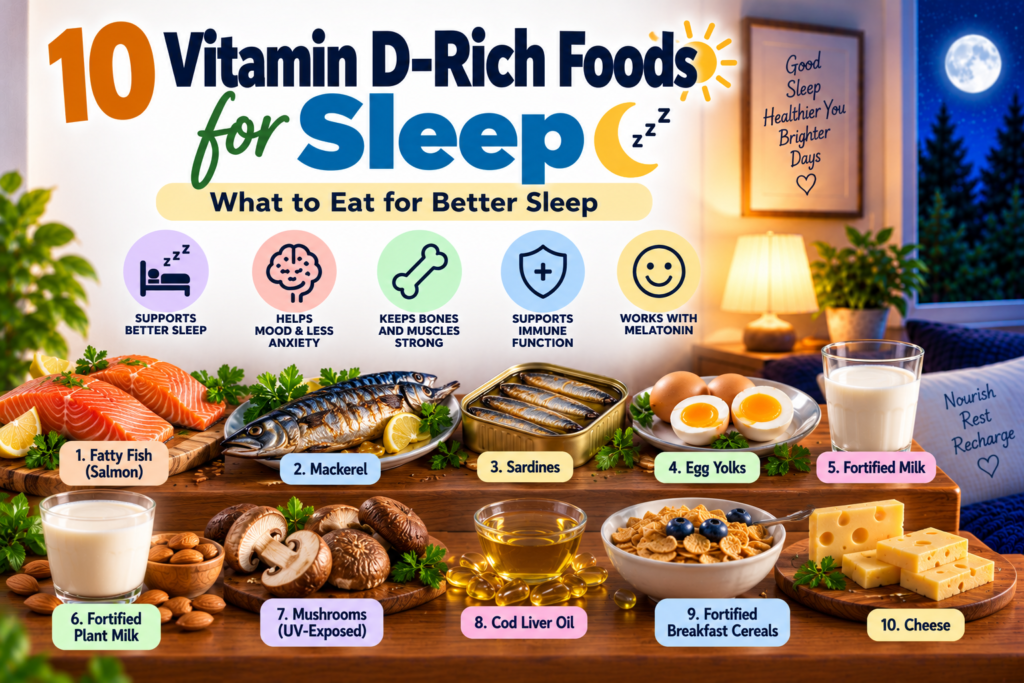
Vitamin D Rich foods for sleep include oily fish, eggs, UV-exposed mushrooms, and foods fortified with vitamin D, such as certain milk products and breakfast cereals.
Vitamin D is essential for bone health, calcium absorption, and normal muscle function. Researchers have also investigated its relationship with sleep quality, but no particular food has been proven to treat insomnia or reliably help you fall asleep faster.
Including vitamin D sources in your diet is still worthwhile, especially if you rarely eat fish or other foods that naturally contain this vitamin.
Table of Contents
Why Is Vitamin D Important for Sleep?
Vitamin D is a fat-soluble vitamin that helps your body absorb calcium and maintain healthy bones. It also contributes to normal muscle function and several other processes throughout the body.
Its connection with sleep is less straightforward.
Researchers have found associations between low vitamin D levels and certain sleep problems. Studies have also explored whether vitamin D supplementation can improve sleep quality. However, these findings do not prove that a lack of vitamin D is the cause of insomnia or that eating more vitamin D-rich foods will solve sleep difficulties.
It helps to separate two questions: Are you getting enough vitamin D for good health? And will increasing your vitamin D intake improve your sleep? The first is an established nutritional concern. The second remains an active area of research.
Vitamin D and Sleep: Take-Home Message
Vitamin D is essential for health, but vitamin D-rich foods are not proven sleep remedies. Aim to meet your nutritional needs rather than eating a particular food specifically to treat insomnia.
Vitamin D Supplement and Sleep, what research say?
A 2022 systematic review and meta-analysis examined 19 studies investigating vitamin D supplementation and sleep.
The researchers found that supplementation improved scores on the Pittsburgh Sleep Quality Index, a questionnaire used to assess sleep quality. The estimated improvement was statistically significant, and the certainty of evidence for this outcome was rated moderate.
However, findings for sleep duration, sleep-related difficulties, daytime sleepiness, and sleep disorders were less consistent.
There is another important limitation: the researchers studied vitamin D supplements, not vitamin D-rich foods. The findings therefore cannot establish that eating more fish, eggs, or fortified foods will produce the same results.
The practical conclusion is straightforward. Getting enough vitamin D matters, and correcting a deficiency may be necessary for your health. But vitamin D should not be treated as a proven cure for insomnia. If sleep problems continue, other causes need to be considered.
10 Vitamin D-Rich Foods to Include in Your Diet
Vitamin D occurs naturally in relatively few foods. Oily fish is among the richest dietary sources, while egg yolks and some other animal foods provide smaller amounts. UV-exposed mushrooms can supply vitamin D2, and fortified products can make a useful contribution.
The foods below offer different ways to obtain vitamin D. Some are naturally rich sources; others contribute smaller amounts or are useful only when fortified.
1. Salmon and Trout
Salmon and trout are among the strongest natural dietary sources of vitamin D. They also provide protein and, depending on the species, omega-3 fatty acids.
The NIH Office of Dietary Supplements lists approximately 14.2 micrograms (570 IU) of vitamin D in a 3-ounce serving of cooked salmon and 16.2 micrograms (645 IU) in the same serving of cooked trout. Actual amounts vary with species and preparation.
These fish may be expensive or less accessible in some Indian households, so they are options rather than foods you need to buy specifically for vitamin D.
How to include them: Grill, bake, or cook fish as part of a balanced meal. There is no established advantage to eating it at bedtime.
2. Indian Oily Fish, Including Mackerel
For Indian readers, locally available oily fish can be a more practical choice than imported salmon or trout. Mackerel, commonly called bangda, is one option. Sardines and other oily fish may also fit into the diet, depending on local availability.
The vitamin D content varies by species, season, and preparation. Values reported for Atlantic mackerel or other fish should not automatically be applied to Indian mackerel.
Fish is still a useful dietary choice for people who eat it, but its exact contribution to vitamin D intake depends on the variety and portion.
How to include it: Prepare fish curry, grilled fish, or a lightly cooked fish dish and serve it with vegetables and rice or roti. Choose varieties that are affordable and readily available.
3. Sardines
Sardines provide vitamin D along with protein and other nutrients. Fresh sardines and canned sardines can differ in their nutrient content, so the amount depends on the product and serving.
The NIH lists approximately 1.2 micrograms (46 IU) in two canned Atlantic sardines. This is a reference value for that specific food, not a figure that applies to every sardine preparation.
How to include them: Use sardines in a curry or serve them as part of a balanced meal. If you choose canned fish, check the sodium content.
4. UV-Exposed Mushrooms
Mushrooms are unusual because they can produce vitamin D2 when exposed to ultraviolet light. Certain commercially available mushrooms are treated with UV light to increase their vitamin D content.
Ordinary mushrooms may contain much less vitamin D, so the distinction matters. A mushroom dish should not automatically be counted as a rich source unless the product’s vitamin D content is known.
According to the NIH, half a cup of sliced white mushrooms exposed to UV light provides approximately 9.2 micrograms (366 IU) of vitamin D.
How to include them: Add mushrooms to a vegetable stir-fry, omelette, soup, or curry. If you are choosing mushrooms specifically for vitamin D, look for information about UV exposure or check the product label.
5. Egg Yolks
Egg yolks contain vitamin D, although the amount is modest compared with oily fish or UV-exposed mushrooms. Eggs are convenient, widely used, and provide protein alongside other nutrients.
The NIH lists approximately 1.1 micrograms (44 IU) in one large scrambled egg. The actual amount can vary with the hen’s diet and production system.
Eggs can contribute to your daily vitamin D intake, but they are unlikely to meet your needs on their own.
How to include them: Boiled eggs, omelettes, or eggs cooked with vegetables are easy options for breakfast, lunch, or dinner.
6. Fortified Milk
Some milk products have vitamin D added during processing. This can make them a useful source, but not all milk contains added vitamin D.
The NIH lists approximately 2.9 micrograms (120 IU) per cup of fortified 2% milk in its reference table. This is a US food value and should not automatically be applied to ordinary milk sold in India.
How to choose it: Check the nutrition label to see whether vitamin D has been added and how much one serving provides. Milk can contribute to a balanced diet, but drinking it at bedtime has not been established as a vitamin D-based treatment for sleep problems.
7. Fortified Plant-Based Milk
Some soy, almond, and oat drinks are fortified with vitamin D. These products can be useful for people who avoid dairy, including those following vegan diets.
The amount varies by brand, and many plant-based drinks contain little or no vitamin D unless it has been added. Their calcium and protein content also differs, so check these separately if they are important to your diet.
How to choose it: Look for vitamin D in the nutrition information and compare the amount per serving. Do not assume that all plant-based milk alternatives are fortified.
8. Fortified Breakfast Cereals
Some breakfast cereals contain added vitamin D. They can help increase intake, especially when natural dietary sources are limited.
Fortification levels vary widely. A cereal’s whole-grain or health-focused marketing does not guarantee that it contains vitamin D.
How to choose them: Check the label for vitamin D and the amount per serving. Consider added sugar and the product’s overall nutritional value as well.
9. Cheese
Cheese contains small amounts of vitamin D, but it is not among the richest sources. The NIH lists approximately 0.4 micrograms (17 IU) in a 1.5-ounce serving of cheddar cheese.
Cheese can contribute a little vitamin D while providing protein and calcium. However, eating larger portions is not an efficient way to meet your vitamin D requirements, and some varieties are high in sodium and saturated fat.
How to include it: Enjoy moderate portions in meals or snacks, according to your dietary needs.
10. Beef Liver
Beef liver contains vitamin D, but its contribution is relatively modest compared with oily fish. The NIH lists approximately 1 microgram (42 IU) in a 3-ounce serving of braised beef liver.
Liver is also very rich in preformed vitamin A. Excessive intake of preformed vitamin A can be harmful, and people who are pregnant or may become pregnant should seek specific guidance about liver consumption.
How to approach it: If liver is already part of your diet, it can contribute some vitamin D. There is no need to add it specifically for sleep, particularly when other food sources better suit your dietary preferences.
Vitamin D Content of Selected Foods
The following figures are reference values from the NIH Office of Dietary Supplements. They refer to specific foods and portions; amounts can vary with species, preparation, and fortification.
| Food | Reference serving | Vitamin D |
|---|---|---|
| Trout, cooked | 3 ounces | 16.2 mcg (645 IU) |
| Salmon, cooked | 3 ounces | 14.2 mcg (570 IU) |
| UV-exposed white mushrooms | ½ cup | 9.2 mcg (366 IU) |
| Fortified 2% milk | 1 cup | 2.9 mcg (120 IU) |
| Fortified breakfast cereal | 1 serving providing 10% of the US Daily Value | 2.0 mcg (80 IU) |
| Canned Atlantic sardines | 2 sardines | 1.2 mcg (46 IU) |
| Scrambled egg | 1 large | 1.1 mcg (44 IU) |
| Braised beef liver | 3 ounces | 1.0 mcg (42 IU) |
| Cheddar cheese | 1.5 ounces | 0.4 mcg (17 IU) |
Source: NIH Office of Dietary Supplements — Vitamin D Fact Sheet. These figures are not guaranteed amounts for every product or recipe.
For many Indian households, locally available oily fish and eggs may be practical options. Fortified milk or plant-based drinks can help too, but only when vitamin D has actually been added. UV-exposed mushrooms are another option when available.
How Much Vitamin D Do You Need Each Day?
The US National Institutes of Health lists the following recommended dietary allowances for healthy people:
| Age or life stage | Recommended daily intake |
|---|---|
| Adults aged 19–70 years | 600 IU (15 mcg) |
| Adults older than 70 years | 800 IU (20 mcg) |
| Pregnancy and breastfeeding | 600 IU (15 mcg) |
These are US reference values; recommendations can differ by country and individual circumstances.
Vitamin D is fat-soluble, so the body can store it. Taking more than you need does not automatically provide extra benefits. Excessive vitamin D intake, particularly from supplements, can lead to high blood calcium levels and other complications.
The US adult upper intake level is 4,000 IU (100 mcg) per day from all sources, unless a higher dose is prescribed and monitored by a healthcare professional. This is a safety limit, not a target.
Can Food Alone Provide Enough Vitamin D?
That depends on your diet, health, absorption, and the foods available to you. Because relatively few foods naturally contain substantial amounts of vitamin D, some people may find it difficult to meet their needs through food alone.
If you have a confirmed deficiency, dietary changes may not be enough to correct it. A healthcare professional can advise whether testing or supplementation is appropriate. A blood test measuring 25-hydroxyvitamin D is commonly used when assessing vitamin D status is clinically indicated.
Do You Need Vitamin D Supplements for Better Sleep?
Not necessarily. A supplement may be appropriate for someone with a deficiency or a specific medical need, but it is not an established treatment for insomnia.
The distinction is important because studies of supplementation cannot be used to claim that vitamin D-rich foods have the same effects. Nor does everyone with sleep difficulties need a vitamin D test or supplement.
If you suspect deficiency because of known risk factors or ongoing symptoms, discuss your situation with a healthcare professional rather than starting high-dose vitamin D on your own.
Other Habits That May Help You Sleep Better
Vitamin D is only one part of overall health. If your sleep has been poor, it may be more helpful to look at your daily routine and sleeping environment than to focus on one nutrient.
- Keep a consistent sleep schedule. Try to wake up and go to bed at similar times each day.
- Get daylight during the day. Daylight exposure helps regulate the body clock, although it is not a reason to seek excessive unprotected sun exposure.
- Limit caffeine later in the day. Tea, coffee, energy drinks, and other caffeinated products can interfere with sleep.
- Make your bedroom comfortable. A quiet, dark, and comfortably cool environment may make sleep easier.
- Adjust meal timing if needed. If heavy meals close to bedtime cause discomfort, allow more time between eating and sleeping.
- Seek help for persistent sleep problems. Ongoing insomnia, loud snoring, gasping during sleep, or excessive daytime sleepiness may need medical assessment.
For chronic insomnia, cognitive behavioural therapy for insomnia (CBT-I) is an evidence-based treatment. Dietary changes can support general health, but they may not resolve an underlying sleep disorder.
Frequently Asked Questions
1. Which vitamin D-rich foods are best for sleep?
Oily fish, sunlight-exposed mushrooms, eggs, and appropriately fortified foods are useful sources of vitamin D. They can help you meet your nutritional needs, but none has been proven to treat insomnia specifically.
2. Do eggs contain enough vitamin D?
Egg yolks contain some vitamin D, but the amount in one egg is modest. Eggs can contribute to daily intake, although they are unlikely to provide all the vitamin D you need on their own.
3. Are mushrooms a good source of vitamin D?
Some mushrooms exposed to UV light contain meaningful amounts of vitamin D2. Ordinary mushrooms may contain much less, so the product and how it was grown matter.
4. Is Indian milk fortified with vitamin D?
Some milk products sold in India are fortified with vitamin D, but you should not assume that every milk product contains added vitamin D. Check the nutrition label.
5. Does vitamin D help you fall asleep faster?
Research has investigated vitamin D supplementation and sleep quality, but the results are not conclusive for all sleep outcomes. There is no established evidence that eating a particular vitamin D-rich food makes you fall asleep faster.
6. Can I take vitamin D tablets to improve sleep?
Vitamin D supplements may be appropriate for a deficiency or another medical reason, but they are not an established treatment for insomnia. Ask a healthcare professional whether supplementation is suitable for you, especially before taking high doses.
Vitamin D-Rich Foods for Sleep: Take-Home Message
Include oily fish, eggs, sunlight-exposed mushrooms, in a varied diet to help meet your vitamin D needs. Adequate vitamin D is important for health, but vitamin D-rich foods are not proven sleep remedies. If you suspect a deficiency or have persistent sleep problems, seek appropriate medical advice.
Also Read
References
- National Institutes of Health, Office of Dietary Supplements. Vitamin D: Fact Sheet for Health Professionals.
https://ods.od.nih.gov/factsheets/VitaminD-HealthProfessional/ - National Institutes of Health, Office of Dietary Supplements. Vitamin D: Fact Sheet for Consumers.
https://ods.od.nih.gov/factsheets/VitaminD-Consumer/ - Abboud M. Vitamin D supplementation and sleep: a systematic review and meta-analysis of intervention studies. Nutrients. 2022;14(5):1076.
https://pubmed.ncbi.nlm.nih.gov/35268051/ - Mirzaei-Azandaryani Z, Abdolalipour S, Mirghafourvand M. The effect of vitamin D on sleep quality: a systematic review and meta-analysis. Nutrition and Health. 2022;28(4):515–526.
https://pubmed.ncbi.nlm.nih.gov/35578558/ - Food Safety and Standards Authority of India (FSSAI). Fortified Food: information on food fortification and the +F logo.
https://www.fssai.gov.in/citizen/fortified-food