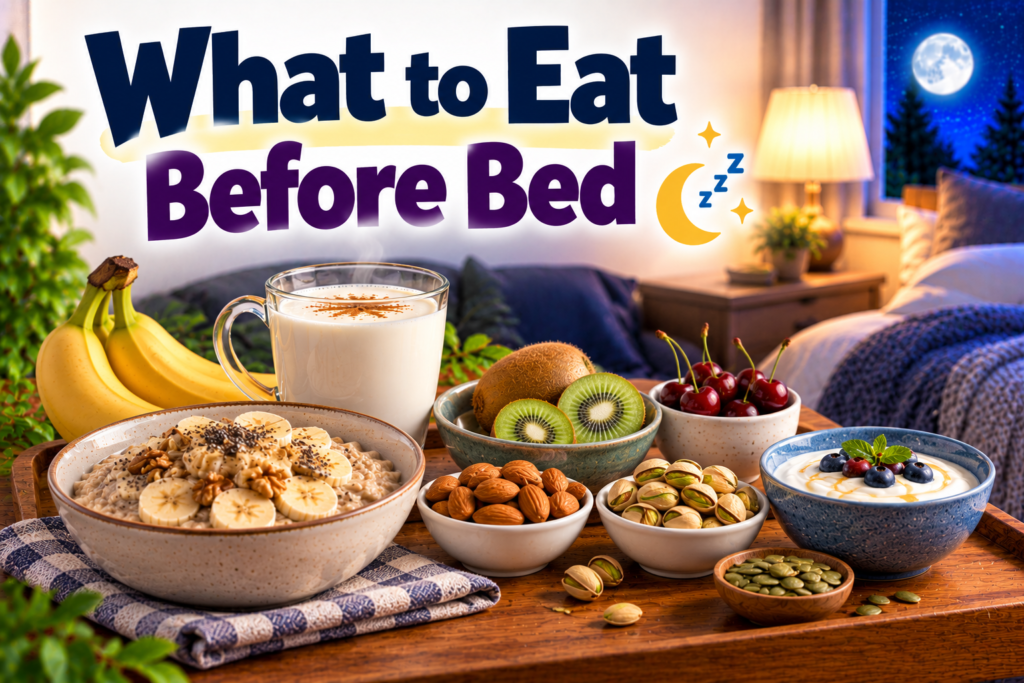
It is late at night. You are getting ready for bed, but your stomach starts to rumble. Should you eat something, drink a glass of milk, or ignore the hunger and go to sleep?
So you are wandering “what to eat before bed”, the best night snack.
If you are wondering what to eat before bed, a small, balanced snack is usually a reasonable choice when you are genuinely hungry.
You do not need to go to bed hungry simply because it is nighttime. However, a large meal close to bedtime may leave you feeling uncomfortable, and certain foods or drinks can interfere with sleep.
Everyday foods such as plain curd, a banana, oats, nuts or whole-grain toast can make convenient bedtime snacks.
None is a guaranteed sleep aid, though. Your overall diet, meal timing, digestive comfort and daily sleep habits matter more than finding one special food to eat at night.
In this guide, we’ll look at the best bedtime snacks, foods and drinks to limit, how long to wait after dinner before sleeping, and simple options that work well in Indian households.
Table of Contents
What Is the Best Thing to Eat Before Bed?
There is no single food that guarantees a good night’s sleep. The best choice depends on how hungry you are, how soon you plan to go to bed, and how well you tolerate different foods.
If you need a snack, choose something that satisfies your hunger without leaving you overly full.
| Bedtime snack | Why it can be a sensible choice |
|---|---|
| Plain curd or yoghurt | Provides protein and calcium |
| Banana | Provides carbohydrates, potassium and vitamin B6 |
| Almonds or walnuts | Provide unsaturated fats, fibre and some protein |
| Oatmeal | Provides carbohydrates, fibre and other nutrients |
| Whole-grain toast with peanut butter | Combines carbohydrates, fat and protein |
| A small glass of milk | Provides protein and calcium |
| Roasted chana | Provides plant protein and fibre |
These are nutritious nighttime snacks, not proven treatments for insomnia. Research has not established that eating any one of these foods immediately before bed will reliably help everyone fall asleep faster or sleep more deeply.
If you have already eaten a satisfying dinner and are not hungry, there is no need to add another meal simply because it is bedtime.
7 Foods You Can Consider Eating Before Bed
The following foods are practical choices when you need something small to eat in the evening. Their main value is their nutritional content and convenience—not a guaranteed effect on sleep.
1. Banana
Bananas are easy to find, require no preparation and provide carbohydrates, potassium and vitamin B6.
Vitamin B6 plays a role in normal nervous-system function and several metabolic processes. However, eating a banana before bed has not been shown to reliably make healthy adults sleepy.
How to eat it: Have one small banana on its own, or pair it with a little plain curd if you need something more filling.
If you are interested in the research on another fruit, read our guide to kiwi and sleep.
2. Plain curd or yoghurt
Plain curd and yoghurt provide protein and calcium. Their protein content can also help make a small snack more satisfying.
Choose an unsweetened variety if you want to avoid unnecessary added sugar. You can add a few pieces of fruit for natural sweetness.
How to eat it: Try a small bowl of plain curd, with or without a little sliced banana.
If you have lactose intolerance, choose a product you tolerate or a suitable lactose-free alternative. Dairy is optional; you do not need to consume it to sleep well.
3. Oats
Oats provide carbohydrates, fibre and several micronutrients. They are easy to prepare and can be a useful option when fruit alone does not satisfy your hunger.
Carbohydrates may influence the availability of tryptophan in the brain under certain dietary conditions. However, the relationship between carbohydrate intake and sleep is complex, and evidence about carbohydrates generally does not prove that oats themselves improve sleep.
How to eat them: Prepare a small bowl of oatmeal with milk or water. Add a little fruit if you like, and keep added sugar modest.
4. Almonds and walnuts
Nuts provide unsaturated fats, fibre and some protein. Almonds contain magnesium, while walnuts provide plant-based omega-3 fatty acids.
These nutrients are important for health, but eating nuts immediately before bed has not been proven to improve sleep in everyone. Nuts are also energy-dense, so a modest portion is usually more practical than eating directly from a large packet.
How to eat them: Try a small handful of unsalted almonds or walnuts if you enjoy them and tolerate them well.
You can learn more in our guides to walnuts and sleep and magnesium-rich foods for sleep.
5. Milk
A glass of warm milk is a familiar bedtime tradition in many Indian households. Milk provides protein and calcium, and a warm drink may feel comforting as part of a relaxing evening routine.
Milk also contains tryptophan, an amino acid involved in the production of serotonin and melatonin. However, the presence of tryptophan does not prove that an ordinary glass of milk will noticeably improve sleep.
How to drink it: If you enjoy milk, try a small glass of warm or room-temperature milk without excessive added sugar.
Warm milk is a comfort choice, not a necessary sleep treatment. Water is perfectly fine if you are thirsty, and you do not need to force yourself to drink milk before bed.
6. Whole-grain toast with peanut butter
If fruit alone does not satisfy your hunger, whole-grain toast with a thin layer of peanut butter can provide a more filling combination of carbohydrates, fat and protein.
This is a practical option for people who return home late or have a long gap between dinner and bedtime.
How to eat it: Start with one slice of whole-grain toast and a modest amount of peanut butter. Adjust the portion to your hunger rather than turning the snack into another full meal.
Avoid peanut butter if you have a peanut allergy, and choose a product that suits your dietary needs.
7. Roasted chana or a small serving of chickpeas
For people who prefer savoury snacks, roasted chana or a small serving of lightly prepared chickpeas provides plant protein, fibre and carbohydrates.
These familiar Indian foods can be convenient alternatives to packaged snacks. However, a large, heavily spiced or oily serving may cause discomfort close to bedtime, especially if you are prone to acidity or bloating.
How to eat them: Try a small portion of roasted chana or lightly seasoned chickpeas. If they cause gas or bloating, choose a different snack.
What Should You Avoid Eating or Drinking Before Bed?
You do not need a long list of forbidden foods. The aim is to recognise which choices interfere with your sleep, digestion or comfort.
Large, heavy meals
A large meal shortly before lying down may leave you feeling overly full or uncomfortable. This is particularly relevant if you experience acid reflux.
When your schedule allows, finish dinner a few hours before bed. If you must eat late, a smaller, more comfortable meal may be preferable to a large dinner immediately before lying down.
Spicy or high-fat foods if they trigger acidity
Spicy dishes, fried foods and high-fat meals can worsen reflux symptoms in some people. Others may tolerate them without difficulty.
There is no need to eliminate every spicy or fatty food unless it causes symptoms for you. If you regularly experience heartburn when lying down, the National Institute of Diabetes and Digestive and Kidney Diseases advises that eating at least three hours before lying down may help improve nighttime symptoms.
For further guidance, see our article on foods, drinks and habits to avoid with acid reflux at night.
Chocolate and caffeine
Chocolate can contain caffeine and theobromine, which may have stimulating effects. Coffee, tea, energy drinks, cola and some other products also contain caffeine.
If you struggle to fall asleep, consider reducing caffeine later in the day rather than trying to compensate with a bedtime snack.
This is particularly relevant in India, where evening chai is a common habit. If your tea keeps you alert at night, try moving it earlier or choosing a caffeine-free alternative.
Alcohol
Alcohol may make you feel sleepy initially, but it can disrupt sleep later in the night. It is not a reliable sleep aid.
If better sleep is your goal, avoid using alcohol as part of your bedtime routine.
Large portions of sugary snacks
A sweet snack is not automatically harmful, and you do not need to avoid all sugar at night. However, frequent large portions of sweets, desserts or sugary drinks can add substantial calories without providing much nutritional value.
If you want something sweet, consider a small portion of fruit or plain yoghurt with fruit.
How Long Before Bed Should You Eat?
There is no single meal-timing rule that suits everyone. It helps to distinguish between a substantial dinner and a small snack.
- Dinner: Aim to finish a substantial meal about 2–3 hours before lying down when your schedule allows.
- If you have acid reflux: Leaving at least three hours between eating and lying down may help reduce nighttime symptoms.
- A small bedtime snack: If you are genuinely hungry near bedtime, a modest snack may be reasonable. You do not necessarily need the same interval as you would after a large meal.
- If you work late: Choose a meal pattern that is realistic, comfortable and allows you enough time for sleep.
Research on meal timing and sleep is still developing. A 2024 systematic scoping review found considerable variation in the studies available, so the evidence does not establish one ideal meal-to-bedtime interval for everyone.
The familiar advice to finish dinner several hours before bed is particularly useful for comfort and reflux management. It does not guarantee better sleep, nor does it mean your stomach must be completely empty before you lie down.
For most people, the more useful questions are whether the meal was too large, whether it caused discomfort, whether eating late delayed bedtime, and whether the routine left enough time for sleep.
What If You Feel Hungry Just Before Sleeping?
If you are genuinely hungry, there is no need to force yourself to lie awake with an uncomfortable stomach. Choose a small snack that suits your appetite and digestion.
Some simple options include:
- One small banana.
- A small bowl of plain curd.
- A small glass of milk.
- One slice of whole-grain toast.
- A small handful of nuts.
- A modest serving of oats or roasted chana.
If you regularly become very hungry at night, look at your eating pattern during the day. Your dinner may be too small, your meals may be irregular, or you may be staying awake much longer than expected.
A balanced dinner containing vegetables, a protein source and an appropriate portion of rice, roti or another carbohydrate may help you feel satisfied for longer.
If you have diabetes, nighttime hunger may sometimes be related to low blood glucose, particularly if you use insulin or medicines that can cause hypoglycaemia. Follow your clinician’s advice about monitoring and treating low blood glucose rather than assuming that a routine bedtime snack is always the right solution.
5 Simple Bedtime Snack Ideas for Indian Households
You do not need imported foods or complicated recipes to make a sensible evening snack. These combinations use familiar ingredients and can be adjusted to your appetite.
| Snack idea | Simple preparation |
|---|---|
| Banana and curd | Slice a small banana into a bowl of plain curd |
| Warm milk | Warm a small glass of milk; avoid adding excessive sugar |
| Oatmeal | Cook a few tablespoons of oats in milk or water and add a little fruit if desired |
| Whole-grain toast | Spread a thin layer of peanut butter on one slice of toast |
| Roasted chana | Have a small handful, with mild seasoning if preferred |
Keep the portion modest if you are eating close to bedtime. If a particular food causes bloating, acidity or other discomfort, choose something else.
These are convenient snack ideas, not recipes that have been clinically proven to improve sleep.
Does Eating Before Bed Cause Weight Gain?
Eating at night does not automatically cause weight gain. Overall energy intake, food choices, physical activity, sleep and other factors all contribute.
However, late-night eating can make it easier to consume extra calories without noticing, particularly when you snack while watching television or scrolling through your phone.
A useful approach is to distinguish planned hunger from automatic snacking. If you need food, choose a portion that satisfies you. If you are not hungry, you do not need to eat simply because a particular food is associated with sleep.
There is no need to feel guilty about eating after a certain hour. A sustainable eating pattern is more useful than worrying that one late snack has ruined your health goals.
Can the Right Food Help You Sleep Better?
Diet and sleep are related, but the relationship is complex. Studies have linked healthier dietary patterns with better sleep outcomes, although these associations do not prove that a particular food causes better sleep.
Food provides energy and nutrients, and your overall eating pattern may matter more than a single snack before bed. Meal timing, caffeine intake, alcohol, digestive symptoms, stress and sleep habits can all influence the bigger picture.
The evidence for individual foods—including bananas, milk, nuts and oats—is not strong enough to promise that eating them at bedtime will make you fall asleep faster.
Instead of searching for one perfect sleep food, focus on a balanced diet, suitable meal timing and a consistent sleep routine.
For more information, explore our guides to tryptophan in foods, magnesium-rich foods for sleep and drinks to help you sleep.
Frequently Asked Questions
Is it okay to eat right before bed?
A small snack may be reasonable if you are hungry. Large meals close to bedtime can cause discomfort and may worsen reflux in some people. Choose a portion that feels comfortable and avoid making late-night snacking a substitute for balanced meals during the day.
What is the best fruit to eat before bed?
There is no universally best fruit for sleep. Bananas and kiwi are practical options, but evidence that eating any fruit immediately before bed reliably improves sleep remains limited. Choose fruit you enjoy and tolerate well.
Is milk good before bed?
Milk provides protein and calcium and may be a comforting part of an evening routine. However, there is not strong evidence that a glass of milk reliably induces sleep. It is optional, not essential.
Should I go to bed hungry?
You do not need to force yourself to sleep while genuinely hungry. A small snack may help you feel comfortable. If you regularly become very hungry at night, review the size and timing of your daytime meals.
How long after dinner should I sleep?
When possible, leave about 2–3 hours after a substantial meal before lying down. If you have nighttime acid reflux, a gap of at least three hours may help. Individual needs and schedules vary.
Are nuts good to eat before bed?
Nuts provide healthy fats, fibre and some protein, making them nutritious snack options. However, eating nuts before bed has not been proven to improve sleep in everyone. A small portion is generally more practical than a large serving.
What should I avoid drinking before bed?
Consider limiting coffee, caffeinated tea, energy drinks and other caffeine-containing beverages if they affect your sleep. Alcohol is not a reliable sleep aid and can disrupt sleep later in the night.
Final Thoughts
The best bedtime snack is not a magic food. It is a small, satisfying choice that fits your hunger, digestion and daily routine.
If you are hungry, try a banana, plain curd, a little oatmeal, milk, whole-grain toast or a small portion of nuts or roasted chana. If you have already eaten enough, there is no need to add a snack just because it is bedtime.
Try to finish substantial meals a few hours before lying down, especially if you experience acid reflux. Limit late-day caffeine and avoid using alcohol as a sleep aid.
Most importantly, better sleep comes from your overall habits—not from one special food eaten at night.