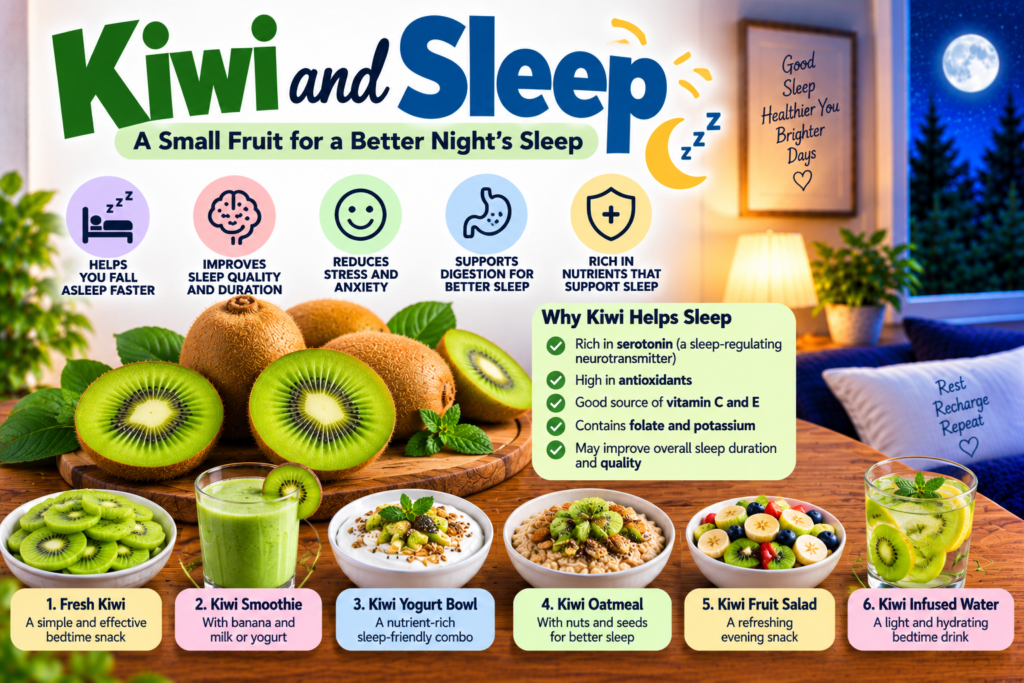
Kiwi and sleep may be connected, and some small human studies suggest that eating kiwi before bedtime could help improve certain aspects of sleep quality and duration.
However, the evidence is still limited, and larger, well-controlled studies are needed to confirm these benefits.
Researchers have explored eating two kiwis about one hour before bed, but this should be viewed as a study protocol rather than an established treatment for sleep problems.
Kiwi is a nutrient-rich fruit that provides vitamin C, folate, potassium, and other beneficial compounds. These nutrients support general health, but could eating kiwi in the evening offer additional benefits for sleep?
Table of Contents
Let’s explore what researchers have found, why kiwi might influence sleep, and how you can decide whether to include this fruit in your evening routine.
Can Kiwi Really Help You Sleep Better?
The relationship between kiwi and sleep quality has attracted attention because a few small human studies have reported improvements in sleep after participants ate kiwi regularly or shortly before bedtime.
The findings are interesting, but they need to be interpreted carefully. Some studies lacked a control group, and the total number of participants was small. This makes it difficult to determine whether kiwi itself caused the reported improvements.
Eating Kiwi Before Bed: What Did Researchers Find?
One of the best-known studies on kiwi for sleep was published in 2011 in the Asia Pacific Journal of Clinical Nutrition.
Researchers studied 24 adults aged 20–55 who ate two kiwis one hour before bedtime for four weeks. Participants recorded their sleep using questionnaires and sleep diaries.
The researchers reported improvements in several measures, including:
- Falling asleep: Participants reported a shorter time to fall asleep.
- Sleep duration: Reported total sleep time increased.
- Sleep quality: Participants reported better overall sleep.
- Nighttime wakefulness: Some measures suggested less time spent awake during the night.
These findings are encouraging, particularly because kiwi is an ordinary food rather than a sleep medication.
However, the study had an important limitation: it did not include a control group. Without a comparison group, researchers could not confidently determine whether kiwi caused the improvements. Changes in daily routines, expectations, or other factors may also have contributed.
The study provides an interesting starting point, but it does not establish that eating kiwi reliably improves sleep in the general population.
Does Kiwi Have an Immediate Effect on Sleep?
A 2023 study explored the short-term effects of green kiwi in 24 healthy young men. Researchers compared different treatments, including fresh green kiwi, a freeze-dried kiwi preparation, and water.
The researchers assessed sleep-related outcomes alongside measures of mood and alertness. Some findings suggested possible benefits, but the results were not consistently positive across all outcomes.
This distinction matters. A change in one sleep-related measure does not necessarily mean that a food improves overall sleep quality, reduces insomnia, or helps everyone sleep longer.
The study also used specific preparations under controlled conditions. Its results cannot automatically be applied to every kiwi product or bedtime routine.
Overall, the findings add to the interest in kiwi and sleep, but they do not establish kiwi as a proven sleep aid.
Can Kiwi Improve Sleep Quality and Duration?
Another 2023 study examined kiwi consumption in 15 elite athletes. Participants ate two green kiwis approximately one hour before bedtime for four weeks.
The researchers reported improvements in self-reported sleep quality, total sleep time, sleep efficiency, and nighttime awakenings during the intervention period.
These findings are interesting because athletes may experience sleep challenges related to demanding training schedules and recovery needs.
However, the study was small and compared outcomes before and after the intervention without a separate control group. It is therefore difficult to determine how much of the improvement was caused by kiwi.
The findings may also not apply directly to people with chronic insomnia, older adults, or people with diagnosed sleep disorders.
What Do These Findings Mean for Your Sleep?
Taken together, the available studies suggest that kiwi may help some aspects of sleep, but the evidence is still preliminary.
There are several reasons to be cautious:
- Small studies: The research included relatively few participants.
- Limited control groups: Some studies cannot separate the effects of kiwi from other changes.
- Different populations: Findings in healthy adults or elite athletes may not apply to people with insomnia.
- Self-reported outcomes: Some results relied on participants’ own descriptions of their sleep.
- Limited long-term evidence: We do not know whether any benefits persist over months or years.
Larger randomized controlled trials are needed to determine whether kiwi meaningfully improves sleep and which people, if any, are most likely to benefit.
Why Might Kiwi Help With Sleep? 3 Possible Explanations
Researchers have proposed several explanations for the possible relationship between kiwi and sleep. These include serotonin-related compounds, antioxidant nutrients, and the fruit’s overall nutritional composition.
At present, however, no single mechanism has been established as the reason for the improvements reported in small studies.
Kiwi, Serotonin, and Melatonin: What’s the Connection?
Serotonin is a chemical messenger involved in mood, appetite, and other body functions. It also plays a role in biological pathways associated with sleep.
Melatonin, a hormone that helps regulate the body’s sleep–wake timing, is produced through a pathway that includes serotonin.
Kiwi has been studied for its serotonin content, which has led researchers to explore whether the fruit might influence sleep-related processes.
However, eating a food that contains serotonin does not mean that serotonin from that food directly reaches the brain and improves sleep. Serotonin does not readily cross the blood–brain barrier, and the body’s production and regulation of these chemicals are complex.
A change in a serotonin-related metabolite, such as urinary 5-hydroxyindoleacetic acid (5-HIAA), also does not prove that brain serotonin increased or that melatonin production improved in a way that enhanced sleep.
The serotonin hypothesis is worth investigating, but it remains unconfirmed as an explanation for the reported effects of kiwi.
Could Kiwi’s Antioxidants Support Better Sleep?
Kiwi is a good source of vitamin C, an antioxidant that helps protect cells from oxidative damage and supports normal immune function.
The fruit also contains other compounds with antioxidant activity. Researchers have explored relationships between oxidative stress, inflammation, and sleep, making kiwi’s nutritional composition one possible area of interest.
However, it would be an overstatement to conclude that kiwi improves sleep simply because it contains antioxidants.
The available kiwi studies do not establish that its vitamin C content is responsible for any reported improvements. Nor do they show that eating kiwi treats insomnia or corrects a specific sleep-related deficiency.
Kiwi can contribute to a healthy diet, but its antioxidant content is not proof of a direct sleep benefit.
What Do Kiwi’s Vitamins and Minerals Have to Do With Sleep?
Kiwi provides folate (vitamin B9), potassium, and smaller amounts of other vitamins and minerals. These nutrients support normal physiological functions, including cellular metabolism and nervous system activity.
Adequate nutrition is important for general health, and deficiencies in certain nutrients can affect wellbeing. Nevertheless, consuming extra amounts of these nutrients does not necessarily improve sleep in someone whose nutritional needs are already met.
There is currently insufficient evidence to identify folate, potassium, or another individual nutrient in kiwi as the main reason for its possible sleep effects.
The fruit’s potential value may relate to its overall nutritional composition, but this remains a research question rather than an established explanation.
Is It the Whole Fruit That Matters?
Foods contain combinations of nutrients and other compounds that may interact in complex ways. It is possible that the overall composition of kiwi, rather than a single vitamin or chemical, could be relevant to the effects observed in small studies.
It is also possible that some reported changes reflect factors unrelated to the fruit itself.
Researchers have not yet established whether kiwi has a unique sleep-promoting effect compared with other fruits or a balanced evening diet.
How Many Kiwis Should You Eat Before Bed?
If you are interested in trying kiwi before bed, the most commonly studied amount is two kiwis approximately one hour before bedtime.
This amount and timing were used in the 2011 adult study and the 2023 elite-athlete study. However, these were research protocols, not clinically established doses.
There is no scientifically established number of kiwis that guarantees better sleep. The studies are too small to determine an optimal amount, and the findings need confirmation in larger controlled trials.
If you enjoy kiwi, you can include it as part of your usual diet. You do not need to force yourself to eat two fruits every night, particularly if that amount causes digestive discomfort or does not fit your nutritional needs.
Remember: Two kiwis one hour before bed is a routine investigated in research, not a proven treatment or a requirement for better sleep.
When Should You Eat Kiwi for Better Sleep?
The timing used in some studies has encouraged interest in eating kiwi before bedtime, but the ideal time has not been established.
Here are a few practical considerations:
- Before bed: Some studies used kiwi about one hour before bedtime, but there is not enough evidence to show that this timing is best.
- Earlier in the evening: You can eat kiwi earlier if that is more comfortable or convenient.
- With a meal or snack: Kiwi can be included in a balanced meal or eaten as a snack according to your preferences.
- Pay attention to comfort: If eating fruit close to bedtime causes reflux or digestive discomfort, try having it earlier.
There is no need to eat kiwi at an exact time. Your overall diet, sleep schedule, light exposure, stress, and other habits can influence sleep as well.
Can Kiwi Help With Insomnia?
The current evidence is not strong enough to recommend kiwi as a treatment for insomnia.
The available studies are small and do not establish that kiwi can reliably reduce persistent difficulty falling asleep, repeated nighttime awakenings, or early-morning waking in people with diagnosed insomnia.
If you have occasional difficulty sleeping, eating kiwi as part of a balanced diet is generally a reasonable food choice if you tolerate it. But if sleep problems occur regularly and affect your daytime functioning, it is important to look beyond individual foods.
For chronic insomnia, cognitive behavioural therapy for insomnia (CBT-I) is a recommended first-line treatment.
Depending on your symptoms, a healthcare professional may also assess factors such as medication effects, anxiety, pain, sleep apnoea, restless legs syndrome, or an irregular sleep schedule.
Kiwi may be a food worth studying, but it should not replace an evidence-based assessment or treatment.
Who Should Be Careful About Eating Kiwi?
Kiwi is safe for most people as an ordinary food, but it is not suitable for everyone.
People With Kiwi Allergy
Some people develop an allergic reaction to kiwi. Symptoms may include itching or tingling in the mouth, swelling of the lips or tongue, hives, or digestive symptoms.
A severe allergic reaction can cause breathing difficulty or throat swelling and requires emergency medical care.
If you have previously reacted to kiwi, do not try it as a bedtime remedy without appropriate medical advice.
People With Sensitive Digestion or Reflux
Kiwi contains fibre and is mildly acidic. Some people tolerate it well, while others may experience abdominal discomfort or find that eating fruit close to bedtime worsens reflux symptoms.
If kiwi causes discomfort, try eating it earlier in the day or choose another fruit that you tolerate better. There is no need to eat it immediately before bed to pursue a possible sleep benefit.
People Following a Medically Prescribed Diet
Most people can include kiwi in a balanced diet. However, anyone following an individualized diet for a medical condition should consider their overall dietary plan and follow advice from their healthcare professional.
Kiwi should be treated as a food, not as a substitute for prescribed medication or treatment.
6 Sleep Habits That Matter More Than One Food
If your goal is better sleep, it makes sense to focus on habits with stronger evidence rather than relying on one fruit.
1. Keep a Regular Sleep Schedule
Try to go to bed and wake up at consistent times, including on weekends. A stable schedule helps reinforce your body’s sleep–wake rhythm.
2. Get Daylight During the Day
Exposure to natural light, particularly earlier in the day, helps regulate circadian timing. Regular daytime activity can also support a healthy sleep routine.
3. Be Careful With Caffeine
Coffee, tea, energy drinks, and other sources of caffeine can interfere with sleep in some people. Consider reducing caffeine later in the day if you have difficulty falling asleep.
4. Avoid Heavy Meals Close to Bedtime
Large meals immediately before lying down can cause discomfort or worsen reflux. If this affects you, try finishing your main evening meal a few hours before bedtime.
5. Make Your Bedroom Comfortable
A quiet, dark, and comfortably cool bedroom can make it easier to sleep. Reducing disruptive light and noise may help as well.
6. Seek Help for Persistent Sleep Problems
If sleep difficulties continue, consider speaking with a healthcare professional. Loud snoring with gasping, persistent insomnia, or excessive daytime sleepiness may need further assessment.
Kiwi can be one part of a healthy eating pattern, but no single food can compensate for an ongoing sleep disorder or consistently poor sleep habits.
Frequently Asked Questions About Kiwi and Sleep
Is kiwi good for sleep?
Kiwi may help improve some aspects of sleep, according to a few small human studies. However, the evidence is preliminary, and larger controlled trials are needed before kiwi can be recommended as a reliable way to improve sleep.
How many kiwis should I eat before bed?
Two kiwis approximately one hour before bedtime were used in some studies. This is not an established dose, and there is no proven number of kiwis that guarantees better sleep.
Is it good to eat kiwi at night?
You can eat kiwi at night if you enjoy it and tolerate it well. Some small studies have investigated bedtime consumption, but there is not enough evidence to establish that nighttime is better than another time of day.
Does kiwi contain melatonin?
Kiwi has been investigated for compounds that might be relevant to sleep regulation, but its potential sleep effects have not been conclusively linked to its melatonin content. Eating kiwi should not be treated as equivalent to taking a melatonin supplement.
Can kiwi help you fall asleep faster?
One small 2011 study reported that participants fell asleep more quickly after eating kiwi regularly. However, the study did not include a control group, so it cannot establish that kiwi caused the improvement.
Can kiwi cure insomnia?
No. There is insufficient evidence that kiwi can cure or treat insomnia. Persistent sleep problems deserve appropriate assessment and, when needed, evidence-based treatment.
Is green kiwi better for sleep than golden kiwi?
There is not enough comparative research to establish that green kiwi is better than golden kiwi for sleep. Some studies specifically used green kiwi, but that does not prove that other varieties are less effective.
Can I eat kiwi every day?
Most people can enjoy kiwi regularly as part of a balanced diet if they tolerate it. However, eating it every day has not been established as a treatment for sleep problems, and there is no proven sleep-specific daily dose.
Kiwi and Sleep: Take-Home Message
Kiwi and sleep: A few small human studies suggest that eating kiwi may improve certain aspects of sleep, but the evidence is still preliminary. Two kiwis about one hour before bed has been studied, yet it is not an established treatment or required dose. Enjoy kiwi as part of a balanced diet, and rely on evidence-based sleep habits and care for persistent sleep problems.
Also Read
References
- Lin HH, Tsai PS, Fang SC, Liu JF. Effect of kiwifruit consumption on sleep quality in adults with sleep problems. Asia Pacific Journal of Clinical Nutrition. 2011. Read on PubMed.
- Study investigating the acute effects of green kiwifruit on sleep-related outcomes in healthy young men. 2023. Full text on PubMed Central.
- Doherty R, et al. Study investigating kiwifruit consumption and sleep outcomes in elite athletes. 2023. Read on PubMed.
- St-Onge MP, Mikic A, Pietrolungo CE. Effects of diet on sleep quality. Advances in Nutrition. 2016;7(5):938–949. Full text on PubMed Central.