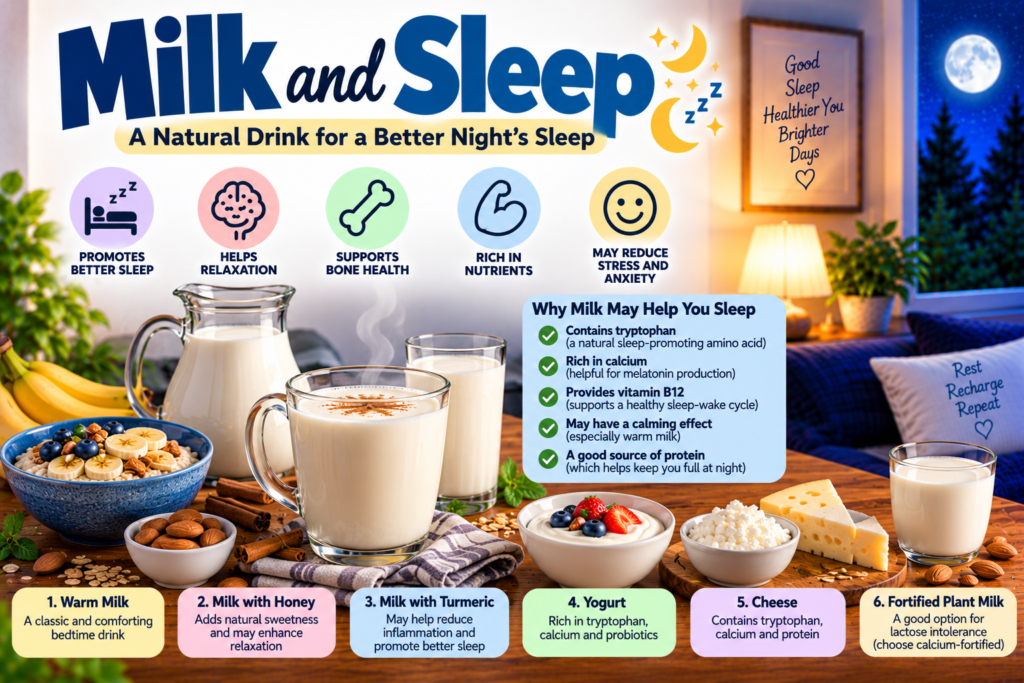
Milk and sleep have been linked for generations, and many people still enjoy a glass of warm milk before bed.
Milk contains tryptophan, protein, calcium, and other nutrients involved in normal body functions, including processes related to sleep.
Some studies suggest that drinking milk or consuming dairy products may improve sleep quality, but the evidence is not strong enough to say that milk reliably helps everyone fall asleep faster or sleep longer.
If you enjoy milk and tolerate it well, it can be part of a comfortable evening routine—but it is not a proven treatment for insomnia.
Table of Contents
Can Drinking Milk Really Help You Sleep Better?
The idea that milk can help you sleep is not entirely without scientific support. Researchers have studied milk and other dairy products to find out whether they influence sleep quality, sleep duration, and difficulty falling asleep.
The results are encouraging in some studies, but they are not consistent enough to make milk a reliable sleep remedy.
Some research has found better self-reported sleep quality among people who consume milk or dairy products. Other studies have found little or no clear improvement. The results may depend on the type of dairy product, the amount consumed, the population being studied, and the way sleep is measured.
It is also important to distinguish between including milk in a balanced diet and drinking milk specifically to treat a sleep problem. Evidence supporting the first does not automatically prove the second.
If you already enjoy milk in the evening, there is no need to stop simply because its sleep benefits are uncertain. However, you do not need to start drinking milk if you dislike it or cannot tolerate it.
What Does Research Say About Milk and Sleep?
Scientists have examined milk and sleep through individual clinical trials and systematic reviews. Looking at the overall evidence gives us a better picture than relying on one encouraging study.
A Small Study Found Improvements After Bedtime Milk
A 2024 study examined 21 adults with primary insomnia who were divided into three groups: one received a portion of banana, another received 200 mL of whole milk, and the third served as a control group.
The intervention lasted six weeks. Researchers assessed sleep using the Pittsburgh Sleep Quality Index (PSQI) and polysomnography, a method that records several aspects of sleep.
The researchers reported improved PSQI scores in the milk and banana groups. Total sleep time also increased significantly compared with baseline in the milk group.
These findings are interesting, but there are important limitations. The study was small, and the results from a group of 21 participants cannot establish that milk is an effective treatment for insomnia in the wider population.
Changes from baseline also need to be interpreted alongside differences between the intervention and control groups.
What does this mean for you? The study offers a reason to investigate bedtime milk further, but it does not prove that drinking a glass of milk will improve your sleep.
Read the study: Bedtime banana and milk intake on sleep and biochemical parameters.
What Did an Earlier Review Find?
A 2020 systematic review examined 14 studies on milk or dairy products and sleep. These included randomised controlled trials, crossover experiments, and observational research.
The findings were mixed. Some studies reported improvements in sleep, while others found less convincing results. Differences in participants, study methods, dairy products, and outcome measurements made it difficult to draw a firm conclusion.
This matters because a familiar bedtime tradition can seem convincing when individual studies report positive results. A systematic review helps us see whether the findings are consistent across different studies.
The review suggested that milk and dairy products may be compatible with better sleep, but the evidence did not establish a dependable effect for everyone.
Read the review: The Effects of Milk and Dairy Products on Sleep: A Systematic Review.
What Do the Newer Reviews Tell Us?
A 2025 systematic review and meta-analysis examined clinical trials investigating milk and dairy products in relation to sleep quality. Nine clinical trials were included in the review, but only four contributed to the pooled meta-analysis.
The pooled results showed an improvement in Pittsburgh Sleep Quality Index scores. However, the researchers also highlighted the need for better-quality human studies to confirm the findings.
A further systematic review and dose-response meta-analysis, published in 2026, included 29 studies: 25 observational studies and four intervention trials. The observational findings linked milk and dairy consumption with better sleep quality and, in some analyses, longer sleep duration. The intervention findings suggested a modest improvement in sleep quality.
There is an important distinction here. Observational studies show associations, not proof of cause and effect. People who regularly consume milk may differ from others in their overall diet, daily routine, health, or other lifestyle habits. These differences can influence sleep independently of milk.
The intervention evidence is also limited by the small number of trials. The findings are promising, but they do not establish milk as a treatment for insomnia or identify a proven bedtime dose.
Read the newer reviews:
- 2025 systematic review and meta-analysis of milk, dairy products, and sleep quality
- 2026 systematic review and dose-response meta-analysis of dairy intake and sleep
Milk and Sleep: Take-Home Message
Milk may support sleep quality for some people, but the available research is still limited. Enjoy it as a food you like, not as a guaranteed remedy for sleeplessness.
Also Read:
Why Is Milk Sometimes Linked to Better Sleep?
Milk contains several nutrients that researchers have considered as possible contributors to sleep. These mechanisms are biologically interesting, but they should not be mistaken for proof that a glass of milk will make you sleepy.
1. Tryptophan: An Amino Acid Involved in Sleep Biology
Milk contains tryptophan, an essential amino acid that the body uses to make proteins. Tryptophan is also involved in the production of serotonin, which can be converted into melatonin.
Melatonin is a hormone that helps regulate the body’s sleep-wake timing. Its production normally rises in the evening in response to the body’s circadian rhythm and environmental light conditions.
This provides a plausible biological explanation for why researchers are interested in milk and sleep.
However, the presence of tryptophan in milk does not mean that drinking milk necessarily raises brain melatonin enough to improve sleep. Tryptophan must be absorbed and transported through the body, and its effects depend on several physiological factors.
In simple terms, milk contains a nutrient involved in sleep biology, but that alone does not establish milk as a sleep aid.
2. Calcium: Important for Normal Body Functions
Milk is a familiar source of calcium, a mineral essential for healthy bones and teeth. Calcium also plays roles in nerve signalling, muscle function, and cellular processes.
Researchers have explored connections between calcium and sleep because normal cellular signalling is involved in the regulation of sleep and wakefulness.
But this does not mean that calcium in milk acts like a sleeping pill. There is not enough evidence to recommend drinking milk specifically to obtain an immediate sleep benefit from calcium.
Getting adequate calcium as part of a balanced diet is important for general health, regardless of whether it changes your sleep.
3. Protein and Other Nutrients
Milk provides protein and several other nutrients, including vitamin B12 and riboflavin. Its nutritional value can make it a useful part of a balanced diet.
Researchers are also investigating whether the composition of dairy products, including their proteins and other naturally occurring compounds, may influence sleep-related processes.
For now, these possibilities should be viewed as areas of research rather than established explanations for a sleep benefit.
The key point: Milk is nutritious, and some of its nutrients are involved in normal body processes related to sleep. But a nutritious food is not automatically a sleep treatment.
Does Warm Milk Work Better Than Cold Milk?
Many people associate warm milk before bed with relaxation. The familiar routine may feel comforting, especially after a busy day.
However, there is not enough strong evidence to conclude that warm milk improves sleep more effectively than cold milk.
The temperature of the milk is largely a matter of personal preference. If a warm drink helps you slow down and prepare for bed, you can enjoy it. If you prefer cold milk, there is no established reason to believe you are losing a proven sleep benefit.
The relaxing effect may also come from the routine itself. Setting aside a few quiet minutes, reducing stimulating activities, and following a consistent bedtime schedule can help create a more settled transition to sleep.
There is no need to make the drink warm if you do not enjoy it.
How Much Milk Should You Drink Before Bed?
There is no scientifically established amount of milk that guarantees better sleep.
The 2024 study discussed earlier used 200 mL of whole milk at bedtime. That was the amount tested in that particular study, not a proven therapeutic dose for the general population.
If you enjoy milk in the evening, a small glass may be a reasonable choice. The amount should depend on your appetite, dietary needs, tolerance, and overall food intake rather than a belief that more milk will produce better sleep.
Drinking a large quantity immediately before bed may be uncomfortable for some people. It can also increase the need to urinate during the night, potentially interrupting sleep.
A practical approach: Choose a comfortable serving and avoid drinking so much that you feel overly full or need repeated bathroom visits.
When Should You Drink Milk for Better Sleep?
There is no firmly established best time to drink milk for sleep.
Some research has examined milk consumed at bedtime, but that does not prove that bedtime is the ideal time for everyone. Nor does it show that milk taken earlier in the evening is ineffective.
Consider your own routine:
- If milk feels comfortable at bedtime: A small glass can be part of your wind-down routine.
- If you experience reflux: Avoid drinking milk immediately before lying down if it worsens your symptoms. Allow enough time between your last food or drink and bedtime to remain comfortable.
- If you wake up to urinate: Try drinking less fluid close to bedtime.
- If milk makes you feel bloated: Have it earlier in the evening or choose a suitable alternative.
Consistency matters more than following an unproven timing rule. Aim for a regular bedtime and wake-up time, and choose an evening routine that helps you relax without causing discomfort.
Simple Ways to Include Milk in Your Evening Diet
You do not need a special recipe to include milk in your diet. Keep it simple and choose options that suit your preferences.
- Drink a small glass of plain milk if you enjoy it.
- Have milk with a light evening snack if you are genuinely hungry.
- Choose lactose-free milk if lactose causes digestive symptoms.
- Use unsweetened fortified milk alternatives if you do not consume dairy, checking their nutritional content because protein, calcium, and vitamin B12 vary by product.
- Keep added sugar modest, especially if you regularly drink sweetened milk.
There is no need to consume milk at night if you already meet your nutritional needs through other foods. A balanced diet does not depend on one particular bedtime drink.
Who Should Be Careful About Drinking Milk Before Bed?
Milk is safe for many people, but it is not suitable for everyone in the same way.
People With Lactose Intolerance
People with lactose intolerance may experience bloating, abdominal discomfort, gas, or diarrhoea after drinking regular milk. These symptoms can make it harder to sleep comfortably.
Lactose-free milk may be an option for people who tolerate it better. Individual tolerance varies.
People With a Milk Allergy
A milk allergy is different from lactose intolerance. It involves an immune reaction to milk proteins. People with a confirmed milk allergy should avoid milk and follow their clinician’s advice about suitable alternatives.
People With Acid Reflux
Some people find that eating or drinking close to bedtime aggravates reflux. If milk triggers symptoms for you, avoid taking it immediately before lying down.
If nighttime reflux is frequent, persistent, or severe, discuss it with a healthcare professional rather than relying on milk or other home remedies.
People Managing Diabetes
Milk contains naturally occurring lactose, a carbohydrate that contributes to its total carbohydrate content. Sweetened milk drinks can contain considerably more carbohydrate because of added sugar.
People managing diabetes should consider the total carbohydrate content and portion size, and account for milk within their usual meal plan. Milk does not need to be avoided by everyone with diabetes, but individual needs differ.
People With Specific Dietary Restrictions
Anyone following a medically prescribed diet should consider their overall nutritional requirements. For example, some people with advanced kidney disease may need individualised advice about potassium, phosphorus, protein, or fluid intake.
Milk is optional. If it does not suit your health needs or preferences, you can obtain essential nutrients from other suitable foods.
Six Simple Habits That Matter for Better Sleep
Instead of depending on a single food, focus on the habits that help support regular, healthy sleep.
- Keep a consistent sleep schedule. Go to bed and wake up at roughly the same time each day.
- Get enough sleep. Most adults need at least seven hours of sleep regularly, although individual needs vary.
- Reduce bright light and stimulating activities before bed. Give yourself time to wind down.
- Limit caffeine late in the day. Caffeine can interfere with sleep even when consumed several hours before bedtime.
- Make your bedroom comfortable. A quiet, dark, and comfortably cool environment may help.
- Avoid heavy meals close to bedtime. Large meals can cause discomfort or reflux in some people.
Milk can fit into these habits if you enjoy it. It should not replace them.
If you regularly struggle to fall asleep, wake repeatedly during the night, or feel unrefreshed despite allowing enough time for sleep, consider seeking medical advice. Persistent insomnia may need more than changes to food or bedtime routines.
Frequently Asked Questions About Milk and Sleep
1. Does drinking milk before bed help you sleep?
It may help some people, but the evidence is not conclusive. Small clinical studies and systematic reviews have reported improvements in some sleep measures, but more high-quality research is needed. Milk should not be considered a proven treatment for insomnia.
2. Is warm milk better than cold milk for sleep?
There is no convincing evidence that warm milk is more effective than cold milk. Choose the temperature you enjoy. A relaxing evening routine may be useful, but warmth itself has not been established as a sleep treatment.
3. How long before bed should I drink milk?
There is no scientifically proven interval. Choose a time that fits your routine and does not cause bloating, reflux, fullness, or nighttime urination. You do not have to drink milk immediately before going to bed.
4. How much milk should I drink to sleep better?
No specific amount has been established as a sleep-improving dose. A small glass is reasonable if you enjoy it and tolerate it well. The 200 mL amount used in one small study should not be interpreted as a universal recommendation.
5. Can milk cure insomnia?
No. Milk has not been established as a cure or reliable treatment for insomnia. If sleep difficulties persist or affect your daytime functioning, seek appropriate medical advice. Evidence-based treatments, including cognitive behavioural therapy for insomnia (CBT-I), may be recommended depending on your situation.
Milk and Sleep: The Final Take-Home Message
Milk and sleep have an interesting connection, but the science is not as simple as the traditional bedtime advice suggests. Milk contains tryptophan and other nutrients involved in normal body functions, and some studies have reported improvements in sleep quality after consuming milk or dairy products.
However, the available evidence remains limited, and it does not establish that milk will reliably make you fall asleep faster, sleep longer, or overcome insomnia.
If you enjoy a glass of milk in the evening, it can be a nutritious and comforting part of your routine. Choose a comfortable amount, pay attention to your body’s response, and focus on the habits that support good sleep over the long term.
Milk can be part of a healthy evening routine—but you do not need milk to sleep well.
Also Read:
References
- Keser MG, Yuksel A, Ekmekci AH, Vatansev H. Bedtime banana and milk intake on sleep and biochemical parameters. Asia Pacific Journal of Clinical Nutrition. 2024;33(4):481–488. Read the study on PubMed.
- Komada Y, Okajima I, Kuwata T. The effects of milk and dairy products on sleep: A systematic review. International Journal of Environmental Research and Public Health. 2020;17(24):9440. Read the full review.
- Peres AP, Domingues YO, Beserra BTBS, et al. The consumption of milk or dairy products and sleep quality: A systematic review and meta-analysis. Cureus. 2025. Read the systematic review and meta-analysis.
- Nouripour F, Moaddeli Z, Kazemi A, et al. Dairy intake and sleep duration and quality: A systematic review and dose–response meta-analysis of observational and interventional studies. Nutrition Journal. 2026. Read the review.