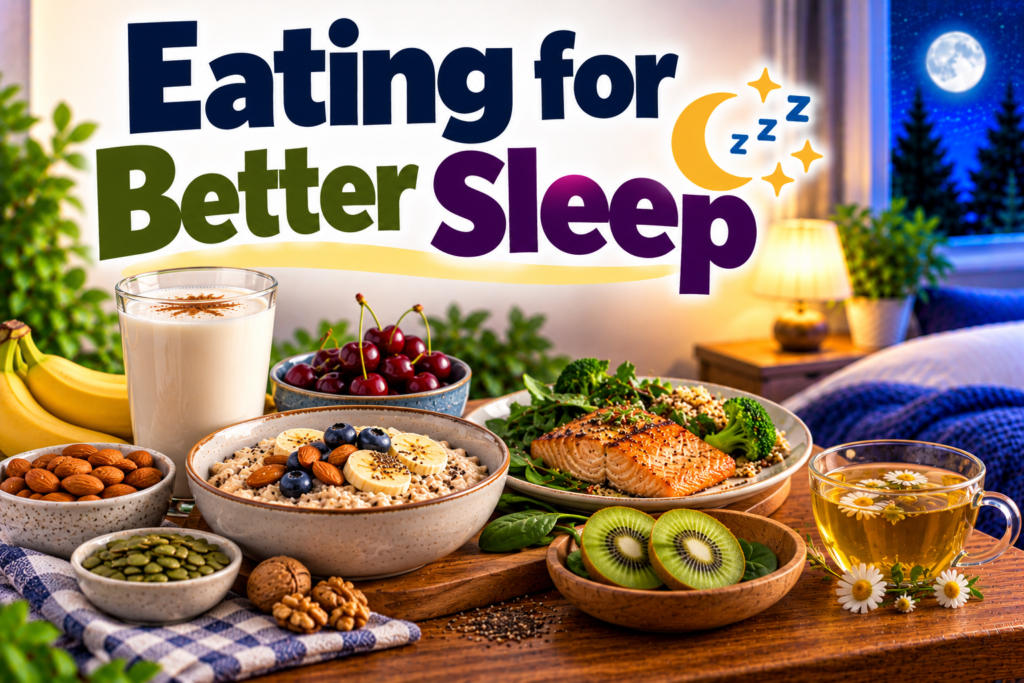
What Is the Connection Between Diet and Eating for Better Sleep?
- Overall diet quality matters. Eating a varied diet rich in vegetables, fruits, whole grains, legumes, nuts, and suitable protein sources supports overall health and has been linked to better sleep in research.
- Sleep and diet influence each other. Poor sleep may affect appetite, food preferences, and eating habits, while dietary habits may affect sleep outcomes.
- Nutrients matter, but more isn’t always better. Magnesium, iron, tryptophan, and several vitamins have important physiological roles. Taking extra amounts does not necessarily improve sleep.
- Meal timing can affect comfort. Large meals close to bedtime may aggravate indigestion or acid reflux, while going to bed hungry may be uncomfortable for some people.
- Caffeine and alcohol can disrupt sleep. Caffeine may delay sleep, and alcohol can disturb sleep later in the night even if it initially makes you feel drowsy.
- No diet is perfect for everyone. A healthy eating pattern can include foods from different cultures and should reflect your nutritional needs, preferences, budget, and medical circumstances.
The most useful starting point is not to search for a miracle bedtime snack. Instead, look at your overall eating habits.
Your diet can influence sleep quality, but no single food, nutrient, or eating pattern guarantees a good night’s rest.
Research shows that healthier dietary patterns are often associated with better sleep, while diets high in added sugars and certain highly processed foods are linked to less favorable sleep outcomes.
However, these associations do not prove that changing your diet alone will improve your sleep.
What you eat throughout the day, whether you get enough nutrients, how much caffeine or alcohol you consume, and when you eat your meals may all be relevant. The effects vary from person to person, and diet is only one part of sleep health.
This guide explores the link between healthy eating and better sleep quality, what research says, which nutrients to focus on, and how to build a balanced eating routine that fits your lifestyle.
1. How Are Diet, Eating and Better Sleep Connected?
Sleep and nutrition are both essential to health, and they are more closely connected than they might seem.
The body’s internal clock, the gradual build-up of sleep pressure during waking hours, and brain systems involved in alertness and sleep regulate sleep. Nutrition supports normal metabolism, neurological function, and many other processes that keep the body working properly.
Some nutrients participate in biological pathways involved in sleep regulation. Eating habits can also influence how comfortable you feel at bedtime. At the same time, the amount and quality of sleep you get may affect what and how much you eat the following day.
The nutrients your body needs
Your body requires sufficient energy, protein, vitamins, minerals, and essential fats to function normally. Consistently eating too little or having a significant nutrient deficiency can affect health and may contribute to sleep-disrupting symptoms.
For example, tryptophan is an amino acid used to produce serotonin, which supports several brain functions and is a precursor in the pathway that produces melatonin.
Magnesium participates in normal nerve and muscle function, while iron is necessary for oxygen transport and other physiological processes.
These roles matter, but eating more of a particular nutrient won’t automatically make you sleepy.
The effect of food on comfort at bedtime
Imagine eating a very large meal just before lying down. You might feel uncomfortably full, experience bloating, or develop heartburn. Someone who has gastroesophageal reflux disease (GERD) may be particularly sensitive to late meals.
The opposite situation can also be uncomfortable. If you eat too little during the day, persistent hunger may make it hard to settle down for sleep.
Neither situation applies to everyone. Some people can eat a late dinner without difficulty, while others notice that even a moderate meal close to bedtime causes symptoms.
Why poor sleep can change eating habits
The relationship also works in the other direction.
After a poor night’s sleep, you may feel less motivated to prepare meals, reach for convenient snacks, or consume more caffeine to stay alert. Research suggests that insufficient sleep can affect appetite, food reward, and energy intake, although effects differ between individuals.
This creates a possible cycle: disrupted sleep may make healthy eating harder, and certain eating patterns may in turn be associated with less favorable sleep.
A 2021 review in Annual Review of Nutrition discusses this two-way relationship and the possible biological pathways involved. The authors also emphasize the need for more clinical trials to establish how much changing dietary patterns directly affects sleep.
Read the review: Sleep and Diet—Mounting Evidence of a Cyclical Relationship
2. What Does Research Say About Healthy Diet, Eating and Sleep Quality?
Researchers have investigated diet and sleep through surveys, long-term observational studies, and controlled interventions. Together, these studies suggest a relationship, but they do not yet provide a simple formula for eating your way to better sleep.
A systematic review published in Sleep Medicine Reviews in 2021 examined 29 studies on diet and sleep quality.
The authors found that healthier food choices were generally associated with better sleep, while higher consumption of processed foods and foods rich in free sugars was associated with less favorable sleep outcomes. So, there is a relationship between diet and sleep quality.
However, most included studies were observational, and overall evidence quality was limited. The researchers concluded that the findings could not establish a causal relationship.
Read the systematic review in PubMed
The Mediterranean diet has also attracted attention. A 2025 systematic review and meta-analysis included 62 observational studies involving 328,493 participants.
It found associations between greater adherence to the Mediterranean diet and favorable sleep-related outcomes. However, the studies varied substantially, and the findings do not establish that adopting this diet will directly improve sleep.
Read the 2025 Mediterranean diet and sleep meta-analysis
How should we interpret these findings?
People who eat a balanced diet may also have other habits that support sleep. They may be more physically active, follow a more regular schedule, or have fewer lifestyle factors that interfere with rest.
Researchers can adjust for some of these differences, but they can’t eliminate every influence.
Controlled trials are particularly important because they can help determine whether changing a dietary pattern actually changes sleep.
More such research is needed to understand which changes help, how large the effects may be, and who is most likely to benefit.
| Type of evidence | What it can tell us |
|---|---|
| Observational studies | Whether particular eating patterns and sleep outcomes tend to occur together |
| Controlled dietary trials | Whether a planned dietary change produces measurable changes in sleep under the study conditions |
| Nutritional and physiological research | How nutrients participate in normal body functions that may be relevant to sleep |
The current conclusion: A healthy dietary pattern is a sensible foundation for general health, and it may support better sleep. However, it should not be presented as a proven stand-alone treatment for insomnia.
3. Which Dietary Patterns Are Associated With Better Sleep?
Rather than focusing on individual foods, researchers often study overall eating patterns. This approach considers how frequently someone eats different food groups and how those foods fit together over time.
The Mediterranean diet
The Mediterranean dietary pattern typically includes vegetables, fruits, whole grains, legumes, nuts, seeds, olive oil, fish, and other minimally processed foods.
People may include dairy products, eggs, and poultry in moderate amounts, while they generally consume red and processed meats and foods high in added sugars less often.
Studies have found associations between greater adherence to this pattern and better sleep outcomes. However, the evidence is not strong enough to claim that the Mediterranean diet reliably treats sleep problems.
Its value is that it offers an established, balanced eating pattern that supports broader health. You do not have to live in the Mediterranean region or follow its traditional recipes to apply the same principles.
Also read: Mediterranean Diet and Sleep
Plant-rich eating patterns
Vegetables, fruits, whole grains, beans, lentils, nuts and seeds provide fiber, vitamins, minerals and other beneficial compounds.
Including a variety of these foods can improve your diet’s overall nutritional quality. However, research has not shown that increasing plant food intake alone consistently improves sleep in every person.
A balanced diet can include animal products or be entirely plant-based. The important consideration is whether it provides enough energy, protein, and essential nutrients.
Diets high in added sugars and highly processed foods
Some observational studies have associated diets high in added sugars and certain processed foods with poorer sleep outcomes. Interpret these findings carefully: they do not mean one dessert or packaged snack will automatically disrupt sleep.
Highly processed foods vary considerably. Some provide nutrients or are convenient parts of a balanced diet, while others deliver large amounts of added sugars, sodium, or saturated fat with little fiber.
Instead of treating all processed foods as harmful, focus on the overall pattern. Make nutritious foods the foundation of your diet and leave room for flexibility.
4. Nutrients That Play a Role in Sleep Health
Several nutrients matter to sleep research because they support normal brain function, metabolism, and other physiological processes.
Incorporating these nutrients into your diet means eating healthy food. Eating healthy foods will help you get better sleep.
Remember that a nutrient’s biological role does not automatically mean that taking more of it will improve sleep.
Tryptophan
Tryptophan is an essential amino acid, meaning that the body must obtain it from food. It helps produce several compounds, including serotonin, and is involved in the pathway the body uses to produce melatonin.
Food sources include eggs, dairy products, fish, poultry, soy foods, beans, lentils, nuts, and seeds.
Eating enough protein provides tryptophan and other essential amino acids. However, eating tryptophan-rich foods does not guarantee a meaningful increase in melatonin production or improved sleep.
Also read: How Tryptophan in Foods Can Help You Sleep Better
Magnesium
Magnesium supports hundreds of enzymatic reactions, including those involved in energy metabolism, nerve function and muscle function.
Sources include legumes, nuts, seeds, whole grains and leafy green vegetables. Getting enough magnesium supports normal health, but evidence that magnesium supplements improve sleep in otherwise well-nourished people remains limited.
Including magnesium-rich foods is a reasonable part of a balanced diet. Taking high doses of supplements solely to improve sleep is a different matter and may carry risks.
Also read: 15 Magnesium-Rich Foods for Sleep
Vitamin B12 and folate
Vitamin B12 and folate, also called vitamin B9, support normal nervous system function and red blood cell formation.
Vitamin B12 occurs naturally in foods such as fish, meat, eggs and dairy products. People following vegan diets need a reliable source, usually through appropriately fortified foods or supplements.
Folate is found in foods such as leafy green vegetables, beans, peas and some fruits. Fortified grain products provide folic acid in countries where fortification is practiced.
Both nutrients are essential, but neither should be described as a general-purpose sleep enhancer.
Correcting a deficiency matters; taking extra amounts when intake is already adequate has not been proven to improve sleep.
Vitamin D
Vitamin D supports bone health and has other important physiological roles. The body produces it in the skin in response to adequate ultraviolet B exposure, and you can also get it from certain foods and fortified products.
Researchers have investigated possible relationships between vitamin D status and sleep. However, an association between low vitamin D levels and poor sleep does not establish that the deficiency caused the problem or that supplements will improve sleep for everyone.
People at risk of deficiency should discuss assessment and treatment with a healthcare professional.
Iron
Iron is required to produce hemoglobin, which carries oxygen in the blood. It also contributes to normal neurological function.
Sources include meat, seafood, beans, lentils, tofu, fortified grains and some seeds. Vitamin C-rich foods can help improve the absorption of non-haem iron from plant sources.
Iron status is particularly relevant when assessing restless legs syndrome, a condition that can cause uncomfortable leg sensations and an urge to move the legs, especially during rest. These symptoms can interfere with sleep.
Do not use iron supplements casually as a sleep aid. Excess iron can be harmful, so evaluate suspected deficiency appropriately.
Protein, carbohydrates and omega-3 fatty acids
Protein supplies amino acids needed for normal growth and repair. Carbohydrates provide energy and are found in foods such as whole grains, fruit, beans and starchy vegetables.
Omega-3 fatty acids, found in foods such as oily fish, walnuts, flaxseeds and chia seeds, are also important components of a healthy diet.
Researchers have investigated whether the amounts and types of these nutrients influence sleep, but the findings are mixed.
No ideal ratio of protein, carbohydrate, and fat has been established specifically for sleep, and omega-3 supplements are not a proven sleep treatment for the general population.
For most people, the priority is getting enough energy, eating varied protein sources, and including nutritious sources of carbohydrates and fats.
5. Which Foods Fit Into a Healthy Eating Pattern?
You don’t need to build your diet around a list of supposedly sleep-inducing foods. A better approach is to choose foods that contribute to overall nutritional quality and that you enjoy eating regularly.
| Food group | Examples | Why include them? |
|---|---|---|
| Fruits | Kiwifruit, bananas, berries, apples, oranges | Provide fibre, vitamins and other plant compounds |
| Vegetables | Leafy greens, broccoli, carrots, peppers, tomatoes | Supply fibre, folate, potassium and other nutrients |
| Whole grains | Oats, whole-wheat bread, brown rice, barley, quinoa | Provide carbohydrates, fibre and varying amounts of micronutrients |
| Legumes | Lentils, chickpeas, beans, peas, soy foods | Supply protein, fibre, iron and folate |
| Nuts and seeds | Almonds, walnuts, pumpkin seeds, chia seeds | Provide unsaturated fats, protein, fibre and minerals |
| Dairy or fortified alternatives | Milk, yogurt, fortified soy drinks | Can provide protein and nutrients such as calcium and vitamin B12, depending on the product |
| Protein-rich foods | Fish, eggs, poultry, tofu, tempeh | Help meet daily protein needs; some also supply vitamin B12 or omega-3 fats |
Some individual foods, including kiwifruit, have been studied in small sleep-related trials. These studies are interesting, but they do not establish that the foods reliably improve sleep for everyone.
Choose foods based on their nutritional value, availability, affordability, and suitability for your needs. You do not need expensive superfoods or products marketed specifically for sleep.
For more detailed advice about bedtime snacks, see What to Eat Before Bed.
6. Can Meal Timing Affect Sleep Quality?
When you eat matters, especially if your schedule leaves you hungry at bedtime or causes digestive symptoms. However, no single dinner time suits everyone.
Eating a large meal shortly before bed
Eating a large meal right before lying down can leave some people feeling full or uncomfortable. It may also aggravate acid reflux.
If you experience nighttime reflux, the US National Institute of Diabetes and Digestive and Kidney Diseases advises eating at least three hours before lying down to improve symptoms. This recommendation is especially relevant to people who have reflux; it is not a universal rule that everyone must stop eating three hours before bed.
Read the NIDDK guidance on diet and acid reflux.
Also read: How Long Before Bed Should You Stop Eating?
Going to bed hungry
You do not have to eat a bedtime snack if you are comfortable and not hungry. But if you have eaten too little during the day or hunger keeps you awake, a small snack may help.
Options include fruit, plain yogurt, a small bowl of oats, or whole-grain toast with a suitable spread. Choose something that suits your digestion and meets your nutritional needs.
People with diabetes who use insulin or medicines that can cause hypoglycemia should follow their individual meal and medication plan rather than applying general advice about fasting or bedtime snacks.
Also read: Does Skipping Dinner Affect Sleep?
Late-night eating
Eating late is not automatically harmful. The effect depends on meal size, food choices, digestive symptoms, your usual schedule and other factors.
Observational studies have linked some late-eating patterns with less favorable health outcomes, but they cannot establish that eating late itself is responsible. Work schedules and other lifestyle factors may also contribute.
If you regularly eat late because of work or family commitments, focus on what you can reasonably change: avoid meals that leave you uncomfortably full, choose foods you tolerate well, and leave time to digest before lying down if reflux is a problem.
Also read: Late-Night Eating and Sleep
7. Foods and Drinks That May Disrupt Sleep
Some dietary factors connect more directly and practically to sleep than others. Their effects depend on how much you consume, when you consume it, and your individual sensitivity.
Caffeine
Caffeine is a stimulant found in coffee, tea, energy drinks, cola, and some chocolate products. It can reduce sleepiness and make it harder to fall asleep, particularly when consumed later in the day.
People differ in how quickly they process caffeine and how sensitive they are to its effects. If you struggle to fall asleep or wake up regularly during the night, try reducing your intake or moving caffeinated drinks earlier in the day.
Remember that caffeine can also be present in some supplements and products marketed for alertness or exercise.
Alcohol
Alcohol can make you feel sleepy initially, but it does not reliably improve sleep quality. It can disrupt sleep later in the night and may worsen snoring or sleep-disordered breathing.
The effects depend on the amount consumed, timing, and individual health. Alcohol should not be used as a treatment for insomnia.
Also read: Alcohol and Sleep: Does Drinking Help You Sleep Better?
Sugar-rich foods and drinks
Frequent consumption of foods and drinks high in added sugars may contribute to a less nutritious overall diet, particularly when they replace foods rich in fiber and essential nutrients.
Some studies have linked higher sugar intake with poorer sleep outcomes, but the evidence does not establish that a small dessert before bed will inevitably cause insomnia.
If you notice a consistent relationship between sugary drinks or snacks and your sleep, try changing the portion, timing or choice of snack. Whole fruit is not nutritionally equivalent to sugar-sweetened drinks because it contains fiber and a different combination of nutrients.
Also read: Sugar Before Bed and Sleep
Spicy, rich or fatty meals
Spicy food does not disturb everyone’s sleep. However, it may trigger heartburn in people who are susceptible to reflux. Large, rich or high-fat meals may also leave some people feeling uncomfortably full.
If certain foods repeatedly cause symptoms at night, consider adjusting portions or timing rather than eliminating entire food groups without a clear reason.
Also read: Spicy Food and Sleep
8. How to Build an Eating Routine That Supports Sleep
You do not need to overhaul your diet overnight. A few practical changes are often a better starting point than a strict plan that is hard to maintain.
- Eat a varied diet. Include vegetables, fruits, whole grains, protein sources and suitable fats across your meals.
- Get enough food. Eating too little regularly can leave you hungry and make it harder to meet your nutritional needs.
- Make meals satisfying. Combine protein, fiber-rich carbohydrates, and other nutritious foods to feel satisfied longer.
- Pay attention to caffeine. If sleep is difficult, experiment with reducing caffeine or moving your last caffeinated drink earlier.
- Notice your personal triggers. If you suspect a connection, track foods, drinks, symptoms, and sleep. Change one factor at a time where possible.
- Allow time for digestion when needed. If late meals cause reflux or discomfort, try eating your main meal earlier.
- Be cautious with supplements. More vitamins or minerals do not necessarily mean better sleep. Seek advice if you suspect a deficiency.
Your routine should also fit your life. Shift workers, parents caring for young children, and people working conventional daytime hours may need different meal schedules.
The goal is to find a sustainable pattern that meets your nutritional needs and lets you sleep comfortably.
9. Healthy Eating Looks Different Around the World
A healthy eating pattern does not belong to one country or cuisine. You can apply the same broad nutritional principles using familiar, affordable foods from different cultures.
| Food tradition | Examples of foods that can form part of a balanced diet |
|---|---|
| Mediterranean | Vegetables, beans, whole grains, nuts, olive oil, fruit and fish |
| South Asian | Lentils, chickpeas, vegetables, whole-wheat flatbreads, rice, yogurt, fruit and nuts |
| East Asian | Rice and other grains, tofu, vegetables, fish, eggs and soups |
| Latin American | Beans, corn, whole grains, vegetables, fruit, avocado and suitable protein sources |
| Northern European | Oats, rye, root vegetables, berries, legumes, fish and dairy or fortified alternatives |
| Plant-based | Beans, lentils, tofu, whole grains, nuts, seeds, vegetables, fruit and appropriately fortified foods |
These are examples, not prescribed menus. A diet’s nutritional quality depends on its overall composition, portions, preparation, and the person’s needs.
You don’t need to abandon rice, bread, potatoes, or other familiar staples to eat well. Consider how your meals fit together and whether your usual pattern provides adequate energy, protein, fiber, and essential nutrients.
10. When Diet Is Not Enough to Improve Sleep
A balanced diet can support general health, but it cannot guarantee that you will fall asleep quickly, stay asleep all night or wake feeling refreshed.
Your circadian rhythm, sleep schedule, stress, physical activity, light exposure, sleeping environment, medicines, and medical conditions also influence sleep.
If you have persistent difficulty falling asleep, repeated awakenings, or daytime impairment, don’t assume changing your diet is enough. Chronic insomnia may require specific treatment, and cognitive behavioral therapy for insomnia (CBT-I) is a recommended first-line treatment.
Loud snoring, gasping during sleep, marked daytime sleepiness, or other concerning symptoms may warrant medical assessment for a sleep disorder.
Nutrition should complement appropriate sleep care, not replace it.
Frequently Asked Questions About Diet and Sleep Quality
Can eating a healthy diet improve sleep quality?
A healthier dietary pattern has been associated with better sleep in observational studies. However, the evidence does not establish that changing diet alone will improve sleep for everyone. A balanced diet is best viewed as one part of overall sleep health.
What diet is best for sleep?
No single diet has been proven best for sleep across all populations. Researchers have studied the Mediterranean diet extensively, and findings show associations between greater adherence and better sleep outcomes. Other balanced dietary patterns can also meet nutritional needs.
Which foods should I eat regularly for sleep health?
Vegetables, fruits, whole grains, legumes, nuts, seeds, and suitable protein sources are useful components of a balanced diet. Their main value is nutritional; none is guaranteed to make you sleepy.
Can vitamin or mineral deficiencies affect sleep?
Some deficiencies can cause symptoms or contribute to conditions that interfere with sleep. Iron status is particularly relevant when evaluating restless legs syndrome. However, nutritional deficiencies don’t cause all sleep problems, and supplements should be used for a specific reason.
Does eating sugar before bed cause insomnia?
There is not enough evidence to say that a small amount of sugar before bed inevitably causes insomnia. Some studies link higher-sugar dietary patterns with poorer sleep, but individual responses vary.
Should I stop eating before bed?
Not necessarily. If you are comfortable and not hungry, you do not need a bedtime snack. If you experience reflux or fullness, finishing your main meal earlier may help. If hunger keeps you awake, a small snack may be reasonable.
Can the Mediterranean diet cure insomnia?
No. Research has found associations between the Mediterranean dietary pattern and favorable sleep outcomes, but much of the evidence is observational. The diet is not an established stand-alone treatment for insomnia.
Do I need sleep supplements if I eat a healthy diet?
No. Supplements are not automatically necessary for people who eat a balanced diet. Their use should depend on nutritional needs, medical circumstances, and evidence of benefit. If you suspect a deficiency, seek appropriate assessment.
Final Thoughts: Focus on Your Overall Diet, Not One Perfect Food
Diet and sleep are connected, but the relationship is complex. Research suggests healthier dietary patterns are often associated with better sleep, but it remains unclear how much of this association is directly caused by diet.
The most useful approach is to eat a varied, balanced diet, get enough energy and essential nutrients, watch caffeine and alcohol, and adjust meal timing if late eating causes discomfort or reflux. You don’t need expensive superfoods, unnecessary supplements, or a rigid bedtime eating rule to get started.
Good nutrition supports sleep health, but it is only one part of the picture. A consistent sleep schedule, a suitable sleeping environment and appropriate treatment for persistent sleep problems remain important.
References and Further Reading
- Godos J, et al. Association between diet and sleep quality: A systematic review. Sleep Medicine Reviews. 2021;57:101430. PubMed | DOI
- Zuraikat FM, Wood RA, Barragán R, St-Onge MP. Sleep and Diet: Mounting Evidence of a Cyclical Relationship. Annual Review of Nutrition. 2021;41:309–332. PubMed | Full text
- Arab A, Lempesis IG, Garaulet M, Scheer FAJL. Sleep and the Mediterranean diet: A systematic review and meta-analysis. Sleep Medicine Reviews. 2025;80:102071. PubMed | Full text
- Godos J, et al. Mediterranean Diet and Sleep Features: A Systematic Review of Current Evidence. Nutrients. 2024;16(2):282. PubMed | Full text
- National Institute of Diabetes and Digestive and Kidney Diseases. Eating, Diet, & Nutrition for GER & GERD. Official guidance