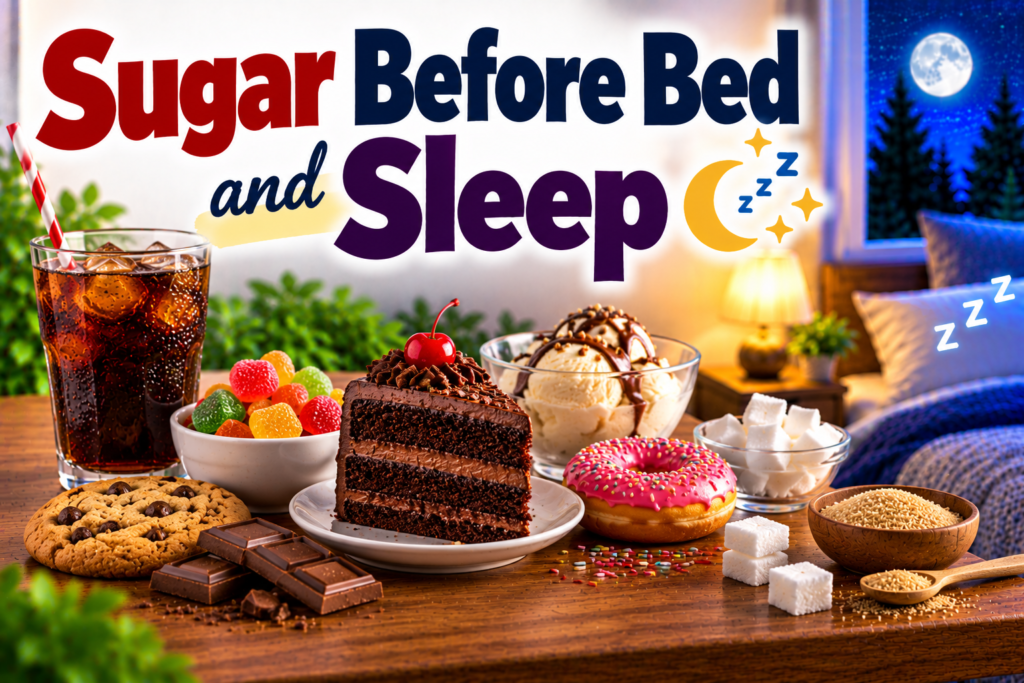
Eating sugar before bed does not automatically lead to a poor night’s sleep. However, research links diets high in added sugars and highly processed foods to less favorable sleep outcomes.
It’s less clear whether eating sugar right before bedtime directly disrupts sleep, and no strong evidence suggests everyone needs to avoid sweets in the evening.
If you enjoy a sweet after dinner, you do not necessarily need to give it up. The amount you eat, the type of food, your overall diet, and your individual health all matter.
A small piece of sweet is different from regularly drinking sugary beverages or eating large amounts of sweets late at night.
The goal is not to fear sugar. It is to understand how your eating habits may fit into your overall sleep routine.
What Happens When You Eat Sugar at Night?
When you eat foods containing sugar or other carbohydrates, your digestive system breaks them down into sugars that enter the bloodstream. Blood glucose rises, and insulin helps your body regulate it.
The response depends on the food, portion size, what else you eat, and your individual metabolism.
For example, a sugary drink can deliver a considerable amount of sugar quickly. Whole fruit also contains natural sugars, but it provides fiber, water, vitamins, and other nutrients.
A normal rise in blood glucose after eating does not, by itself, mean that your sleep will be disturbed. Scientists have not established that an ordinary serving of sugar before bed causes harmful blood glucose changes in every healthy person.
The concern is more about consistently consuming excessive added sugar, particularly through foods and drinks that provide little nutritional value.
There is also no convincing evidence that sugar produces a predictable burst of energy in everyone that prevents them from falling asleep.
If a sweet food seems to affect your sleep, consider the portion, when you ate it, and whether it contained caffeine or caused digestive discomfort.
Does Eating Sugar Before Bed Make It Harder to Fall Asleep?
The answer is not a simple yes or no.
A 2021 systematic review in Sleep Medicine Reviews examined 29 studies on diet and sleep quality. The researchers found that higher consumption of processed foods and foods rich in free sugars was associated with less favorable sleep outcomes.
However, most of the studies were observational. This means they identified relationships between eating habits and sleep but could not establish that sugar caused the sleep problems.
There are several possible explanations for this association:
- People who consume more sugary, highly processed foods may have other dietary habits that affect sleep.
- Poor sleep may affect appetite and make convenient, energy-dense foods more appealing.
- Stress, irregular schedules, and other lifestyle factors may affect both eating habits and sleep.
- The type and amount of sugar consumed may matter, but research has not established a universal bedtime threshold.
Therefore, it would be misleading to say that eating a biscuit, a piece of chocolate, or a small Indian sweet before bed will necessarily keep you awake.
The current evidence is more relevant to overall dietary patterns and habitual sugar intake than to one particular snack.
Sugar and Falling Asleep
Research suggests a possible relationship between high-sugar eating patterns and poorer sleep.
But it does not prove that sugar eaten immediately before bedtime causes insomnia. If you notice a consistent connection between a particular food and your sleep, try changing the portion or timing and observe whether it helps.
Can Sugar Cause You to Wake Up During the Night?
Some people notice that they sleep poorly after eating sweets in the evening. That experience is worth noting, but sugar isn’t necessarily the cause.
Other factors may be involved.
Large late-night meals: Eating a heavy meal close to bedtime can leave you feeling uncomfortably full.
Acid reflux: Rich desserts or large meals may trigger symptoms in susceptible people. Reflux can interrupt sleep, particularly when you lie down soon after eating.
Caffeine: Chocolate, sweetened tea, coffee, and some desserts may contain caffeine. Caffeine is a well-established sleep-disrupting substance, especially when consumed late in the day by sensitive individuals.
Blood glucose changes: People with diabetes may have high or low blood glucose overnight, depending on their condition and treatment.
Other sleep problems: Stress, an irregular sleep schedule, sleep apnoea, and other health conditions can cause repeated awakenings.
If you regularly wake up at night, look at your whole routine rather than assuming sugar is to blame.
People with diabetes who use insulin or certain glucose-lowering medicines should take possible overnight hypoglycemia seriously and follow their individual treatment plan.
A bedtime sweet is not a reliable substitute for appropriate glucose monitoring and medical advice.
Does Sugar Reduce Deep Sleep or REM Sleep?
Deep sleep and rapid eye movement (REM) sleep are important stages of the normal sleep cycle. Researchers have investigated whether carbohydrate intake influences how much time people spend in these stages.
A systematic review, meta-analysis, and meta-regression published in Nutrients in 2021 examined 11 articles comprising 27 nutrition trials. The findings suggested that carbohydrate intake could influence some measured sleep stages.
However, these studies examined carbohydrate intake more broadly, not simply sugar eaten immediately before bed.
Carbohydrates include both sugars and starches, and the studies differed in their methods and dietary interventions.
The findings do not establish that eating sweets at night reduces deep sleep or REM sleep. Nor do they show that avoiding all sugar in the evening improves sleep architecture.
For now, it is more sensible to focus on a balanced diet and consistent sleep habits than to worry that one dessert will automatically change your sleep stages.
Are Some Sugary Foods Better Choices at Night?
Yes, from a nutritional perspective, some choices are more useful than others. That does not mean any particular food is a proven sleep aid.
1. Sweets, Cakes, and Biscuits
Indian sweets such as rasgulla and sandesh, along with cakes, biscuits, and pastries, can contain substantial amounts of added sugar. Some also contain considerable amounts of fat.
Having these foods occasionally does not automatically disrupt sleep. However, eating large portions regularly can increase sugar intake, especially if sweets replace more nutritious foods.
You do not have to give up your favorite sweet. Pay attention to portion sizes and how often you eat them.
2. Sugary Drinks
Soft drinks, sweetened fruit drinks, and other sugary beverages can add a lot of sugar without making you feel particularly full.
Sweetened tea and coffee are another consideration because they may contain caffeine. Even a modest amount of sugar, combined with caffeine consumed late in the day, may interfere with sleep.
3. Chocolate
Chocolate contains caffeine and theobromine in varying amounts. Dark chocolate generally contains more of these compounds than milk chocolate.
If you are sensitive to stimulants, eating chocolate close to bedtime may make falling asleep more difficult. A rich chocolate dessert may also cause digestive discomfort in some people.
4. Whole Fruits
Whole fruit contains natural sugars, fiber, water, vitamins, and other nutrients.
There is no general recommendation to avoid whole fruit at night simply because it contains sugar. A modest serving of banana, apple, orange, or guava can be a reasonable snack if you are hungry and tolerate it well.
Whole fruit is also different from fruit juice, which generally provides less fiber per serving and can be easier to consume in large quantities.
5. Sweetened Yogurt and Breakfast Cereals
Some flavored yogurts and packaged cereals contain more added sugar than you might expect. Checking nutrition labels can help you compare products.
Plain yogurt with fruit or an unsweetened cereal can be a practical alternative if you want to reduce added sugar. These are options for a balanced diet, not proven sleep treatments.
Which Foods Should You Choose?
You do not need to classify every food as either good or bad for sleep. Consider the type of food, portion size, added sugar, caffeine content, and your overall diet.
Take-home message: You don’t need to avoid whole fruit simply because it contains natural sugar. Limiting excessive added sugar is a more useful goal than banning all sweet foods at night.
Should You Avoid Sugar Completely Before Bed?
Most healthy adults don’t need to eliminate every source of sugar in the evening.
Instead, focus on limiting excessive added sugar throughout the day.
The World Health Organization recommends keeping free sugars below 10% of total daily energy intake, with a further reduction to below 5% suggested for additional health benefits.
Free sugars include sugars added during food preparation or manufacturing, as well as sugars naturally present in honey, syrups, fruit juices, and fruit juice concentrates.
The recommendation does not apply to the sugars naturally present in intact whole fruits and vegetables or those naturally present in milk.
These are general dietary recommendations, not bedtime rules. No established scientific cutoff, such as “no sugar after 6 PM” or “no sweets after 7 PM,” has been shown to improve sleep for everyone.
If you enjoy dessert after dinner, consider how often you eat it and how large the portion is. If it causes reflux, discomfort, or repeatedly affects your sleep, try eating earlier or choosing a smaller portion.
What Can You Eat If You Crave Something Sweet at Night?
You don’t have to ignore genuine hunger just because bedtime is approaching. If you want a snack, choose something that suits your appetite and dietary needs.
Some practical options include:
- A small serving of whole fruit, such as a banana, apple, orange, or guava.
- Plain yogurt with fruit, if you tolerate dairy.
- A modest portion of nuts with fruit for a more filling snack.
- A glass of milk, with little or no added sugar, if you enjoy it.
- A small portion of your favorite dessert, rather than a large serving eaten out of habit.
These foods are not guaranteed to make you sleepy. They are reasonable options that can fit into a balanced eating pattern.
If you find yourself craving sweets every night, consider whether you are eating enough during the day.
Skipping meals, having an inadequate dinner, stress, and habit can all contribute to evening cravings. Addressing the cause of the craving may help more than trying to suppress it.
For more snack ideas, read our guide to What to Eat Before Bed.
How Long Before Bed Should You Stop Eating Sugar?
No scientifically established interval exists specifically for sugar.
You do not necessarily need to stop eating all sweet foods several hours before bedtime. However, avoiding a large dessert or heavy snack right before lying down can help if it causes indigestion or acid reflux.
For a substantial meal, finishing around two to three hours before bed is a practical starting point for many people. Those who experience nighttime reflux may need to leave a longer interval.
A small snack closer to bedtime may be perfectly reasonable if you are hungry. Consider its size, caffeine content, and how it affects your digestion.
The goal is not to follow an arbitrary clock rule. Find an eating pattern that helps you feel comfortable when you go to bed.
Read more: How Long Before Bed Should You Stop Eating?.
Can Poor Sleep Make You Crave More Sugar?
The relationship between sugar and sleep may work in both directions.
Studies have associated shorter sleep duration with greater consumption of sugary drinks and certain energy-dense foods. However, these findings do not prove that poor sleep directly causes sugar cravings in every person.
When you are tired, you may find it harder to stick to planned food choices or feel more drawn to convenient, highly palatable snacks. Stress and irregular schedules can make this pattern more likely.
At the same time, some studies have linked diets high in highly processed foods to less favorable sleep outcomes.
This does not mean sugar alone explains the relationship. Sleep, appetite, stress, and food choices are connected in complicated ways.
If you sleep poorly and reach for sweets more often, try to establish a consistent sleep schedule, eat regular, balanced meals, and make time for physical activity. If sleep problems persist, consider whether another factor may be responsible.
Frequently Asked Questions
Does eating sugar before bed cause insomnia?
There is no strong evidence that a small amount of sugar before bed directly causes insomnia in everyone. Higher consumption of free-sugar-rich and highly processed foods has been associated with poorer sleep outcomes, but the evidence does not establish cause and effect.
Will eating sweets at night make me wake up at 3 AM?
No evidence shows that sugar causes people to wake at a specific time, such as 3 AM. Nighttime awakenings can be related to stress, sleep disorders, noise, temperature, acid reflux, medications, or other factors.
Is fruit before bed bad because it contains sugar?
No. Whole fruit provides fiber, water, and nutrients alongside natural sugars. There is no general need to avoid whole fruit before bed solely because it contains sugar.
Does sugar make children hyperactive and keep them up?
The claim that sugar reliably causes hyperactivity in every child is not supported by strong evidence. However, sugary drinks, caffeine-containing chocolate, large late-night snacks, and irregular routines can complicate healthy eating and sleep habits. A child’s overall diet and bedtime routine matter more than assuming sugar alone is responsible.
Is honey better than sugar before bed?
Honey is a source of free sugar. Insufficient evidence supports recommending honey as a sleep aid or claiming it reliably improves sleep when eaten at bedtime.
Should I stop eating sugar after 6 PM?
No universal cutoff has been established. Limiting excessive added sugar throughout the day is more meaningful than following an arbitrary evening deadline.
What if I have diabetes?
If you have diabetes, base bedtime eating on your glucose levels, medication, and individual treatment plan. A sugary snack is not a reliable way to prevent overnight hypoglycemia. If you use insulin or medicines that can cause low blood glucose, follow your clinician’s instructions and seek advice before making major dietary changes.
Final Summary: Sugar Before Bed and Sleep
The relationship between sugar and sleep is more complicated than simply saying that sugar keeps you awake.
- Diets high in added sugars and highly processed foods have been associated with less favorable sleep outcomes.
- A small sweet before bed has not been shown to cause insomnia in everyone.
- Current research does not prove that bedtime sugar reduces deep sleep or REM sleep.
- You generally don’t need to avoid whole fruit because it contains natural sugar.
- Limiting excessive added sugar and maintaining a balanced diet are more useful than following a strict bedtime sugar ban.
The bottom line: Enjoy sweets in moderation, pay attention to how your body responds, and don’t assume sugar is the only reason for poor sleep. If sleep difficulties continue, look at your sleep routine and consider other possible causes.
References
1. Godos J, et al. Association between diet and sleep quality: A systematic review. Sleep Medicine Reviews. 2021;57:101430. Read on PubMed
2. Vlahoyiannis A, Giannaki CD, Sakkas GK, Aphamis G, Andreou E. A systematic review, meta-analysis and meta-regression on the effects of carbohydrates on sleep. Nutrients. 2021;13(4):1283. Read on PubMed | Full text
3. World Health Organization. Guideline: Sugars Intake for Adults and Children. Read the guideline