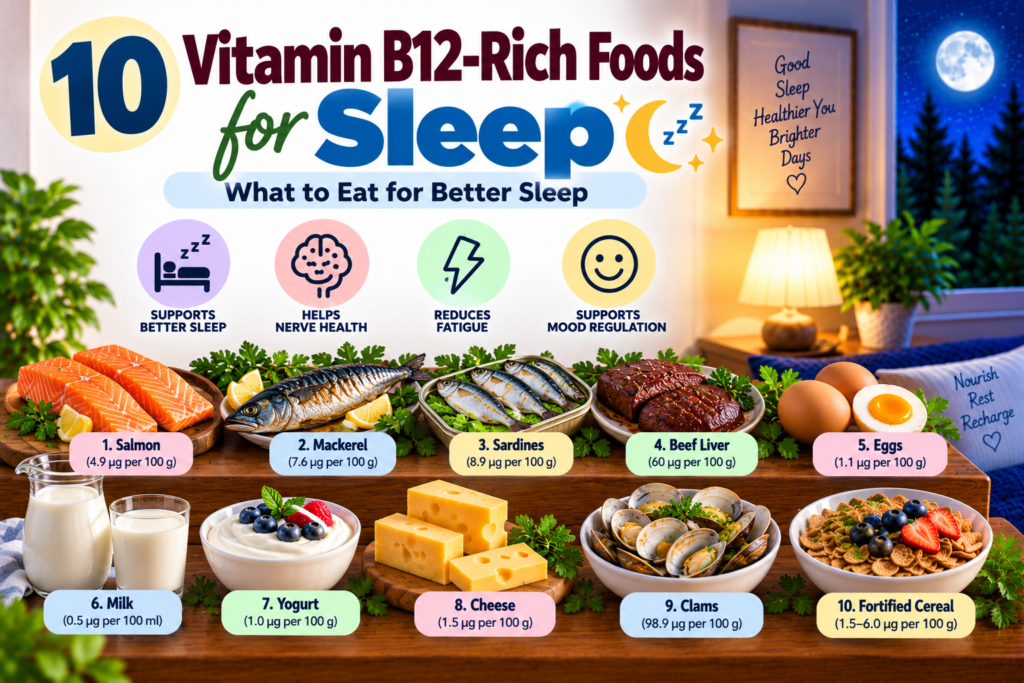
Vitamin B12 Rich foods for sleep include fish, eggs, milk, curd, cheese, chicken, meat, and foods fortified with vitamin B12. This essential nutrient supports healthy nerves, red blood cell formation, and normal brain function.
Although researchers have investigated a possible connection between vitamin B12 and the sleep–wake cycle, there is not enough evidence to say that eating more B12-rich foods will help you sleep better.
The real priority is to get enough vitamin B12, especially if you eat few animal foods or may be at risk of deficiency.
Table of Contents
Why Does Vitamin B12 Matter for Sleep?
Vitamin B12, also known as cobalamin, is essential for keeping the nervous system healthy. It also helps the body make red blood cells and DNA.
A deficiency can cause fatigue, weakness, anaemia, and neurological problems. Some people may also experience symptoms that affect their daily functioning and wellbeing.
But what about sleep itself?
Scientists have explored whether vitamin B12 influences circadian rhythms—the internal timing system that helps regulate when we feel awake and when we feel sleepy. B12 has also been studied in people with sleep-related complaints. So far, however, the findings have not established that increasing B12 intake is an effective way to treat insomnia.
That distinction matters. If you are deficient, getting enough vitamin B12 is important for your health. If your B12 levels are already adequate, taking extra vitamin B12 is not a proven shortcut to better sleep.
Vitamin B12 and Sleep: Take-Home Message
Vitamin B12 is essential for normal nerve function, but eating B12-rich foods or taking extra supplements has not been proven to treat insomnia.
Vitamin B12 and Sleep, What Research Says?
The research is still limited, and the results are mixed. A few studies illustrate why it is too early to make strong claims about vitamin B12 as a sleep aid.
A small supplementation study found no improvement in sleep
In a 2022 study published in Heliyon, researchers investigated whether vitamin B12 supplementation changed sleep patterns in healthy adults whose B12 levels were within the normal range.
Fourteen participants completed the study. They took 3,000 micrograms of cyanocobalamin daily for two weeks. Although their blood B12 levels increased, the researchers found no significant change in the sleep parameters they measured.
The study was small and short, so it cannot answer every question about B12 and sleep. Still, it suggests that raising B12 levels in people who are not deficient does not necessarily improve their sleep.
Vitamin B12 did not effectively treat delayed sleep timing in a clinical trial
A 1997 multicentre, double-blind study examined methylcobalamin, a form of vitamin B12, in 50 people with delayed sleep phase syndrome. This condition involves a sleep schedule that is shifted later than desired.
Participants received either 3 mg of methylcobalamin daily or a placebo for four weeks. The researchers found no significant difference between the groups in their assessments of nighttime sleep, daytime drowsiness, or mood.
The findings did not support vitamin B12 as an effective treatment for delayed sleep phase syndrome.
Vitamin B12 and insomnia
A 2023 study of 512 adults attending primary healthcare services in Greece found that lower vitamin B12 levels were associated with insomnia symptoms in some analyses. However, the researchers did not find a significant association between B12 levels and poor overall sleep quality.
Because this was an observational study, it cannot establish whether low B12 contributed to insomnia or whether other factors explained the relationship.
What does all this mean?
At present, vitamin B12 should not be promoted as a proven sleep supplement. The evidence does not show that people with adequate B12 levels will sleep better by eating more B12-rich foods.
That does not make B12 unimportant. It means its established nutritional role should be kept separate from the still-uncertain evidence about sleep.
10 Vitamin B12-Rich Foods to Include in Your Diet
Vitamin B12 is found naturally in foods of animal origin. Some fortified foods can provide it too. The best choices depend on what you eat, how much B12 a food contains, and whether your body can absorb it properly.
1. Fish
Fish is one of the useful sources of vitamin B12. Salmon, tuna, sardines, and other fish can contribute meaningful amounts, although the exact content varies by species.
Fish also supplies protein and other nutrients. For people who eat fish, it can be part of a balanced diet without requiring special recipes or supplements marketed for sleep.
How to include it: Serve cooked fish with rice or roti and vegetables. Choose varieties that are accessible and affordable, and vary your protein sources over the week.
2. Eggs
Eggs are a convenient source of vitamin B12, especially for people who do not eat meat or fish but include eggs in their diet. They also provide protein and other nutrients.
One large cooked egg contains approximately 0.5 micrograms of vitamin B12, according to the US National Institutes of Health (NIH). That makes eggs a useful contributor, although they are not among the most concentrated sources.
How to include them: Boiled eggs, omelettes, and egg dishes with vegetables are easy options for breakfast, lunch, or dinner. There is no established benefit to eating eggs specifically at bedtime for their B12 content.
3. Milk
Milk contains vitamin B12 and can make a useful contribution to daily intake. It is a familiar option in many Indian households and also supplies protein and calcium.
One cup of 2% milk contains approximately 1.3 micrograms of vitamin B12 in the NIH reference table. Actual values can vary with the product.
Milk is sometimes recommended as a bedtime drink, but its B12 content should not be taken as evidence that it treats insomnia. If milk suits your digestion and routine, it can simply be part of your usual diet.
How to include it: Drink milk on its own or use it in porridge or other meals. If drinking it late at night causes bloating or reflux, have it earlier.
4. Curd and Yogurt
Curd is another familiar option for people who consume dairy products. Yogurt provides vitamin B12 in amounts that vary with the product and serving size.
The NIH lists approximately 1.0 microgram of vitamin B12 in a 6-ounce container of plain fat-free yogurt. Homemade curd may differ, so this should be treated as a reference value rather than an exact estimate for every preparation.
How to include it: Serve plain curd with lunch, add it to suitable meals, or have yogurt as a snack. Choose products with little or no added sugar when practical.
5. Cheese
Cheese contains vitamin B12, although the amount varies by type. It can help contribute to daily intake, particularly for people who regularly eat dairy.
Cheese also supplies protein and calcium, but some varieties are high in sodium and saturated fat. A large serving is not necessary just to obtain B12.
How to include it: Add a moderate amount to sandwiches, meals, or snacks. Consider your overall dietary pattern when choosing how often to eat it.
6. Chicken
Chicken provides vitamin B12 along with protein. It is a practical option for people who eat poultry, although it generally contains less B12 per serving than highly concentrated sources such as liver.
The amount depends on the cut and preparation. Chicken is best viewed as one part of a varied diet rather than the only food you rely on for B12.
How to include it: Serve cooked chicken with vegetables and rice, roti, or another grain. Grilled, roasted, or lightly prepared dishes can offer variety without relying on heavily processed products.
7. Meat
Meat, including beef, can provide vitamin B12. The amount varies with the type of meat and the portion eaten.
For people who eat meat, it is one way to obtain B12 alongside other dietary sources. However, there is no need to depend on red meat alone: fish, dairy products, eggs, and fortified foods may also contribute.
How to include it: Eat meat in portions that suit your overall diet and health needs. Vary your protein sources rather than assuming that one food must be eaten every day.
8. Liver
Liver is one of the most concentrated dietary sources of vitamin B12. The NIH lists approximately 70.7 micrograms in a 3-ounce serving of cooked beef liver—far more than the recommended daily intake for most adults.
That does not mean you need to eat liver regularly to improve sleep. Liver is also exceptionally rich in preformed vitamin A, and excessive intake can be harmful. People who are pregnant or may become pregnant should be particularly cautious and follow appropriate medical advice.
How to include it: If liver is part of your diet, consider it an occasional food rather than a daily B12 strategy. Other foods can help meet your needs without relying on such a concentrated source.
9. Vitamin B12-Fortified Breakfast Cereals
Some breakfast cereals have vitamin B12 added during manufacturing. These can be helpful for people who eat little or no animal food, provided the product actually contains added B12.
Not every cereal is fortified, and amounts vary by brand. A product’s marketing or whole-grain label does not guarantee that it supplies vitamin B12.
How to choose them: Check the nutrition label for vitamin B12 and the amount per serving. Also consider added sugar and the rest of the nutritional profile.
10. Fortified Plant-Based Milk and Nutritional Yeast
For vegetarians and vegans, fortified foods deserve special attention. Some plant-based milk alternatives and nutritional yeast products contain added vitamin B12.
Ordinary soybeans, almonds, oats, pulses, fruits, and vegetables are not reliable natural sources of B12. A plant-based drink is useful for B12 only if the manufacturer has added the vitamin.
How to choose them: Look for vitamin B12 on the nutrition label and check how much each serving provides. Fortification varies considerably between brands.
If you follow a vegan diet, reliable fortified foods or an appropriate supplement are important because ordinary unfortified plant foods do not provide dependable amounts of vitamin B12.
How Much Vitamin B12 Do You Need Each Day?
For most adults, the US recommended dietary allowance is 2.4 micrograms per day. Needs are slightly higher during pregnancy and breastfeeding.
| Life stage | Recommended daily intake |
|---|---|
| Adults aged 19 years and older | 2.4 mcg |
| Pregnancy | 2.6 mcg |
| Breastfeeding | 2.8 mcg |
These figures come from the NIH Office of Dietary Supplements. National recommendations may differ slightly.
Most people can get B12 from a suitable combination of foods, but intake is only part of the picture. Some people cannot absorb enough B12 from food even when their diet contains it.
Who may need extra attention to B12 intake?
You may need to pay closer attention if you:
- Follow a vegan diet or eat very little animal food.
- Are an older adult and may absorb B12 from food less efficiently.
- Have a condition affecting the stomach or small intestine.
- Have had certain gastrointestinal surgeries.
- Take medicines such as metformin or acid-reducing medicines over the long term, which may affect B12 status in some people.
If you are at risk of deficiency, a clinician can assess your diet, symptoms, medical history, and whether blood tests are appropriate. Do not assume that sleep difficulty alone means you need a B12 supplement.
Can Vitamin B12 Deficiency Affect Sleep?
Some observational studies have found a relationship between B12 levels and insomnia symptoms or daytime sleepiness. However, the evidence is not sufficient to say that B12 deficiency is a common cause of insomnia or that treating B12 deficiency will resolve every sleep problem.
A deficiency can cause fatigue, weakness, anaemia, numbness, tingling, and other neurological symptoms. These symptoms deserve attention, particularly if you eat few B12-containing foods or have a condition that affects absorption.
If you have persistent fatigue or neurological symptoms, seek medical assessment rather than starting high-dose supplements on your own. Identifying a deficiency matters because delayed treatment can allow neurological damage to develop.
What Else Can You Do to Improve Sleep?
Food is one part of the picture, but sleep is influenced by your daily routine, environment, health, and stress levels. If your sleep has been poor, a few consistent habits may be more useful than focusing on a single nutrient.
- Keep a regular sleep schedule. Try to wake up and go to bed at similar times each day.
- Get daylight during the day. Daylight exposure, particularly earlier in the day, helps regulate your body clock.
- Review caffeine timing. Tea, coffee, energy drinks, and other caffeine sources can interfere with sleep, especially later in the day.
- Make your bedroom comfortable. A quiet, dark, and comfortably cool room can support better sleep.
- Adjust meal timing if needed. If heavy meals close to bedtime cause discomfort, allow more time between dinner and sleep.
- Seek help for ongoing problems. Persistent insomnia, loud snoring, gasping during sleep, or excessive daytime sleepiness may require medical assessment.
For chronic insomnia, cognitive behavioural therapy for insomnia (CBT-I) is an evidence-based treatment. Changing your diet can support general health, but it may not resolve an underlying sleep disorder.
Frequently Asked Questions
1. Which vitamin B12-rich foods are best for sleep?
Fish, eggs, milk, curd, cheese, chicken, meat, and appropriately fortified foods can help you meet your B12 needs. None has been proven to treat insomnia specifically.
2. Does vitamin B12 help you fall asleep faster?
Current evidence does not establish that increasing B12 intake helps people fall asleep faster. Studies of supplementation have not consistently demonstrated improvements in sleep.
3. Should I take vitamin B12 at night?
There is no established bedtime for vitamin B12 that has been shown to improve sleep. If you take it for a medical or nutritional reason, follow the instructions provided by your clinician or product label.
4. Are there vegetarian sources of vitamin B12?
Milk, curd, cheese, and eggs provide B12 for people who include these foods in their diet. Fortified cereals, plant-based drinks, and nutritional yeast can also provide B12 when the vitamin has been added. Ordinary unfortified plant foods are not reliable sources.
5. Can vitamin B12 deficiency cause insomnia?
Some research has found associations between lower B12 levels and insomnia symptoms, but this does not prove that low B12 causes insomnia. Persistent sleep problems can have many causes and may need a separate assessment.
6. Can I take high-dose vitamin B12 to improve sleep?
High-dose B12 is not an established treatment for insomnia. Supplements may be appropriate for a confirmed deficiency or certain medical circumstances, but taking large doses solely to improve sleep is not supported by current evidence.
Vitamin B12-Rich Foods for Sleep: Take-Home Message
Include reliable sources of Vitamin B12—such as fish, eggs, dairy products, meat, or fortified foods—in your diet. Adequate B12 supports healthy nerves and blood cells, but extra B12 has not been proven to improve sleep when your intake is already sufficient. If you have persistent insomnia or symptoms of deficiency, seek appropriate medical advice.
Also Read: Vitamins for Sleep, Vitamin B12 and Sleep
References
- National Institutes of Health, Office of Dietary Supplements. Vitamin B12: Fact Sheet for Health Professionals.
https://ods.od.nih.gov/factsheets/VitaminB12-HealthProfessional/ - National Institutes of Health, Office of Dietary Supplements. Vitamin B12: Fact Sheet for Consumers.
https://ods.od.nih.gov/factsheets/VitaminB12-Consumer/ - Channer-Wallen T, Dawson P, Thomas-Brown PG, Gossell-Williams M. Lack of association between serum vitamin B12 and nocturnal sleep parameters following cyanocobalamin supplementation in healthy adults. Heliyon. 2022;8(2).
https://pubmed.ncbi.nlm.nih.gov/35146159/ - Okawa M, et al. Vitamin B12 treatment for delayed sleep phase syndrome: a multi-center double-blind study. Psychiatry and Clinical Neurosciences. 1997;51(5):275–279.
https://pubmed.ncbi.nlm.nih.gov/9413873/ - Bouloukaki I, et al. Association of Vitamin B12 Levels with Sleep Quality, Insomnia, and Sleepiness in Adult Primary Healthcare Users in Greece. Healthcare. 2023;11(23):3026.
https://pubmed.ncbi.nlm.nih.gov/38063594/